China industrial output and retail sales slump amid growing economic slowdown
China's industrial output and retail sales growth slowed in July amid extreme weather and weak domestic demand, increasing pressure on policymakers for support.
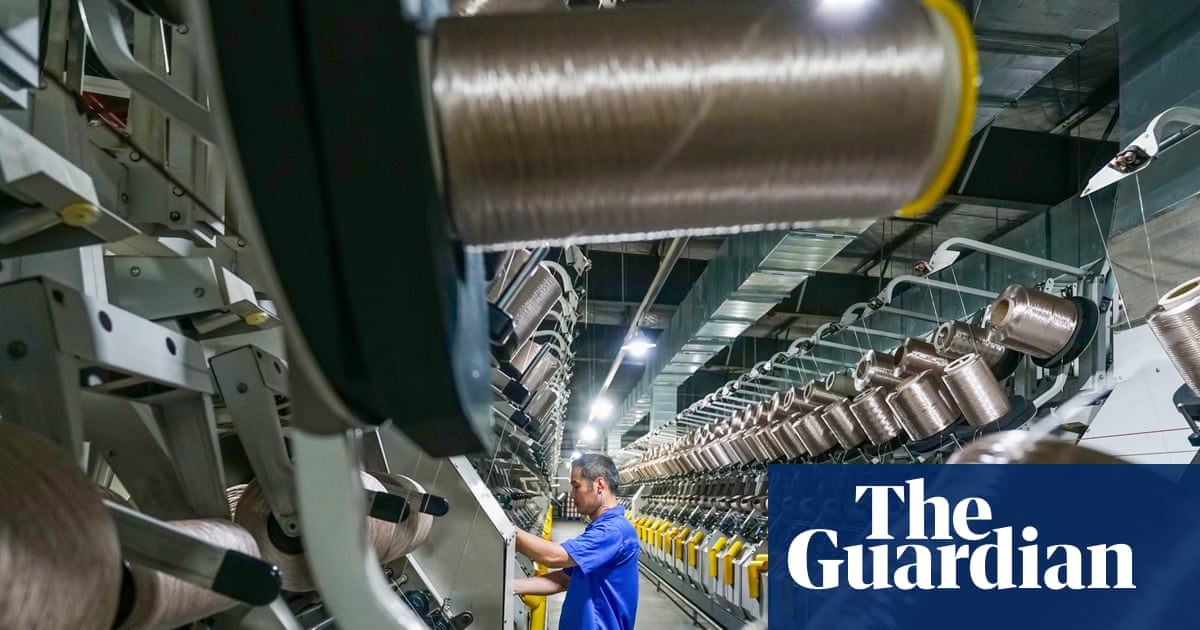
- Core Development: China's industrial output and retail sales growth slowed in July amid extreme weather and weak domestic demand, increasing pressure on policymakers for support.
- Beat Context: Categorized under Business with independent corroboration.
- Reporting Depth: 4 minute analytical read synthesized from verified newsroom sources.
July 2026 data from the National Bureau of Statistics (NBS) show that both factory‑gate output and consumer‑spending have slowed relative to the previous month, extending a pattern that began with the three‑month period to June. Year‑on‑year industrial output rose 4.5%, down from 5.3% in June, while retail sales increased only 0.6% after a 1% rise in the prior month. The figures missed the Reuters poll forecast of 4.8% growth for output and the consensus expectation of 1.5% for sales.
The NBS linked the shortfall partly to “extreme weather, including high temperatures and heavy rainfall” that “disrupted market supply and demand.” That comment follows a broader narrative in official releases that weather‑related shocks have become a recurrent drag on quarterly performance.
Media additions

July’s numbers come on the heels of a weaker‑than‑expected annualised growth rate of 4.3% for the three months to June – the lowest reading since the early 1990s when China first began publishing quarterly GDP. The 4.3% result fell short of the government’s 4.5‑5% target, prompting analysts to warn that the economy could be entering a more protracted slowdown.
Policy tone from Beijing
In a state‑council meeting, Premier Li Qiang warned that “the problem of insufficient domestic demand remains prominent, some industries and enterprises are facing increasing difficulties, and uncertainties in external environment are rising.” He added that “we should actively stabilise external demand, expand mutually‑beneficial international economic and trade cooperation and promote balanced trade development,” according to Xinhua.
Li’s comments echo a growing chorus in the capital calling for accelerated fiscal support. The Guardian notes that the “latest snapshot … is likely to increase pressure on policymakers to accelerate plans for tax and spending measures to support activity.” No concrete package has been announced, but the language of “tax cuts” and “targeted spending” has appeared repeatedly in briefing notes since the June GDP release.
Capital Economics’ head of China economics, Julian Evans‑Pritchard, offered a more nuanced view.
He added that “we still expect a modest uptick in growth over the rest of the year, supported by fiscal loosening.”“The silver lining is that the boost to manufacturing activity from AI capex continued to build, and that the wider weakness partly reflects temporary disruptions from recent typhoons.”
Julian Evans‑Pritchard, head of China economics, via Capital Economics
Analysts therefore see a split narrative: on one side, weather and external shocks are blamed for the dip; on the other, the build‑out of artificial‑intelligence infrastructure is seen as a countervailing force that could lift manufacturing later in the year.
International market reaction
U.S. Equity markets moved on the same Monday that the Chinese data were released. The Dow Jones Industrial Average slipped 0.18% to 53,635.58, while the S&P 500 and Nasdaq Composite each fell by roughly 0.06% and 0.09% respectively. Later in the week, the Dow recovered modestly, trading up 0.13% to 53,833.87 on one session and down 0.13% to 53,787.57 on another.
These fluctuations occurred alongside mixed commentary on global risk factors – from U.S.–Iran tensions to oil‑price movements – that have kept investors wary of any single driver. No direct causal link between the Chinese slowdown and U.S. Index moves is asserted in the source material; the timing simply highlights how China’s data sit alongside broader market sentiment.
Economic context and chronology
- January‑March 2026: GDP growth recorded at 4.3% annualised, below the 4.5‑5% target.
- April‑June 2026: Industrial output grew 5.3% YoY; retail sales rose 1% month‑on‑month.
- July 2026: Output fell to 4.5% YoY; retail sales slipped to 0.6% month‑on‑month.
- July 2026: NBS cites extreme heat and heavy rain as factors disrupting both supply chains and consumer demand.
- July 2026: Premier Li Qiang highlights insufficient domestic demand and rising external uncertainties in a state‑council briefing.
- July 2026: Capital Economics points to AI‑related capital expenditure as a source of resilience in manufacturing.
Putting these points together shows a clear line from the early‑year slowdown, through a brief summer‑month rebound, to the latest dip that coincides with weather‑related disruptions. The narrative also underscores how policymakers are balancing short‑term demand concerns with longer‑term structural bets on technology‑driven growth.
What to watch next
- Beijing’s pending decisions on accelerated tax cuts or targeted fiscal spending, as pressure builds after the July figures.
- Next monthly releases from the NBS – particularly the August industrial output and retail sales data – to see whether weather‑related disruptions are easing.
- Continued commentary from Premier Li Qiang or other senior officials on the balance between domestic stimulus and external demand.
- Capital Markets: Movements in the Dow, S&P 500 and Nasdaq after each new Chinese data point, offering a barometer of investor sentiment.
- Weather forecasts for the rest of the summer, given that the NBS explicitly linked July’s performance to extreme temperatures and heavy rainfall.
How significant is this development?
Contribute your assessment to the aggregated reader sentiment ledger.
Frequently Asked Questions
Key questions answered in this reportWhat is the key development in: China industrial output and retail sales slump amid growing economic slowdown?
China's industrial output and retail sales growth slowed in July amid extreme weather and weak domestic demand, increasing pressure on policymakers for support.
Why is this Business development significant for the UK?
This report covers critical events in our Business beat. Independent reporting monitors related UK statements, regulatory shifts, and public responses as further verified details emerge.
How was this reporting corroborated and verified?
Newsarchy UK compiles and cross-references reporting from primary reporting from economictimes.indiatimes.com and cross-checked wire reports. All coverage adheres to published editorial standards.
When was this report published?
This briefing was published on August 17, 2026 and is permanently cataloged in the Newsarchy UK Business archives.