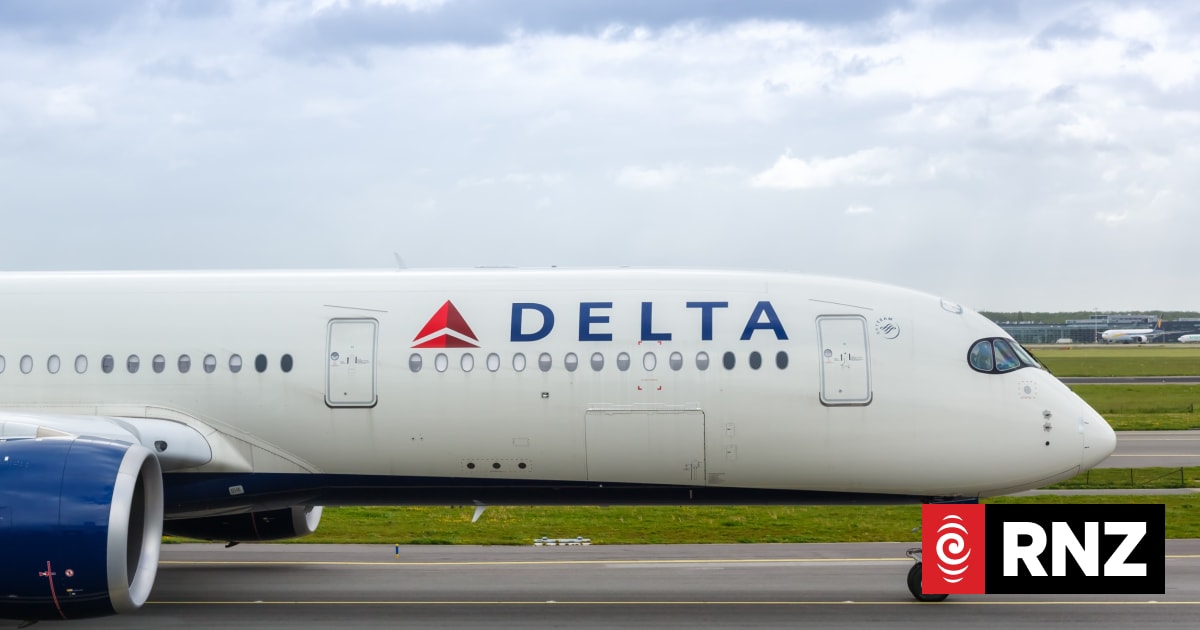
Delta flight hit by firework lands safely at Chicago Midway
A Delta flight from Atlanta safely landed at Chicago Midway after a potential mid-air strike by an unknown object caused minor paint damage to the aircraft.
Delta flight hit by firework lands safely at Chicago Midway
EXECUTIVE BRIEFKey Takeaways & Signal
Core Development: A Delta flight from Atlanta safely landed at Chicago Midway after a potential mid-air strike by an unknown object caused minor paint damage to the aircraft.
Beat Context: Categorized under Business with independent corroboration.
Delta Air Lines Flight 1076, an Airbus A319 bound for Chicago Midway International Airport from Atlanta, reported a sudden “big bang” as it descended through the final approach corridor on the night of July 4, 2026. The incident unfolded just as Independence Day fireworks lit the sky over densely populated neighborhoods that skirt the airport’s arrival path.
“We just had a firework hit our plane. We’re just hoping it was just a mortar that went off underneath, but definitely felt a big bang.”
Image via upi.comImage via rnz.co.nzImage via freep.com
Pilot, Delta Flight 1076, via Yahoo News
The audio recording released by several outlets shows the crew contacting the control tower while the aircraft was between 200 and 250 feet above the ground. Controllers warned the pilots of “multiple reports” of fireworks near the approach end and informed Chicago police, who later confirmed a “plane was ‘struck by an unknown object’ that caused ‘minor paint damage.’”
Chronology of the event
July 4, 2026 – about 8:30 p.m. Local time: Air-traffic control alerts Delta 1076, “Delta 1076… use caution, there are multiple homes near the approach shooting off fireworks.”
Moments later: The pilot reports hearing the bang and believes a firework has struck the aircraft.
8:30 p.m. Local time: The A319 continues its approach and touches down safely at Midway, without declaring an emergency.
Shortly after landing: Chicago police issue a statement describing the strike as an “unknown object” that caused only minor paint damage.
Sunday: Mechanics inspect the aircraft and report no damage.
How outlets framed the incident
The Associated Press, as cited by Yahoo, emphasized the timing of the strike during the Fourth of July celebrations and noted that the flight carried 52 passengers and six crew members. USA Today highlighted the immediate response from air-traffic control, the police notification, and reiterated that no injuries were reported.
Daily Mail added vivid detail, describing the fireworks as a “barrage” and situating the event just before 8:40 p.m., while also noting the broader risk posed by “extravagant fireworks” that can reach 1,300 feet, well above the aircraft’s altitude at that moment.
The International Business Times placed the incident within the larger “America250” celebrations. It also pointed out that “direct firework strikes on commercial aircraft remain uncommon,” underscoring the rarity of such an event.
Upi and RNZ focused on the procedural side, quoting the FAA’s statement that the agency would investigate but would “defer to local authorities and the airline for further information.” RNZ added a sidebar about the altitude range of consumer fireworks (50–200 feet) versus professional displays (up to 1,200 feet), giving readers a sense of why the aircraft’s low-altitude approach was vulnerable.
Freep mirrored USA Today’s coverage, repeating the pilot’s exact words and the police description of “minor paint damage.” It also noted that a subsequent Southwest Airlines flight heard a controller quip, “Welcome to the war zone,” highlighting the heightened tension among inbound traffic.
Official responses
Delta’s statement, reproduced across several outlets, said the flight “landed safely and taxied to the gate” and that “no damage was found during an inspection by mechanics.”
Chicago police, in a written statement to media, described the event as a strike by an unknown object that resulted only in minor paint damage, a visual assessment separate from Delta’s technical inspection.
The FAA’s response, quoted by USA Today, UPI and RNZ, confirmed the safe landing and said the agency would conduct a standard enquiry into foreign-object damage, while directing further inquiries to local authorities and Delta.
Broader safety context
Independence Day fireworks have long been a seasonal hazard for low-altitude approaches, especially at airports surrounded by residential neighborhoods. The Daily Mail noted that “commercial airliners are built to withstand bird strikes, hailstorms and severe weather, but encounters with fireworks remain exceptionally rare.”
Air-traffic controllers in Chicago had already warned multiple inbound flights about fireworks in the approach corridor. As RNZ recorded, a subsequent Southwest Airlines crew received a tongue-in-cheek warning, “Welcome to the war zone,” underscoring the concern among pilots navigating the same airspace.
READER INTELLIGENCE PULSE
How significant is this development?
Contribute your assessment to the aggregated reader sentiment ledger.
Click an option to register your anonymous assessment.
Frequently Asked Questions
Key questions answered in this report
What is the key development in: Delta flight hit by firework lands safely at Chicago Midway?
A Delta flight from Atlanta safely landed at Chicago Midway after a potential mid-air strike by an unknown object caused minor paint damage to the aircraft.
Why is this Business development significant for the UK?
This report covers critical events in our Business beat. Independent reporting monitors related UK statements, regulatory shifts, and public responses as further verified details emerge.
How was this reporting corroborated and verified?
Newsarchy UK compiles and cross-references reporting from primary reporting from rnz.co.nz and cross-checked wire reports. All coverage adheres to published editorial standards.
When was this report published?
This briefing was published on July 6, 2026 and is permanently cataloged in the Newsarchy UK Business archives.