Hui Ka Yan sentenced to life in prison for fraud by Shenzhen court
China Evergrande founder Hui Ka Yan has been sentenced to life in prison for large-scale fraud by a Shenzhen intermediate people's court.

- Core Development: China Evergrande founder Hui Ka Yan has been sentenced to life in prison for large-scale fraud by a Shenzhen intermediate people's court.
- Beat Context: Categorized under Business with independent corroboration.
- Reporting Depth: 3 minute analytical read synthesized from verified newsroom sources.
On Thursday, 20 August 2026, a Shenzhen intermediate people's court sentenced Hui Ka Yan – the founder of China Evergrande Group – to life imprisonment for large‑scale fraud, a ruling that caps a five‑year legal saga and finalises the personal reckoning of a man once hailed as Asia’s richest property tycoon.
The verdict also imposed fines of 8.82 billion yuan on Evergrande Group and 7 billion yuan on its onshore unit Hengda Real Estate, while ordering the confiscation of all of Hui’s personal assets. The decision marks the culmination of a crackdown that began with regulators’ warnings in 2020 and has reverberated through China’s property market, which remains a pivotal engine of the world’s second‑biggest economy.
Media additions


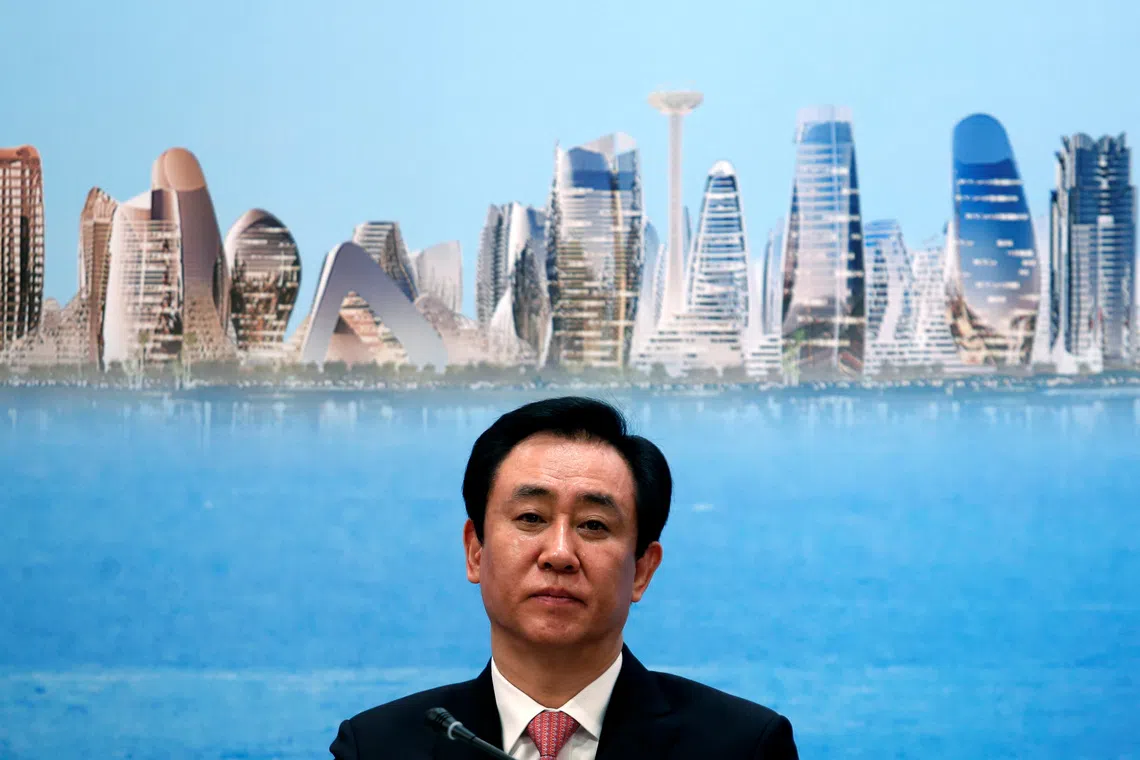
Hui, 67, pleaded guilty in April 2026 after three years in detention, admitting to eight charges that included misuse of funds, fundraising fraud, illegal absorption of public deposits, securities violations, bribery and embezzlement through dividend mechanisms. The court’s statement, quoted by state media Xinhua, described the crime as “exceptionally large” and “particularly heinous”, noting the “exceptionally heavy economic losses” and “extremely grave” harm to society.
“The amount involved in the crime is exceptionally large, the circumstances are particularly heinous, exceptionally heavy economic losses have been caused, and the harm to society is extremely grave.”
Xinhua, state media, via Straitstimes
Evergrande’s collapse, triggered by a default on overseas debt months after Hui’s appearance at the Chinese Communist Party’s centenary celebrations in 2021, turned the developer into a poster child for the sector’s excesses. At its peak the group logged 700 billion yuan in annual sales and owned more than 1,300 projects across 280 Chinese cities. By the time of the sentencing, the company was in liquidation, with creditors in China and abroad still scrambling to recover losses.
Hui’s rise from a Henan village to the helm of a global real‑estate empire is well‑documented. He began as a steel technician, benefitted from a 14‑yuan monthly scholarship that enabled university studies, and launched Evergrande in 1996. By 2017 his net worth peaked at around $45.3 billion, the highest in Asia, before dwindling to an estimated $3 billion in 2023.
"Without the country's policy to reform higher education, I could not have left the village. Without the country giving me a scholarship of 14 yuan every month, I could not have completed university."
Hui Ka Yan, founder, via Chronicle
His public statements repeatedly credited the Communist Party and national reforms for his success, a narrative that the court’s finding now starkly contradicts.
Key moments in the Evergrande saga
- 1996 – Hui founds Evergrande in Guangzhou.
- 2009 – Cheng Yu Tung injects €127 million (≈$150 million) ahead of Evergrande’s Hong Kong IPO.
- 2018 – Hui wins the China Charity Awards for the eighth consecutive year, citing 185 billion yuan in tax payments and over 10 billion yuan in donations.
- 2020 – Government crackdown on excessive borrowing; regulators warn Evergrande to curb debt.
- 2021 – Hui appears at the Party’s centenary celebrations, a signal of official backing.
- 2024 – Regulators accuse the onshore unit of inflating revenue by more than 560 billion yuan; PwC’s audit licence is suspended.
- April 2026 – Hui pleads guilty to eight charges.
- 20 August 2026 – Shenzhen court delivers life sentence and fines.
The sentencing dovetails with a broader pattern of punitive actions against Chinese corporate magnates. Previous high‑profile cases include the 18‑year sentence handed to Anbang Group’s former chairman Wu Xiaohui in 2018 and the execution of Huarong Asset Management head Lai Xiaomin in 2021 on bribery and corruption charges. These precedents underscore the government’s resolve to enforce “severe punishment” for financial misconduct, especially where large‑scale public losses are involved.
Evergrande’s liquidation continues under the oversight of Hong Kong‑appointed liquidators, who have declined to comment on the court’s ruling. Creditors are still evaluating the firm’s asset pool, which spans residential projects, water bottling, professional soccer, and electric vehicles, in hopes of salvaging portions of the “heavy losses” cited by the court.
For ongoing coverage of Evergrande’s fallout, see our dedicated business report and the broader Business section.
How significant is this development?
Contribute your assessment to the aggregated reader sentiment ledger.
Frequently Asked Questions
Key questions answered in this reportWhat is the key development in: Hui Ka Yan sentenced to life in prison for fraud by Shenzhen court?
China Evergrande founder Hui Ka Yan has been sentenced to life in prison for large-scale fraud by a Shenzhen intermediate people's court.
Why is this Business development significant for the UK?
This report covers critical events in our Business beat. Independent reporting monitors related UK statements, regulatory shifts, and public responses as further verified details emerge.
How was this reporting corroborated and verified?
Newsarchy UK compiles and cross-references reporting from primary reporting from chronicle.lu and cross-checked wire reports. All coverage adheres to published editorial standards.
When was this report published?
This briefing was published on August 20, 2026 and is permanently cataloged in the Newsarchy UK Business archives.