Fed Chair Kevin Warsh mulls cutting Fed meeting frequency
Federal Reserve Chair Kevin Warsh is considering reducing the frequency of central bank meetings as part of a broader internal overhaul, sparking uncertainty in Treasury markets.
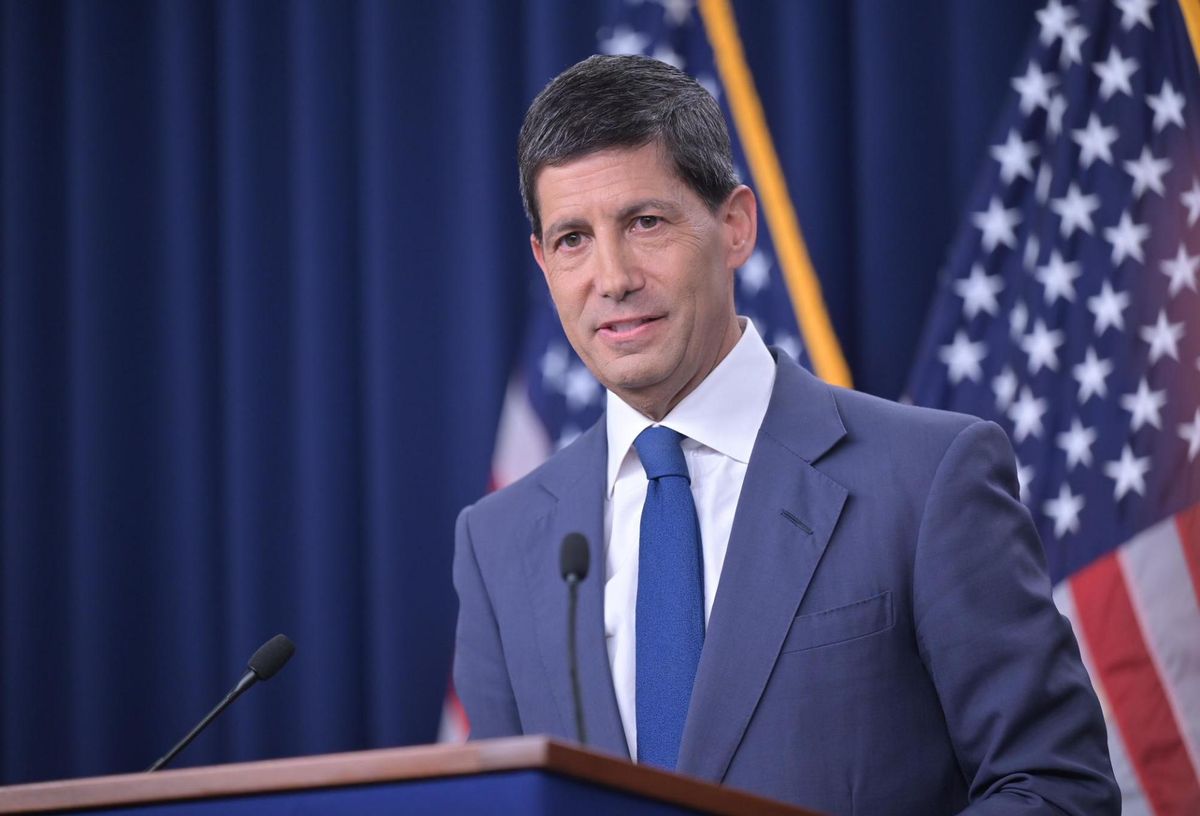
The proposal emerged alongside a 9‑3 vote to keep the policy rate unchanged for the fifth consecutive meeting. Warsh’s remarks sparked a scramble in Treasury markets, with the 10‑year yield hovering near 4.7% as traders wrestled with an uncertain policy rhythm.
Warsh’s own words were terse. He spoke of the inflation target repeatedly but stopped short of signalling readiness to act. The ambiguity prompted Evercore ISI analyst Krishna Guha to write, “We think that the bond market is not mainly responding to the July decision, but rather to the uncertainty regarding the strategy the Fed chair intends to follow to deliver price stability,” a sentiment that echoed across the trading floor.
"We think that the bond market is not mainly responding to the July decision, but rather to the uncertainty regarding the strategy the Fed chair intends to follow to deliver price stability,"
Krishna Guha, head of central banking strategy and economics for Evercore ISI, via Bisnow
Warsh’s hint at a reduced meeting cadence complemented a broader internal overhaul. At his first meeting in July, he unveiled five task forces charged with reviewing the Fed’s data analytics, communications, balance‑sheet management and other core functions. The groups are meant to “examine every aspect of how the central bank tracks the economy, considers policy and makes decisions,” according to the source material.
Under the existing framework, the 12‑member FOMC meets eight times a year. Warsh’s suggestion would carve out fewer scheduled sessions, with any formal alteration expected before the next meeting in mid‑September, as reported by Finance.
Market reaction was swift. After the Fed’s decision, 10‑year Treasury yields rose four basis points, flirting with 4.75% by Friday – a level above the 4.5% ceiling that many commercial‑real‑estate analysts had flagged as a stress point during the ultra‑low‑rate era.
Investors also noted Warsh’s tentative stance on post‑decision press conferences, which he indicated might be scaled back to “streamline policy messaging.” The combination of fewer meetings and slim briefings could compress the flow of information that traders rely on to price future moves.
Opinion among market economists was split. J.P. Morgan chief economist Michael Feroli warned that the task forces might serve to “redefine the inflation challenge away,” suggesting doubts about Warsh’s credibility in delivering lower inflation. Meanwhile, Bank of America economist Aditya Bhave observed that a need to re‑establish credibility could heighten the odds of a rate hike in September, assuming all else remains equal.
"These comments seem to confirm suspicions that the task forces are just covers to redefine the inflation challenge away,"
Michael Feroli, chief economist, J.P. Morgan, via Finance
Former St. Louis Fed president James Bullard, speaking on Bloomberg TV, noted that Warsh “only talked about the inflation target itself, without saying that we’re ready to take action,” a tone that “markets didn’t like.”
The backdrop to this policy debate is a stubborn core personal consumption expenditures (PCE) price index that stood at 3.4% in May and edged to 3.3% in June, according to the latest data released after the meeting. The Fed’s 2% target remains elusive, a fact Warsh reiterated multiple times during the press conference.
Four of the five dissenting governors – Beth Hammack of the Cleveland Fed, Neel Kashkari of Minneapolis, Lorie Logan of Dallas and another unnamed member – signaled that a more aggressive stance was warranted. Hammack urged “the FOMC to act to speed the return of PCE inflation to our 2 percent objective,” while Kashkari warned that “waiting risked faster rate movement in the future.”
Readers can follow the ongoing debate in related coverage, including the Fed’s decision to hold rates steady and its implications for commercial‑real‑estate financing.

