OpenAI launches ChatGPT Work agent alongside GPT-5.6 model rollout
OpenAI has launched the GPT-5.6 model family and the ChatGPT Work platform, which integrates agents into enterprise tools to automate multi-step projects.

- Core Development: OpenAI has launched the GPT-5.6 model family and the ChatGPT Work platform, which integrates agents into enterprise tools to automate multi-step projects.
- Beat Context: Categorized under Business with independent corroboration.
- Reporting Depth: 3 minute analytical read synthesized from verified newsroom sources.
OpenAI has officially released its GPT-5.6 model family and a new agentic platform, ChatGPT Work, following a period of restricted access. The rollout follows a decision by the US government to allow the public release of the models after an initial limited preview period focused on evaluating advanced cybersecurity and biology capabilities. This transition aims to shift the competitive focus in the enterprise sector from raw model benchmarks to operational efficiency and performance per dollar.
The company describes the release as a move to help users delegate entire projects rather than relying on isolated interactions. By integrating its Codex technology into the ChatGPT ecosystem, OpenAI intends to enable automated workflows that span files, applications, and desktop environments. These agents are designed to execute long-running tasks, such as generating marketing assets or reconciling financial data, while allowing users to monitor progress and approve actions. According to OpenAI, the platform is designed to help organizations automate knowledge work while maintaining enterprise-grade governance and security.
Media additions


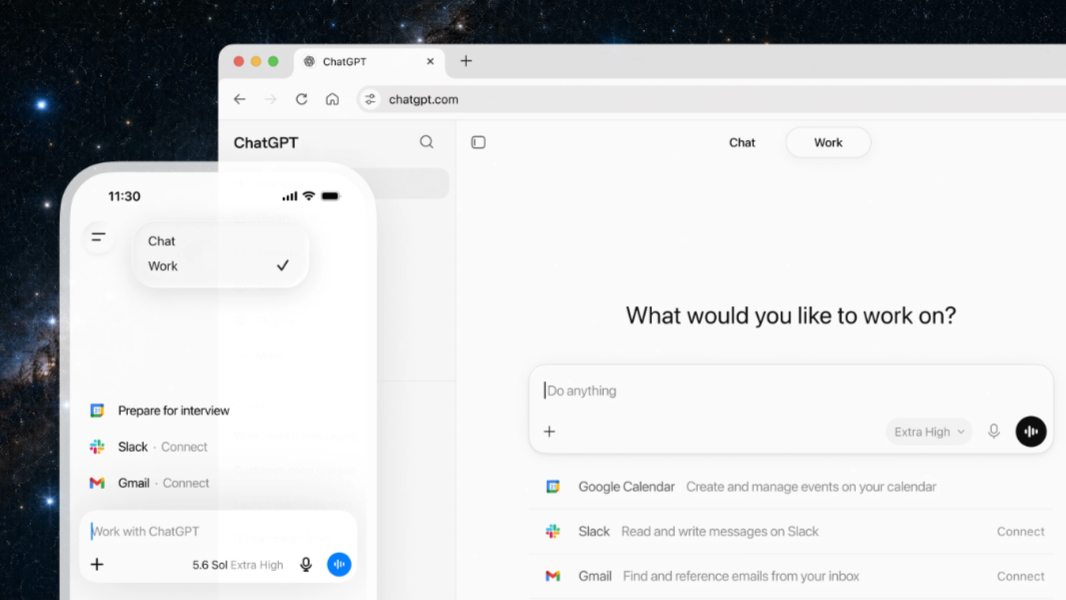
Model Tiering and Performance
The GPT-5.6 family consists of three distinct models tailored to different operational needs. According to OpenAI, the models emphasize efficiency to combat rising inference costs, a growing concern for leadership teams as they move beyond experimental phases into production-grade workloads.
| Model | Primary Use | Input Price (per 1M tokens) | Output Price (per 1M tokens) |
|---|---|---|---|
| Sol | Complex Reasoning | $5 | $30 |
| Terra | Mainstream Enterprise | $2.50 | $15 |
| Luna | High-Volume/Low-Cost | $1 | $6 |
Industry analysts note that the strategy reflects a shift in how organizations procure technology. Faisal Kawoosa, co-founder and chief analyst at Techarc, suggests that the exploratory stage of this technology is ending, and performance per dollar will determine whether these tools become core business infrastructure or remain ad hoc experiments. While OpenAI claims its flagship Sol model achieves superior performance in coding and professional workflows, some experts maintain that CIOs will continue to demand higher levels of transparency regarding safety guardrails and automated monitoring. Neil Shah, vice president for research and partner at Counterpoint Research, noted that rising token consumption has created bill shocks for enterprises, forcing them to adopt different models for different workloads.
Agentic Capabilities and Governance
ChatGPT Work is designed to act as a workspace collaborator. By connecting to enterprise tools like Slack, Microsoft Teams, Google Drive, SharePoint, and Notion, the agent can perform multi-step tasks across systems. OpenAI claims that the agent holds context throughout a project, removing the need for users to repeat instructions at each stage. For instance, teams can task the agent with monitoring account activity to refresh dashboards or reconciling monthly budget variances.
Governance remains a primary concern for the company. To manage access, OpenAI provides administrative controls that allow Enterprise and Edu users to define which applications the agent can access, the context it can utilize, and the specific actions it is authorized to take. A compliance API is also available to provide oversight of actions and conversations at scale. On desktop, the product builds on the enterprise governance model to extend safeguards to local files, apps, and browsers.
Market Context
The launch arrives as competition intensifies between major model providers. Observers view the release as a direct effort to counter the momentum of competitors. While OpenAI emphasizes its robust safeguards, including extensive red-team evaluations, the integration of agentic features into desktop environments brings new risks. Regarding the new models, CEO Sam Altman described the release as the best model the company has ever produced.
What to Watch Next
- Rollout Timeline: Access is currently available for Pro, Enterprise, and Edu users on web and mobile, with Plus and Business plans receiving access over the next few days. The updated desktop app is available globally for Mac and Windows.
- Transitioning Legacy Tools: The company is sunsetting its Atlas browser product and merging the standalone Codex app into the unified ChatGPT desktop experience.
- Usage Metering: Because ChatGPT Work executes long-running tasks, it will be metered based on complexity, requiring administrators to monitor spend controls as adoption increases.
How significant is this development?
Contribute your assessment to the aggregated reader sentiment ledger.
Frequently Asked Questions
Key questions answered in this reportWhat is the key development in: OpenAI launches ChatGPT Work agent alongside GPT-5.6 model rollout?
OpenAI has launched the GPT-5.6 model family and the ChatGPT Work platform, which integrates agents into enterprise tools to automate multi-step projects.
Why is this Business development significant for the UK?
This report covers critical events in our Business beat. Independent reporting monitors related UK statements, regulatory shifts, and public responses as further verified details emerge.
How was this reporting corroborated and verified?
Newsarchy UK compiles and cross-references reporting from primary reporting from thenextweb.com and cross-checked wire reports. All coverage adheres to published editorial standards.
When was this report published?
This briefing was published on July 10, 2026 and is permanently cataloged in the Newsarchy UK Business archives.