RBA Faces Scrutiny Over 8.5 Billion Loss As Unemployment Rises
The Reserve Bank of Australia faces scrutiny following an AU$8.5 billion accounting loss, a weakening labour market, and discussions surrounding Governor Michele Bullock's remuneration package.

- Core Development: The Reserve Bank of Australia faces scrutiny following an AU$8.5 billion accounting loss, a weakening labour market, and discussions surrounding Governor Michele Bullock's remuneration package.
- Beat Context: Categorized under Business with independent corroboration.
- Reporting Depth: 3 minute analytical read synthesized from verified newsroom sources.
The Reserve Bank of Australia faced renewed scrutiny on 15 October 2026 following reports of an AU$8.5 billion accounting loss for FY2026, alongside concerns surrounding Governor Michele Bullock's remuneration. The developments emerged as Australia's labour market showed signs of weakening, complicating the central bank's efforts to contain inflation without placing excessive pressure on households and businesses.
The reported loss reflects valuation pressures associated with rising bond yields and Australian dollar movements. However, central bank accounting losses do not necessarily undermine its ability to implement monetary policy. Nevertheless, the figures compound broader questions regarding the long-term balance sheet management stemming from pandemic-era liquidity operations.
Media additions

Employment declined by 39,300 positions, while the unemployment rate stood at 4.7%, its highest level in nearly five years. Part-time employment fell by 73,700 positions, partly offset by 34,400 additional full-time jobs. The cooling labour market led financial investors to scale back expectations of imminent monetary tightening.
Following September's 25-basis-point increase, the RBA's cash rate stands at 4.60%, according to Kapitales, while World Socialist Web Site reports the rate at 4.6 percent. Market pricing for a subsequent rate rise in November receded amid mounting concerns over slowing economic activity and household mortgage stress. Polling data cited by World Socialist Web Site indicates that nearly a third of mortgage holders view themselves as being at risk of mortgage stress.
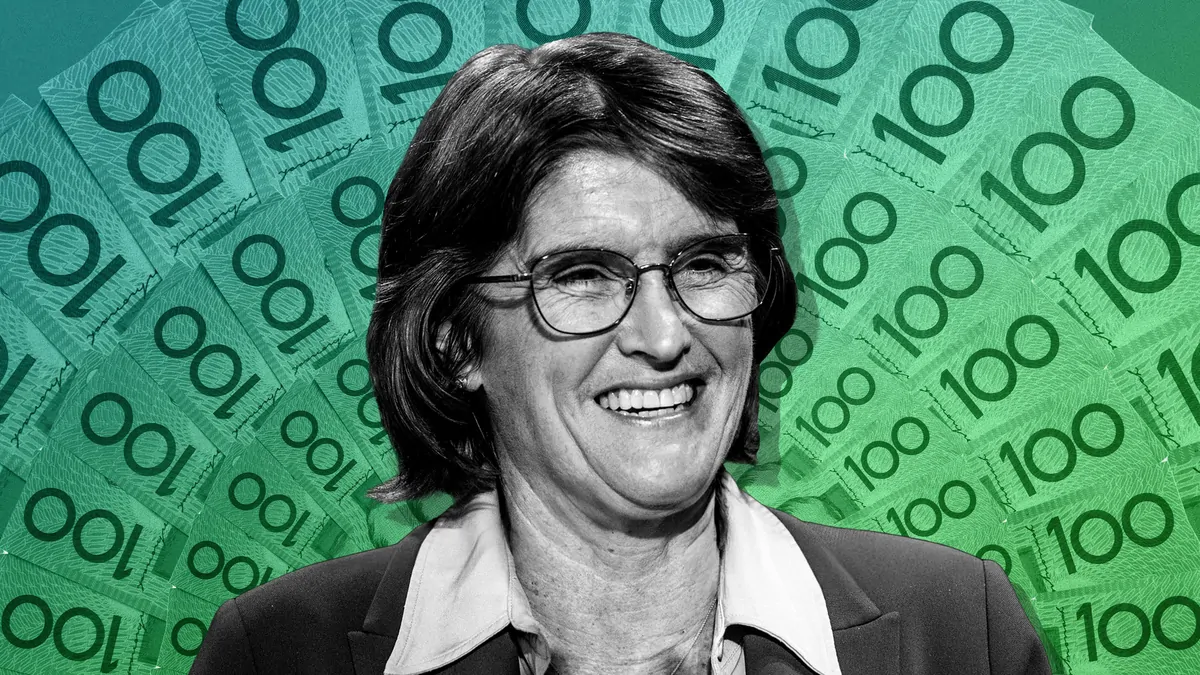
Executive compensation at the central bank added another layer of public debate. According to The Nightly, Reserve Bank of Australia governor Michele Bullock received a base salary of $987,132, which increased to $1,195,275 when the central bank’s generous superannuation scheme and other allowances were included, according to its annual report. This compensation package surpasses that of the nation's Prime Minister and towers over the pay of United States Federal Reserve Chairman Jerome Powell. Economists consulted by The Nightly noted that central bank governors enjoy fixed contracts and strong institutional independence compared to corporate executives or elected officials.
| Official / Executive | Institution | Remuneration Details |
|---|---|---|
| Michele Bullock | Reserve Bank of Australia | Base salary of $987,132; total package near $1.2 million including superannuation and allowances (The Nightly) |
| Andrew Hauser | Reserve Bank of Australia | Remuneration of $879,714 (The Nightly) |
| Adrian Orr | Reserve Bank of New Zealand | Remuneration of $804,802, reflecting a decrease from the prior year due to accrued annual leave balance changes (Interest) |
| Jerome Powell | US Federal Reserve | Package equivalent to approximately $290,000 AUD, set by congressional legislation rather than an independent tribunal (The Nightly) |
Across the Tasman Sea, the Reserve Bank of New Zealand charted a different financial course, announcing its first dividend payment to the Crown in three years following an agreement with the Minister of Finance. The New Zealand central bank reported a surplus driven by higher net Interest income, even as its governor experienced a minor reduction in total remuneration due to shifting annual leave balances, according to Interest.
Back in Australia, policymakers continue to navigate competing pressures from persistent price growth and softening employment metrics. Economists and market observers are weighing whether the central bank will pause its tightening cycle or pursue additional rate hikes in the face of international energy volatility and domestic cost pressures.
What to Watch Next
- Australia's September-quarter inflation figures, scheduled for release on 28 October 2026, which will heavily influence expectations for the upcoming monetary policy meeting (Kapitales).
- The Reserve Bank of Australia's subsequent interest rate decision and board announcements regarding the cash rate target.
- Ongoing parliamentary and public commentary concerning public sector executive remuneration and fiscal strategy.
How significant is this development?
Contribute your assessment to the aggregated reader sentiment ledger.
Frequently Asked Questions
Key questions answered in this reportWhat is the key development in: RBA Faces Scrutiny Over 8.5 Billion Loss As Unemployment Rises?
The Reserve Bank of Australia faces scrutiny following an AU$8.5 billion accounting loss, a weakening labour market, and discussions surrounding Governor Michele Bullock's remuneration package.
Why is this Business development significant for the UK?
This report covers critical events in our Business beat. Independent reporting monitors related UK statements, regulatory shifts, and public responses as further verified details emerge.
How was this reporting corroborated and verified?
Newsarchy UK compiles and cross-references reporting from primary reporting from World Socialist Web Site and cross-checked wire reports. All coverage adheres to published editorial standards.
When was this report published?
This briefing was published on October 16, 2026 and is permanently cataloged in the Newsarchy UK Business archives.