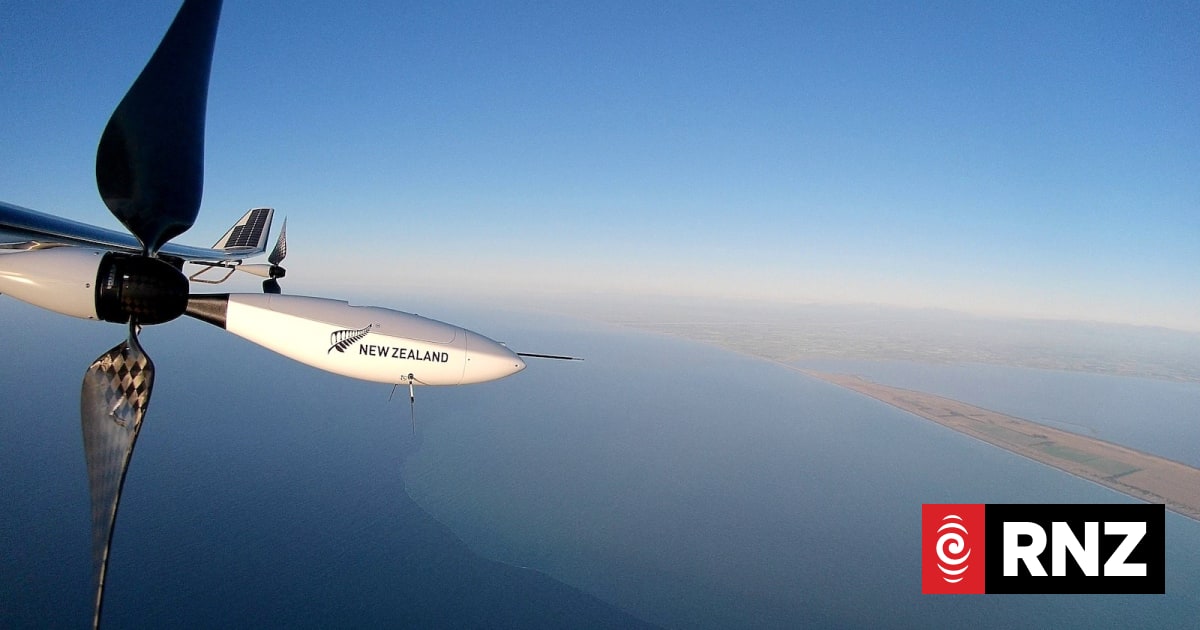
Tāwhaki seeks overseas private funding for NZ's second launch pad
Tāwhaki is hunting for private overseas investment to construct a second rocket launch pad in New Zealand, bypassing limited government funding amid surging global demand.
Tāwhaki seeks overseas private funding for NZ's second launch pad
EXECUTIVE BRIEFKey Takeaways & Signal
Core Development: Tāwhaki is hunting for private overseas investment to construct a second rocket launch pad in New Zealand, bypassing limited government funding amid surging global demand.
Beat Context: Categorized under Business with independent corroboration.
New Zealand’s National Aerospace Centre – operating as Tāwhaki – has shifted from a government‑driven pause to a hunt for overseas private money to build a second launch pad on Kaitorete Spit. The move comes as global demand for vertical launch services sharpens and competitors race to lock in new sites.
There is a lot more intensity around vertical launch services
Media additions
Image via theconversation.comImage via nola.comImage via newsweek.com
John Holt, acting chief executive, via RNZ
” than a year ago. He added that the centre is “as close as somebody giving us the commercial basis to push ‘go’ on a build.” Holt expects an overseas‑backed test pad could be ready within two years if a commercial sponsor materialises.
European interest is modest but concrete. Holt said “less than five” firms have engaged after trips to the United States and Europe. While he declined to name them, he highlighted the geographical advantage for European operators, noting that “launch times have been cut from two years to just 10 weeks in some US projects.” The centre is positioning itself as a “long‑term candidate for supporting European vertical launch requirements,” according to briefing documents released to Space Minister Chris Penk.
Government support remains limited. Penk confirmed that the Crown has injected $35 million since 2021, but recent briefings stress that “the fiscal context suggests the Crown will be unlikely to provide more investment at the moment.” The lack of dedicated subsidies, a “key challenge” flagged in official briefings, means the onus now sits on private capital.
Even so, New Zealand is not standing still. The nation lifted its cap on annual launches from 100 to 1 000 and halved the approval window for payloads, cutting it from 11 weeks to 5.5 weeks. The permanent Special Use Airspace zone and streamlined aerospace regulations are touted as competitive advantages for operators willing to test‑flight from Tāwhaki.
International context
Across the Pacific, SpaceX is pushing the envelope of what rockets can carry. Its Starfall demo mission, launched on June 23 2026, showcased rockets as ultra‑fast cargo carriers for both Earth‑to‑Earth and Earth‑to‑orbit deliveries. The project underlines a broader market shift: governments and defence agencies, which the RNZ briefing cites as “dual demand,” are increasingly eyeing rapid launch capability for emergency logistics and satellite replacement.
SpaceX’s ambitions are not without risk. A Falcon 9 upper stage, originally used for lunar landers, collided with the Moon in early 2026, creating a crater roughly 60 feet wide, according to Newsweek. While the impact was described as modest, the incident highlighted the need for robust tracking and the scientific value of accidental lunar impacts.
In the United States, SpaceX’s capital spending surged to $18.4 billion in the latest quarter, with $15.8 billion tied to an AI build‑out, reported by Morningstar. The scale of private spend contrasts sharply with New Zealand’s restrained public funding, reinforcing Holt’s view that “a trillion‑dollar market” will require private partners to capture the “sliver of that market which is great for the New Zealand economy.”
Elsewhere, Canada sealed a military‑led spaceport lease in Nova Scotia for CA$200 million over ten years, a benchmark mentioned by Holt when discussing “scale.” The United Kingdom, meanwhile, has suffered setbacks after a rocket explosion in 2024 and the collapse of two launch firms, underscoring the volatility of state‑supported programmes.
Stakeholder perspectives
Government: Penk stresses that past aerospace R&D “has been ad hoc” and that future co‑investment “would be expected by vertical launch operators” seeking a foothold at Tāwhaki.
Industry: Holt’s comments reflect optimism that “dual‑use” activities – commercial launches and defence‑related radar tracking – can co‑exist under “clear boundaries.”
International partners: European firms see Tajwhaki’s southern latitude as a “geographical advantage,” while NATO’s STARLIFT observer status points to potential collaborative launches for allied satellites.
Timeline of recent developments
2021 – NZ government injects $35 million into Tāwhaki.
Early 2025 – New Zealand lifts launch‑cap limit to 1 000 per year.
March 2025 – Canada announces CA$200 million Nova Scotia spaceport lease.
June 2026 – Holt returns from Europe with “less than five” interested investors; briefings to Penk flag urgent capital need.
July 2026 – SpaceX’s Falcon 9 stage impacts the Moon, prompting scientific interest.
August 2026 – Tāwhaki’s board slated to confirm dual‑use policy; Holt’s US trip to pitch investors scheduled for later this month.
What to watch next
The upcoming board decision on dual‑use launch policy, which will shape eligibility for overseas investors.
Potential signing of a memorandum of understanding with a European aerospace firm during Holt’s US visit.
Further NATO STARLIFT discussions that could position Tāwhaki as a backup launch node for allied satellites.
Continued monitoring of SpaceX’s cargo‑rocket market, which may alter demand dynamics for New Zealand’s vertical launch services.
With the New Zealand aerospace sector pivoting back to rockets after an 18‑month diversion to advanced aviation, Tāwhaki’s success hinges on securing the “commercial ignition” Holt described. The mix of heightened global launch demand, government‑driven regulatory reforms, and a patchwork of international funding offers both opportunity and uncertainty. If private overseas capital materialises, the second pad could become an anchor for dual‑use missions, bolstering New Zealand’s role in the trillion‑dollar space economy while keeping the Crown’s fiscal exposure low.
READER INTELLIGENCE PULSE
How significant is this development?
Contribute your assessment to the aggregated reader sentiment ledger.
Click an option to register your anonymous assessment.
Frequently Asked Questions
Key questions answered in this report
What is the key development in: Tāwhaki seeks overseas private funding for NZ's second launch pad?
Tāwhaki is hunting for private overseas investment to construct a second rocket launch pad in New Zealand, bypassing limited government funding amid surging global demand.
Why is this Business development significant for the UK?
This report covers critical events in our Business beat. Independent reporting monitors related UK statements, regulatory shifts, and public responses as further verified details emerge.
How was this reporting corroborated and verified?
Newsarchy UK compiles and cross-references reporting from primary reporting from nola.com and cross-checked wire reports. All coverage adheres to published editorial standards.
When was this report published?
This briefing was published on August 5, 2026 and is permanently cataloged in the Newsarchy UK Business archives.