White House copper tariff plan stalls amid affordability concerns, sources say
The White House has not yet made a decision on whether to impose refined copper tariffs as officials weigh domestic mining goals against manufacturing costs.

The White House has not yet made a decision on refined copper tariffs, with administration officials weighing the objective of encouraging domestic mining against the risk of driving up manufacturing costs, according to London South East reporting. The hesitation comes as President Donald Trump's administration faces intense political pressure ahead of November's midterm elections to demonstrate that its economic policies are actively lowering the cost of living for American consumers and businesses rather than contributing to inflation.
Global copper prices have surged to record highs as industrial buyers and traders rush to build massive inventories inside the United States in anticipation of potential new duties. According to World Energy News reporting, the administration has been considering levies on refined products such as cathode and mine-site copper concentrate as part of a wider effort to rebuild domestic manufacturing. Yet, this approach creates a complex policy tension. While tariffs could improve the commercial economics for U.S. Mining, smelting, and refining projects—such as the Resolution Copper project in Arizona and the Twin Metals project in Minnesota—they simultaneously threaten to raise input costs for manufacturers producing electrical equipment, automobiles, and construction goods.
Media additions
The United States currently imports roughly half of its annual copper needs and operates only two domestic copper smelters, owned by Freeport-McMoRan and Rio Tinto respectively. U.S. Refined copper imports have jumped 16-fold since 2015 while domestic production slipped 20%, figures detailed by London South East using U.S. Geological Survey data highlight. At the same time, the country holds an estimated 30 years' worth of copper supply within its borders. Trade policy has already touched parts of the sector: after stopping short of a blanket metal tariff in July 2025, the administration imposed targeted levies on pipes, wiring, and semi-finished products, followed by further tightening in April 2026, as noted by ABC Money.
Commerce Secretary Howard Lutnick received an update on the copper market by a June 30 deadline, which included a previously floated proposal for a 15% tariff starting on January 1, 2027, rising to 30% in 2028. However, the precise recommendation Lutnick delivered to the president has not been made public. Market analysts point out that tariff uncertainty has effectively trapped metal inside the U.S. And discouraged exports to international markets. Jacob White, a minerals analyst at Sprott Asset Management, stated via London South East that the unresolved policy status reduces the incentive to return metal to international markets.
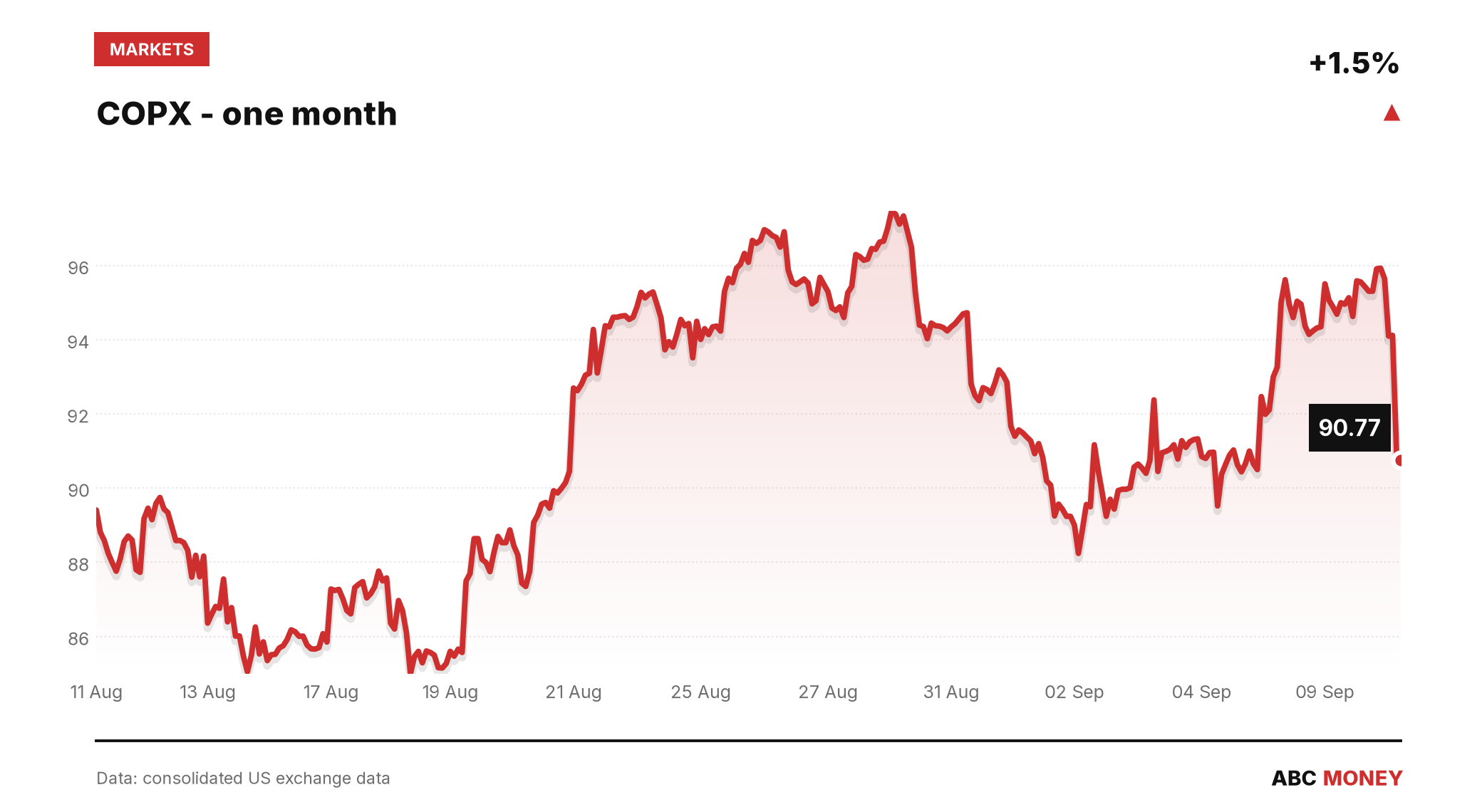
Financial markets reacted swiftly to the reports. Shares of copper producers dropped sharply during midday trading sessions, and specialized investment funds experienced heavy selling pressure. Sector performance data illustrates the immediate market reaction:
| Company / Fund | Asset Type | Market Reaction / Details |
|---|---|---|
| Freeport-McMoRan | Mining & Smelting | Shares fell 7% in midday trading following the initial reports. |
| Rio Tinto | Mining & Smelting | Shares declined by 2.7% amid broader sector losses. |
| BHP | Mining | Shares dropped 4.7% as copper prices lost more than 4%. |
| Global X Copper Miners ETF (COPX) | Listed Producer Fund | Closed 4.68% lower on the day, settling at $90.85. |
A detailed examination of the reporting trail suggests that the narrative of a newly derailed policy may outrun the available documentation. According to ABC Money, the refined-copper decision was already overdue following an earlier June deadline. Because no official Federal Register notice or White House statement has explicitly confirmed a policy stall driven specifically by affordability concerns, that particular framing rests entirely on anonymous sources cited in early reports. Furthermore, trading data showed that short-sale ratios for copper producer funds had already climbed in the days leading up to the announcement, indicating that bearish positioning was building prior to the news breaking.
The broader economic stakes remain immense. Long-term projections from S&P Global suggest that growth across artificial intelligence and defense sectors will boost global copper demand by 50% by 2040. Yet policymakers must weigh these soaring long-term requirements against immediate political sensitivities surrounding inflation and household budgets.
What happens next depends entirely on formal administrative paperwork. Markets and industry participants are awaiting an official Federal Register proclamation or an updated White House fact sheet that definitively addresses whether refined copper duties will be enacted, modified, or shelved. Until those documents are released, the timetable for U.S. Copper policy remains unresolved.