Revealed: Floods have forced at least 67 closures at NHS hospitals
Freedom-of-information requests reveal that flooding has caused over 3,000 days of service disruption across NHS sites, highlighting a need for climate adaptation.

- Core Development: Freedom-of-information requests reveal that flooding has caused over 3,000 days of service disruption across NHS sites, highlighting a need for climate adaptation.
- Beat Context: Categorized under NHS with independent corroboration.
- Reporting Depth: 3 minute analytical read synthesized from verified newsroom sources.
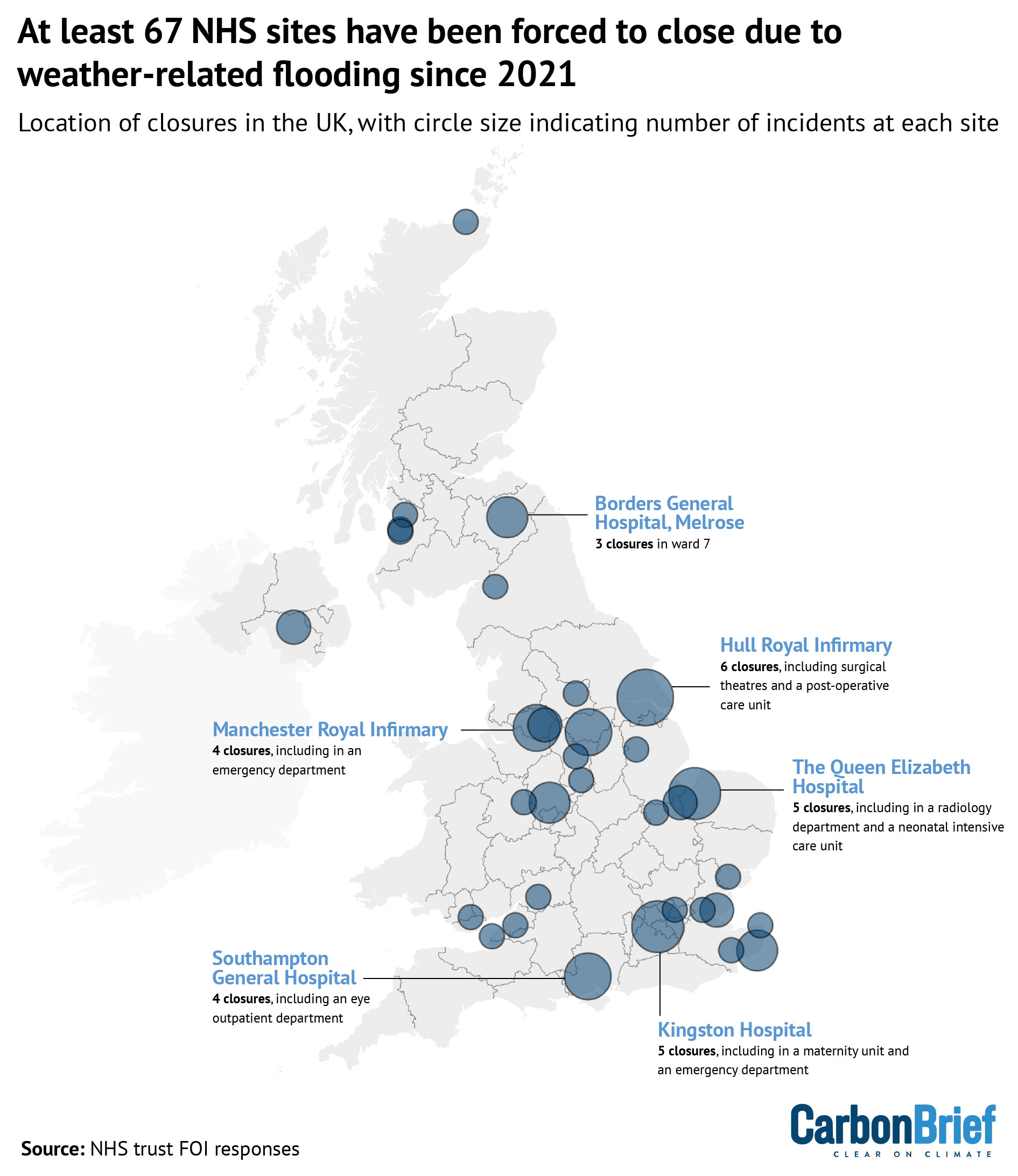
At least 67 NHS hospital wards, departments and other sites across the UK have been forced to temporarily close or relocate due to weather-related flooding over the past five years, a Carbon Brief investigation reveals.
The findings draw on freedom-of-information (FOI) requests sent to 162 NHS trusts. While 148 organisations responded, the 67 flooding-related disruptions reported by NHS trusts and health boards is likely an underestimate. Many trusts told Carbon Brief they did not record such detailed information or that collating it would be too time-consuming. Among the 30 incidents where timespans were provided, the cumulative impact amounted to more than 3,000 days of service disruption.
Media additions

The Scale of Disruption
The impact of flooding on NHS healthcare services has manifested in various ways, often compounding existing operational pressures. Reported incidents include:
- Emergency Care: 13 closures affecting accident and emergency (A&E) departments, urgent treatment centres, and minor injuries units.
- Specialist Services: Significant disruption to maternity units, surgical theatres, and at least one neonatal intensive-care unit.
- Infrastructure Damage: Reports of rainwater “pouring onto expensive equipment” and floods triggering the long-term relocation of services.
- Permanent Closures: For example, Orchard Cottage, a site that provided care for adults with learning disabilities in Derbyshire, experienced major flooding during Storm Babet in 2023 and was permanently shut down as a result.
NHS records show that the number of flood incidents “caused by external weather events” in facilities across England has doubled since 2021, reaching nearly 400 in 2024-25. This trend is occurring against a backdrop of wetter winters and more frequent extreme rainfall events, which experts increasingly link to human-caused climate change.
Infrastructure and Resilience
Many hospitals have outdated infrastructure – often predating the founding of the NHS – which was not designed to cope with climate change. This is further complicated by a backlog of maintenance work at NHS hospitals that was estimated in 2024-25 to need repairs costing £15.9bn. Experts argue that addressing these structural deficits is inherently tied to climate adaptation.
"Dealing with some of the backlog maintenance would probably help with climate adaptation as well, because of leaky roofs and all the rest of it. But we do also need to be thinking specifically about climate adaptation within the NHS and making sure there is funding for that."
Chris Naylor, a senior fellow at the King’s Fund, tells Carbon Brief
While there have been efforts to make UK hospitals more resilient to extreme weather, three-quarters of UK doctors say their workplaces are not prepared for the impact of extreme weather and nearly half of healthcare workers report that extreme weather has disrupted NHS services in the past five years.
Expert Warnings and Future Risks
Environment Agency modelling suggests that a rising share of medical facilities in England will be at risk of flooding due to climate change. It says the share of sites at risk will increase from a quarter in 2024 to a third by the middle of the century. Dr Mark Harber, a consultant nephrologist and special adviser on climate change at the Royal College of Physicians, tells Carbon Brief that hospitals at least need to make plans for extreme weather. This is particularly important for patients in need of time-dependent and life-saving treatments, such as kidney dialysis and chemotherapy.
Prof Hugh Montgomery, chair of intensive-care medicine at University College London, tells Carbon Brief that one expert says such measures are difficult to implement when these institutions are struggling to keep their “heads above water”.
What to Watch Next
The UK’s national adaptation programme sets out expectations for NHS England to “adapt NHS infrastructure to extreme weather events”. All trusts must have “green plans” in place, which require climate change to be factored into infrastructure decisions, for example, through the creation of drainage systems or green spaces.
Carbon Brief asked NHS England – which is responsible for the majority of the trusts that reported flooding disruption – for comment, but had not received a response at the time of publication.
How significant is this development?
Contribute your assessment to the aggregated reader sentiment ledger.
Frequently Asked Questions
Key questions answered in this reportWhat is the key development in: Revealed: Floods have forced at least 67 closures at NHS hospitals?
Freedom-of-information requests reveal that flooding has caused over 3,000 days of service disruption across NHS sites, highlighting a need for climate adaptation.
Why is this NHS development significant for the UK?
This report covers critical events in our NHS beat. Independent reporting monitors related UK statements, regulatory shifts, and public responses as further verified details emerge.
How was this reporting corroborated and verified?
Newsarchy UK compiles and cross-references reporting from primary reporting from carbonbrief.org and cross-checked wire reports. All coverage adheres to published editorial standards.
When was this report published?
This briefing was published on July 7, 2026 and is permanently cataloged in the Newsarchy UK NHS archives.