Britain's new leader shifts power from Downing Street to Manchester with 'No. 10 North
Prime Minister Andy Burnham has opened No. 10 North in Manchester, creating a secondary seat of governance far from Whitehall.
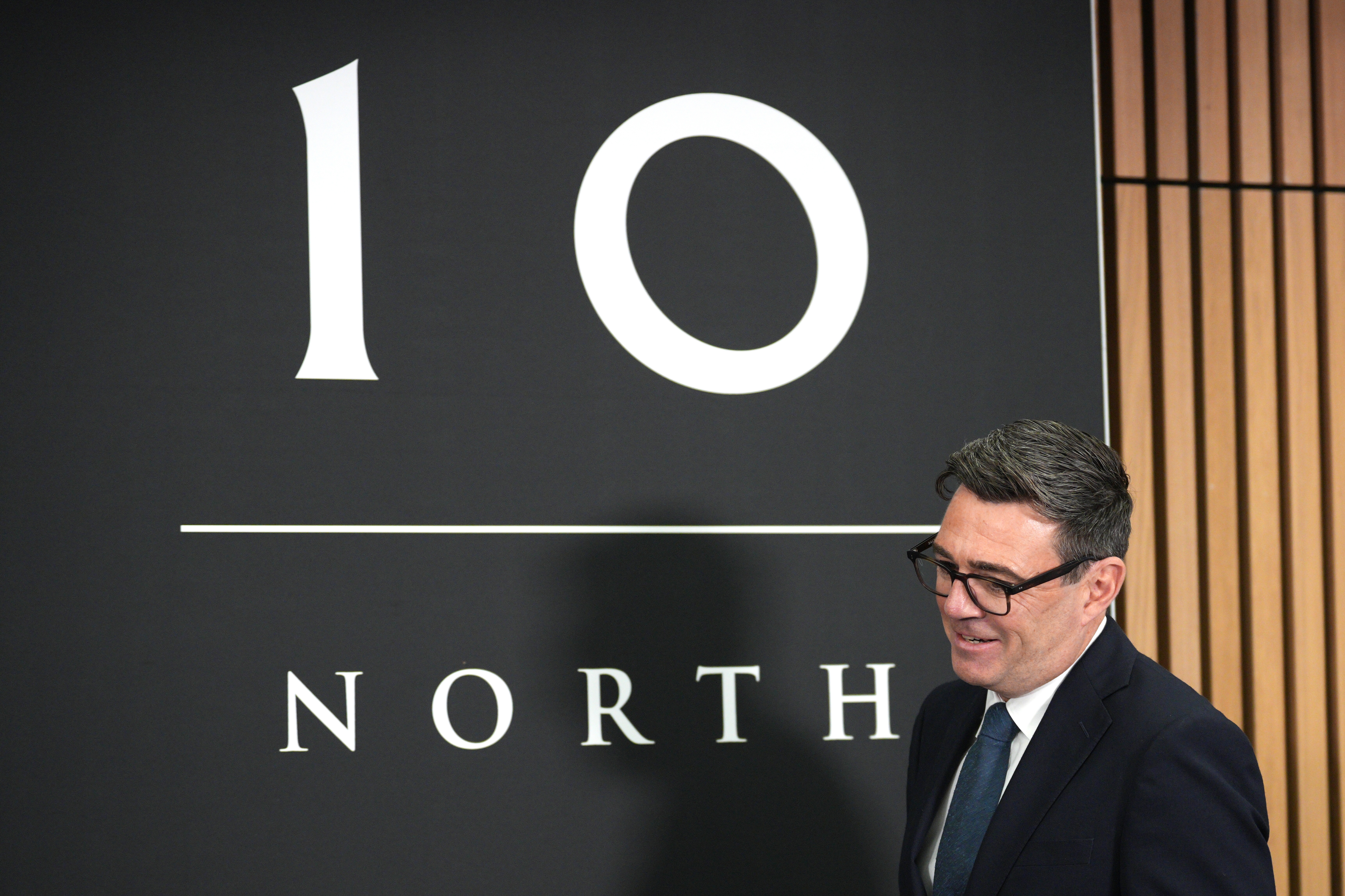
- Core Development: Prime Minister Andy Burnham has opened No. 10 North in Manchester, creating a secondary seat of governance far from Whitehall.
- Beat Context: Categorized under Politics with independent corroboration.
- Reporting Depth: 5 minute analytical read synthesized from verified newsroom sources.
Britain's executive power has undergone a dramatic geographic shift according to primary reporting from Aol, establishing a secondary seat of governance far from the traditional confines of Whitehall. Prime Minister Andy Burnham has officially opened No. 10 North
inside a low-rise office block situated roughly 165 miles from the historical prime ministerial residence at 10 Downing Street. The development forms the cornerstone of Burnham's premiership and directly impacts national politics by attempting to dismantle decades of heavy administrative centralization.
The establishment of the Manchester facility marks a stark departure from how previous British leaders have operated. While past prime ministers typically split their time between London and official countryside retreats, Burnham plans to base himself in the northern hub for at least one working day each week, supported by a full-time cadre of policy experts, aides, and civil servants. Speaking on the matter, Burnham described the initiative not merely as an auxiliary workspace, but as a fundamental change to the way the country thinks about growth and investment
as reported by AP News.
Media additions


The creation of No. 10 North is explicitly designed to distance the current administration from the tenure of Burnham's predecessor, Keir Starmer, who stepped down after facing mounting criticism over policy reversals and sluggish national economic performance. Drawing on his nearly decade-long tenure as mayor of Greater Manchester — where he championed a business-friendly model of decentralized socialism often dubbed Manchesterism
— Burnham aims to replicate local successes on a national scale noted by Aol. During his time as mayor, the city center flourished with skyscraper developments and a municipally managed transit system featuring bright yellow buses and trams, a model later praised by parliamentary colleagues such as Catherine West MP according to coverage by Hamhigh.
As part of this decentralization drive, the prime minister announced that regional mayors will soon retain a larger proportion of income and business tax revenue generated within their boundaries. Burnham hailed the shift as the largest transfer of power, funding, and responsibility from Westminster in a generation, though critical observers have pointed out that crucial financial specifics remain undisclosed as detailed by Aol.
Public Reaction and Regional Discontent
Reactions to the decentralization effort remain sharply divided. Supporters have welcomed the move as an overdue corrective to London-centric policy formulation. Rose Marley, chief executive of Cooperatives UK, praised the accessibility of the new venue per Aol's reporting, noting that it spares regional business figures the burden of constant travel to the capital and introduces diverse perspectives into national policy discussions. Sam Turner, a local nursing lecturer, added that northern realities regarding property values and salaries necessitate tailored regional administration.
Conversely, detractors have dismissed the northern hub as a political gimmick. Academics and regional figures have also questioned whether an office located in Manchester genuinely serves the entirety of the north according to University of Manchester political science professor Rob Ford, who noted that neighboring urban centers like Liverpool, Leeds, and Sheffield might feel overlooked. Other visitors to the region suggested that additional outposts in the east and west of England would be necessary to truly address nationwide geographical disparities.
The initiative has likewise drawn pointed commentary from across the border. Speaking at a festival in Belfast, former Scottish First Minister Nicola Sturgeon offered a critical assessment of the prime minister's regional strategy reported by The National. Sturgeon argued that Burnham maintains a very southern view of what it means to be northern,
asserting that residents further north in places like Newcastle do not view Manchester as the true north of the British mainland. Nevertheless, Sturgeon acknowledged that she hopes Burnham succeeds in office, describing his administration as a vital bulwark against the rise of the Reform UK party.
Cost of Living Measures and National Policy
Alongside the restructuring of executive power, the government has moved to address immediate financial pressures facing households highlighted by Hamhigh. Catherine West MP noted that the cost-of-living crisis remains the primary concern for citizens across constituencies from London to Greater Manchester. In response, the administration has pledged that economic relief will run through the veins of government decision-making, beginning with the abolition of value-added tax on domestic electricity bills.
Public finances and student funding continue to face intense legislative scrutiny as well. Following the release of a parliamentary Treasury Select Committee report examining student loan burdens, which found that students can shoulder up to nearly all the direct cost of their higher education, policymakers are under mounting pressure to recalibrate the financial balance between the individual and the state.
Key Developments in the Shift to No. 10 North
- New Operational Hub: Prime Minister Andy Burnham establishes a working office at Heron House in Manchester, utilizing the space at least one day a week.
- Tax and Power Transfer: Regional mayors are slated to receive a greater share of local income and business tax revenues.
- Political Precedent: The move represents the first time in modern British history that a prime minister has maintained a large-scale operational base outside London.
- Broader Criticisms: Regional commentators and political figures caution that the Manchester office risks focusing attention too narrowly on the North West while neglecting other parts of the country and devolved nations.
As the government settles into its dual-headquarters arrangement, attention turns toward the implementation phase of the promised tax decentralization. Stakeholders across England, Scotland, Wales, and Northern Ireland await further legislative details regarding funding allocations and the long-term viability of balancing executive governance between Whitehall and Manchester.
How significant is this development?
Contribute your assessment to the aggregated reader sentiment ledger.
Frequently Asked Questions
Key questions answered in this reportWhat is the key development in: Britain's new leader shifts power from Downing Street to Manchester with 'No. 10 North?
Prime Minister Andy Burnham has opened No. 10 North in Manchester, creating a secondary seat of governance far from Whitehall.
Why is this Politics development significant for the UK?
This report covers critical events in our Politics beat. Independent reporting monitors related UK statements, regulatory shifts, and public responses as further verified details emerge.
How was this reporting corroborated and verified?
Newsarchy UK compiles and cross-references reporting from primary reporting from apnews.com and cross-checked wire reports. All coverage adheres to published editorial standards.
When was this report published?
This briefing was published on August 1, 2026 and is permanently cataloged in the Newsarchy UK Politics archives.