Britain could face £4trillion bill and 'national bankruptcy' from ...
A Policy Exchange report warns that the UK could face national bankruptcy due to international climate litigation following a landmark UN-endorsed ruling. The think-tank suggests the government consider withdrawing from the ICJ's compulsory jurisdiction to protect against these liabilities.

- Core Development: A Policy Exchange report warns that the UK could face national bankruptcy due to international climate litigation following a landmark UN-endorsed ruling. The think-tank suggests the government consider withdrawing from the ICJ's compulsory jurisdiction to protect against these liabilities.
- Beat Context: Categorized under Politics with independent corroboration.
- Reporting Depth: 5 minute analytical read synthesized from verified newsroom sources.
Britain could face £4 trillion bill and “national bankruptcy” from climate‑change reparations
Policy Exchange has warned that the United Kingdom may be on the brink of a fiscal crisis as historic greenhouse‑gas emissions become the basis for a new wave of international lawsuits. The think‑tank’s paper argues that if Britain is held responsible for roughly 3 per cent of global emissions – a share suggested by the 2023 *Nature Sustainability* study – the liability could exceed £4 trillion. In a worst‑case scenario the authors say lawsuits could force the government to declare “national bankruptcy”.
From advisory opinion to legal exposure
The International Court of Justice issued its advisory opinion on “Obligations of States in respect of Climate Change” in July 2025. The United Nations General Assembly endorsed the opinion in May 2026, giving it unprecedented political weight. The court heard oral arguments in the Hague in December 2024, where a record 96 states and 11 international bodies presented their cases. The UK’s defence that the 2015 Paris Agreement exhausted its climate obligations was rejected; the court found that duties under the United Nations Convention on the Law of the Sea, customary international law and international human‑rights law could give rise to reparations.
Media additions

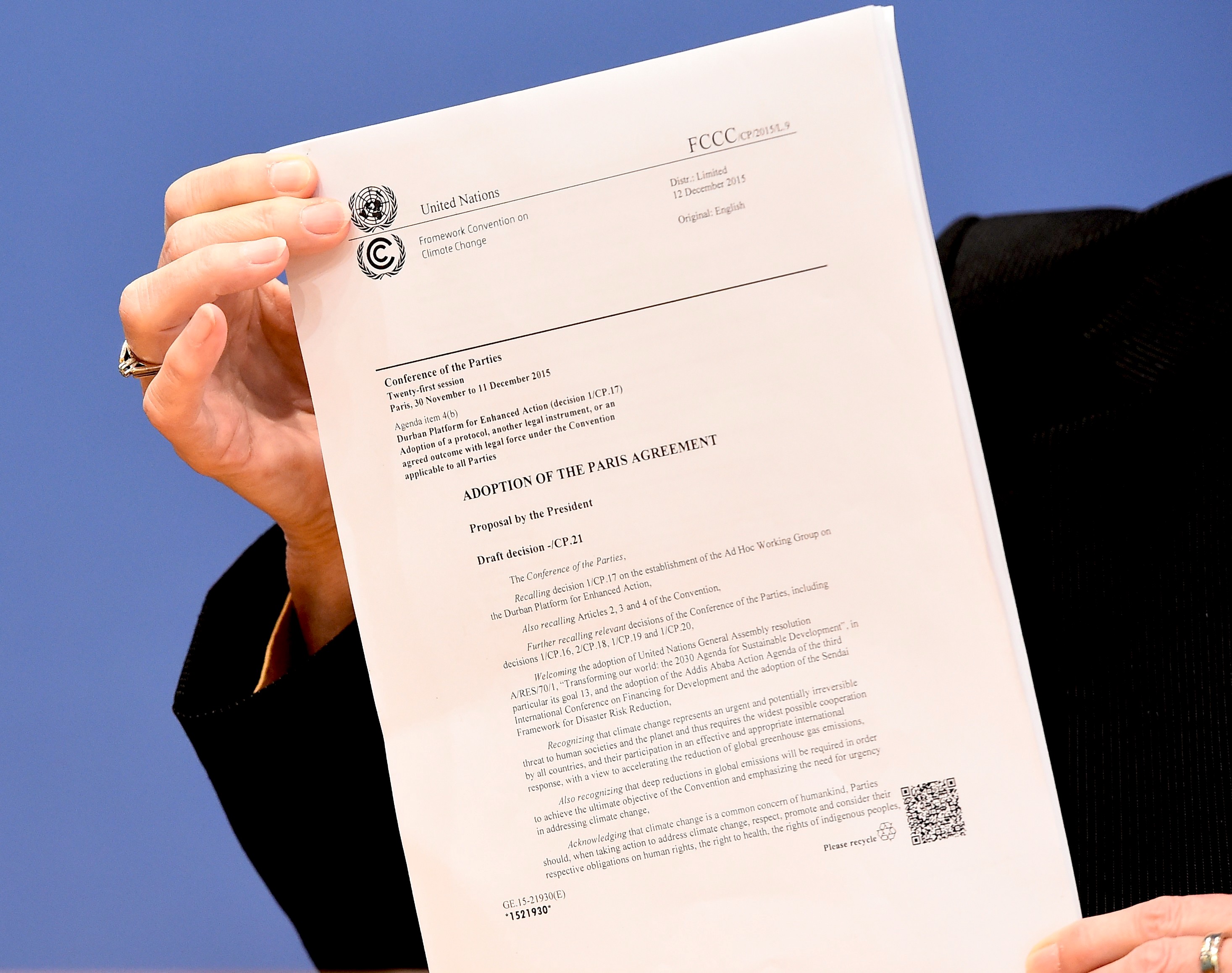

Although non‑binding, the opinion expressly “spurs a further wave of litigation” before international tribunals, a phrase echoed in the Policy Exchange analysis. The report warns that the advisory opinion could be used to challenge future North Sea oil and gas licences, potentially forcing the UK to cease new drilling.
Senior voices sound the alarm
“Climate change is a real and urgent problem; so too is the expanding use of the ICJ’s advisory jurisdiction. It is a matter for our politicians to consider whether to take steps to protect the UK from its consequences.”
Ian Burnett, former Lord Chief Justice of England and Wales, via Express
“The function of a court of law, whether international or domestic, it to declare the law as it is, and not as its judges conceive that it ought to be.”
Jonathan Sumption, former Supreme Court Justice, via London loves business
“Climate change cannot be fought with reparations. International law will not be made stronger by legal over-reach. And energy policy should never be made by judges. Yet the advisory opinion will be pressed into service by those who seek all three.”
Alexander Downer, former Australian foreign minister, via Express
“It has resulted in extraordinary economic growth and the reduction of poverty throughout the world. That is because the rest of the world has chosen to follow Britain, Europe, and the United States and industrialise, especially countries in Asia. It has been, in recent years, China, India, Japan, and many other countries in Asia and Latin America, with much greater populations than the UK, that are having the maximum impact on carbon emissions and climate change.”
Sir Malcolm Rifkind, former Foreign Secretary, via Express
Fiscal pressures already mounting
The Office for Budget Responsibility’s July 2025 fiscal‑risks report paints a stark backdrop. At the end of 2024 the government deficit stood at 5.7 per cent of GDP, roughly four percentage points above the advanced‑economy average. Public‑sector debt was 94 per cent of GDP, the sixth‑highest among 36 advanced economies, and borrowing costs were the third‑highest in the group. The OBR warns that the UK’s public finances are “unsustainable in the long run”.
Net‑Zero transition costs add another layer. The OBR estimates that moving to a net‑zero economy will cost taxpayers over £800 billion across the next two decades, averaging about £30 billion a year to 2051. The package includes nearly £9 billion annually for infrastructure upgrades and a projected £20.5 billion loss of fuel‑duty revenue as electric vehicles replace combustion engines. The OBR notes that the loss of fuel‑duty revenue could become the larger fiscal factor than the direct spending on mitigation.
Meanwhile, the state pension “triple lock” is set to climb from an expected £5.2 billion a year to £15.5 billion by the next election, with a possible £43 billion annual cost by the early 2070s. The OBR also flags a looming decline in demand for gilts from private‑sector defined‑benefit pension schemes, a shift that could push up gilt yields and add another £22 billion in interest costs if debt remains near 100 per cent of GDP.
Climate‑related risks on top of existing strains
The OBR warns that a 3 °C rise in global temperatures could lead to lower economic growth and add 74 per cent of GDP to government debt by the early 2070s.
Political calculations and possible responses
Policy Exchange urges the government to “withdraw from the compulsory jurisdiction” of the ICJ, noting that the UK remains the only permanent UN Security Council member still accepting the court’s compulsory jurisdiction. The think‑tank also calls for a renegotiation of UNCLOS to prevent its “weaponisation” in climate‑change claims.
According to the Spectator, the advisory opinion “abused its advisory jurisdiction” and opened a “new era of climate‑change litigation”. The article suggests that states such as Vanuatu, which led the campaign for the opinion, may eventually bring claims that could challenge new North Sea licences or seek reparations for historic emissions.
The Edie report adds that the ruling could be interpreted as a “legal straitjacket”, potentially shutting down debates on the country’s net‑zero pathway and energy crisis. It repeats the £4 trillion “colossal financial risk” estimate and stresses the need for immediate government action to protect the national interest.
How significant is this development?
Contribute your assessment to the aggregated reader sentiment ledger.
Frequently Asked Questions
Key questions answered in this reportWhat is the key development in: Britain could face £4trillion bill and 'national bankruptcy' from ...?
A Policy Exchange report warns that the UK could face national bankruptcy due to international climate litigation following a landmark UN-endorsed ruling. The think-tank suggests the government consider withdrawing from the ICJ's compulsory jurisdiction to protect against these liabilities.
Why is this Politics development significant for the UK?
This report covers critical events in our Politics beat. Independent reporting monitors related UK statements, regulatory shifts, and public responses as further verified details emerge.
How was this reporting corroborated and verified?
Newsarchy UK compiles and cross-references reporting from primary reporting from express.co.uk and cross-checked wire reports. All coverage adheres to published editorial standards.
When was this report published?
This briefing was published on July 8, 2026 and is permanently cataloged in the Newsarchy UK Politics archives.