Italy's Meloni secures final approval for contested electoral reform
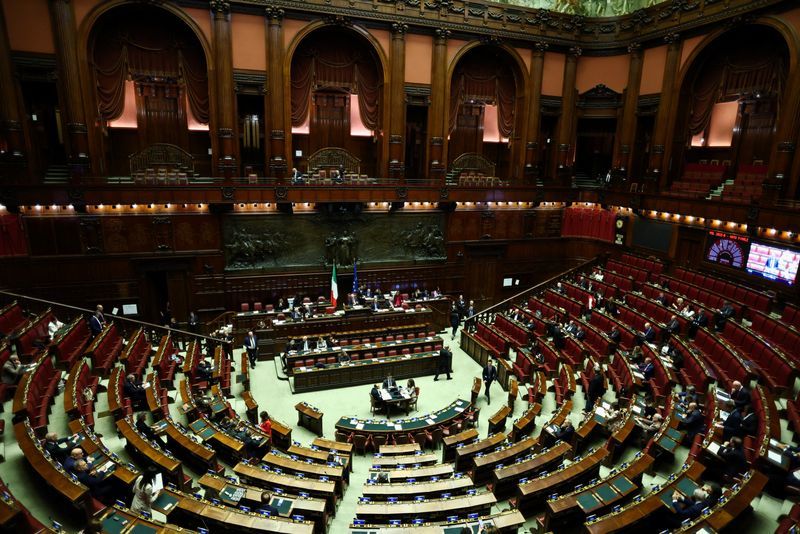
Italy's lower house has given final approval to Prime Minister Giorgia Meloni's contested electoral reform, introducing a fully proportional system with a majority bonus.
- Core Development: Italy's lower house has given final approval to Prime Minister Giorgia Meloni's contested electoral reform, introducing a fully proportional system with a majority bonus.
- Beat Context: Categorized under Transport with independent corroboration.
- Reporting Depth: 4 minute analytical read synthesized from verified newsroom sources.
Italy's lower house of parliament gave final approval on Thursday, 8 October 2026, to a fiercely contested electoral reform championed by Prime Minister Giorgia Meloni according to Reuters reporting via The Star. The legislation, formally known as the Stabilicum and dubbed the Melonellum by its critics, establishes the framework for national elections due next year reported Euronews. While Prime Minister Meloni insists the overhaul is designed to foster stable governance and parliamentary cohesion noted Reuters, opposition parties argue the rules were engineered purely to safeguard her conservative coalition's grip on power explained Yahoo News.
The legislation cleared the Chamber of Deputies following a series of parliamentary readings and confidence votes deployed by the cabinet to limit debate detailed Euronews. Lawmakers in the secret ballot approved the bill by 227 votes to 164 reported Reuters. Under the prior hybrid voting system, roughly two-thirds of lawmakers were elected through proportional representation while the remaining seats were chosen in first-past-the-post constituencies noted Reuters. The new framework moves the country to a fully proportional electoral system augmented by a seat bonus according to Reuters. Any alliance that captures more than 42% of the vote will be awarded additional seats in parliament to guarantee a working majority stated Reuters, specifically gaining 105 additional seats split between the lower house and the senate reported the Bbc.
Media additions


Prime Minister Meloni defended the overhaul on social media immediately after the vote.
Competing factions within the governing coalition clashed over candidate selection mechanisms before reaching a compromise where candidates positioned at the top of party lists automatically receive preference reported Reuters, preserving much of the central leadership's control noted Euronews."We are introducing rules designed to promote the stability and parliamentary cohesion of any government. Whoever wins must be able to govern."
Giorgia Meloni, Prime Minister, via The Star
| Electoral Element | Previous System | New Reform System |
|---|---|---|
| Voting Structure | Hybrid proportional and first-past-the-post | Fully proportional with majority bonus |
| Majority Threshold | Varies by constituency wins | Exceeding 42% national vote share |
| Bonus Allocation | None | 105 additional seats total |
| Candidacy Rule | No mandatory pre-election PM declaration | Mandatory prime ministerial nomination |
Opposition parties mounted fierce resistance during the legislative process. During the chamber sitting, opposition members brandished placards bearing slogans criticising the cabinet reported Euronews. Democratic Party leader Elly Schlein launched a scathing attack on the government's tactics reported Adnkronos.
Schlein further argued that the legislation undermines gender equality provisions and creates excessive hurdles for newcomers by raising signature requirements reported Adnkronos. Five Star Movement leader Giuseppe Conte similarly condemned the changes as an undemocratic maneuver designed to lock in conservative rule noted Yahoo News Singapore."Go ahead and change the electoral law, we will win in any case under any voting system,"
Elly Schlein, Democratic Party leader, via Reuters
Beyond external friction with the left, the legislation introduces stringent structural requirements that complicate coalition building. Parties and alliances must name their designated prime ministerial candidate before the general election reported Reuters. This requirement immediately exposed deep divisions within the fragmented centre-left opposition reported Yahoo News. Schlein and 5-Star leader Giuseppe Conte remain at loggerheads over leadership and policy positions, including differing stances on military support for Ukraine noted Yahoo News. Piero Ignazi, a professor of comparative politics at the University of Bologna, observed that holding primary contests to select a unified candidate could exacerbate personal rivalries and expose policy fractures within the progressive bloc told Yahoo News.
Political dynamics have also shifted due to recent polling trends and new political entrants. When the bill was originally conceived, Meloni's conservative bloc held a comfortable lead in opinion polls reported Reuters. However, the emergence of a new far-right faction, National Future, has eroded support for the established ruling parties noted Reuters. Current surveys show the governing coalition trailing centre-left groupings reported Reuters, leading some analysts to suggest that the electoral reform might ultimately backfire on the prime minister stated Reuters.
Attention now turns to potential legal challenges and the precise timeline for the next national ballot. Opposition critics have identified multiple elements of the new law that they intend to challenge in the Constitutional Court, including the senate majority bonus, the absence of strict gender balance mandates for lead candidates, and steep signature thresholds for unrepresented groups reported Euronews. While the current legislative term runs until September 2027 noted Euronews, political scientists note that an early election before mid-April remains unlikely because lawmakers must reach the threshold required to secure their parliamentary pensions reported Euronews.
How significant is this development?
Contribute your assessment to the aggregated reader sentiment ledger.
Frequently Asked Questions
Key questions answered in this reportWhat is the key development in: Italy's Meloni secures final approval for contested electoral reform?
Italy's lower house has given final approval to Prime Minister Giorgia Meloni's contested electoral reform, introducing a fully proportional system with a majority bonus.
Why is this Transport development significant for the UK?
This report covers critical events in our Transport beat. Independent reporting monitors related UK statements, regulatory shifts, and public responses as further verified details emerge.
How was this reporting corroborated and verified?
Newsarchy UK compiles and cross-references reporting from primary reporting from euronews.com and cross-checked wire reports. All coverage adheres to published editorial standards.
When was this report published?
This briefing was published on October 8, 2026 and is permanently cataloged in the Newsarchy UK Transport archives.