NATO condemns Russia nuclear threats over Kaliningrad enclave
NATO has strongly condemned a Russian diplomatic warning threatening a nuclear response if the alliance attempts to isolate the Kaliningrad exclave.

- Core Development: NATO has strongly condemned a Russian diplomatic warning threatening a nuclear response if the alliance attempts to isolate the Kaliningrad exclave.
- Beat Context: Categorized under Transport with independent corroboration.
- Reporting Depth: 4 minute analytical read synthesized from verified newsroom sources.
NATO has strongly condemned what it termed irresponsible Russian nuclear rhetoric after Moscow warned the alliance of a potential atomic response should its Baltic exclave of Kaliningrad face any attempt at isolation, according to reports from Yahoo News and Metro. The diplomatic escalation marks a tense new chapter in regional security, bringing renewed focus to the heavily militarized territory wedged between Poland and Lithuania.
The confrontation erupted after the Russian embassy in Belgium transmitted an informal diplomatic document—known as a non-paper—to NATO headquarters. As detailed by Elconstitucional and The Moscow Times, the memo accused the alliance of pursuing a dangerous and reckless course that carried high risks of direct armed conflict. The Russian communication explicitly stated that Moscow would utilize its entire military capacity, including nuclear arms, should NATO nations attempt to isolate the Baltic region.
Media additions

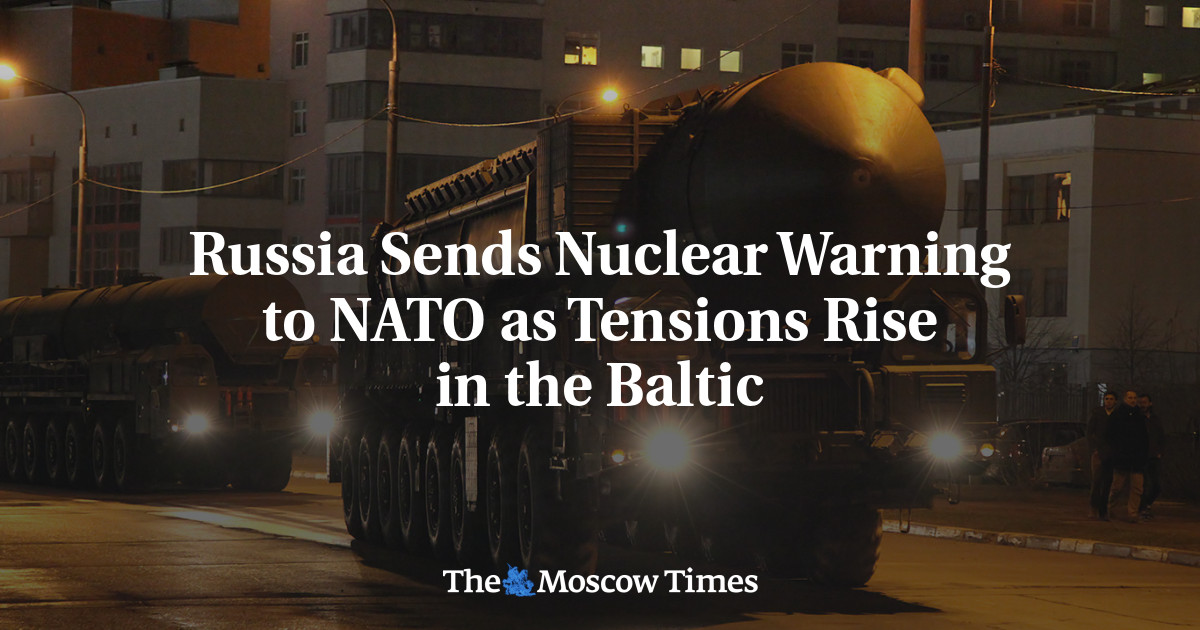

Moscow's foreign ministry channels and embassy accounts across Europe claimed to possess intelligence that NATO was preparing an air and naval blockade of the enclave, as reported by the Hindustan Times. Russian officials specifically pointed to recent media speculation and fictional scenarios, including a British miniseries titled The Wargame broadcast on Sky One, which depicted retaliatory allied strikes against Murmansk and Kaliningrad during a simulated conflict. Kremlin spokesperson Dmitry Peskov defended the diplomatic warnings in comments reported by Al Jazeera, describing them as natural reminders directed at European leaders.
NATO responded swiftly to the written threat. NATO spokesperson Allison Hart issued a formal statement confirming receipt of the non-paper and firmly rejecting the posture adopted by Moscow.
Hart added that the alliance strongly denounced the threat of force and any irresponsible nuclear rhetoric, noting that hybrid tactics are a sign of desperation."I can confirm that Russia sent a non-paper to NATO and that we have sent a response, noting that NATO is a defensive Alliance and none of our activities or exercises pose a risk to any part of Russia."
Allison Hart, NATO spokesperson, via Yahoo News
NATO Secretary-General Mark Rutte reinforced this message during a Brussels forum covered by Fakti, demanding that the Kremlin abandon its atomic threats and arguing that the alliance's proper course involves calm deterrence, reinforced defenses, and continued assistance to Ukraine. Meanwhile, a senior European defense official speaking to Reuters characterized the diplomatic démarche as the most serious direct nuclear threat leveled against Western capitals since the Cold War.
Strategic context surrounding the enclave highlights its immense military value alongside its geographical vulnerability. Situated between Poland and Lithuania, Kaliningrad houses the primary base of the Russian Baltic Fleet and hosts nuclear-capable Iskander missile systems. The territory's separation from mainland Russia makes its reinforcement uniquely challenging, a vulnerability magnified by Finland's accession to NATO in 2023 and Sweden's in 2024, which effectively transformed the Baltic Sea into an allied-dominated basin.
| Strategic Factor | Detail | Significance |
|---|---|---|
| Geographic Position | Enclave between Poland and Lithuania | Close proximity to the sensitive Suwalki corridor linking the Baltic states to NATO |
| Military Assets | Baltic Fleet base and Iskander missiles | Serves as Moscow's primary force-projection platform in northern and central Europe |
| Alliance Response | Operation Baltic Sentry and defense upgrades | Protects underwater communication cables and reinforces regional surveillance |
The nuclear warning arrives amid a broader backdrop of escalating hybrid incidents across Europe, ranging from suspected sabotage operations against defense manufacturing facilities in Tallinn to intensified fighter jet intercepts over the Gulf of Finland. The European Union is actively formulating an emergency security protocol and a fresh security strategy identifying Russia as the primary threat to the bloc, developments intended to complement existing frameworks such as Article 4 of the NATO Treaty.
As diplomatic channels remain strained, regional observers are monitoring how allied defense postures will adapt.
What to Watch Next
Allied naval patrols and air surveillance operations under Operation Baltic Sentry will continue across the Baltic Sea region throughout October.
How significant is this development?
Contribute your assessment to the aggregated reader sentiment ledger.
Frequently Asked Questions
Key questions answered in this reportWhat is the key development in: NATO condemns Russia nuclear threats over Kaliningrad enclave?
NATO has strongly condemned a Russian diplomatic warning threatening a nuclear response if the alliance attempts to isolate the Kaliningrad exclave.
Why is this Transport development significant for the UK?
This report covers critical events in our Transport beat. Independent reporting monitors related UK statements, regulatory shifts, and public responses as further verified details emerge.
How was this reporting corroborated and verified?
Newsarchy UK compiles and cross-references reporting from primary reporting from elconstitucional.es and cross-checked wire reports. All coverage adheres to published editorial standards.
When was this report published?
This briefing was published on October 1, 2026 and is permanently cataloged in the Newsarchy UK Transport archives.

