Ice Age rhino remains unearthed in N Kazakhstan
Quarry workers in North Kazakhstan have unearthed human skulls alongside the bones of an Ice Age woolly rhinoceros, prompting an official expert examination.
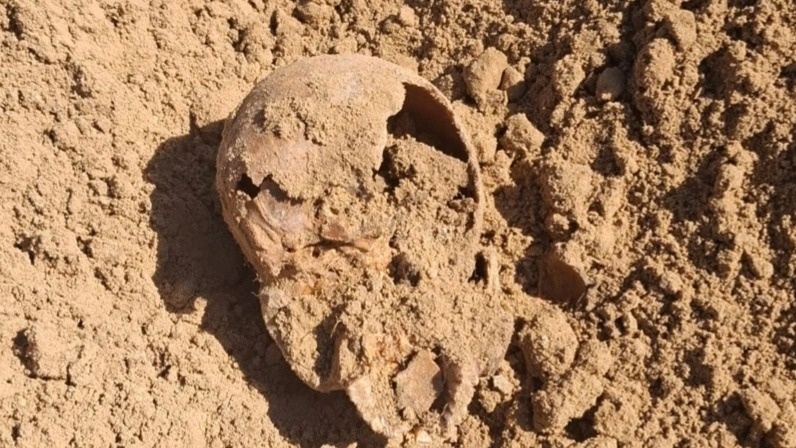
Workers excavating a sand quarry near the village of Beskol in the Kyzylzhar district of North Kazakhstan unearthed the bones of two humans and an Ice Age rhinoceros, according to reporting by Qazinform. The discovery, made on 8 September, adds fresh physical evidence to an expanding prehistoric record across Eurasia, arriving amid broader scientific reassessments of ancient megafauna ranging from woolly carcasses preserved in Siberian permafrost to towering fossilized herbivores in China.
The regional police department confirmed that no signs of criminal activity were found at the North Kazakhstan quarry site. An expert examination has been ordered to determine the origin and circumstances of the remains. Well-known archaeologist Anatoly Pleshakov arrived at the site to inspect the discovery, identifying the two human skulls as belonging to an early period. A third skull is thought to belong to a woolly rhinoceros, a species covered in thick fur that lived during the Ice Age. Pleshakov emphasized that the bones are of significant value and require further study. Similar findings have previously been uncovered in the region, with fragments stored in the local history museum. This discovery adds to recent archaeological findings in the area, including a Bronze Age settlement in the Imantau resort area and other prehistoric structures.
Media additions

Across the wider region, researchers have continued to piece together the complex evolutionary history and eventual disappearance of prehistoric rhinoceros species. Writing in Nature Ecology & Evolution, researchers noted that the mysterious shaggy giant species known as the Siberian unicorn, or Elasmotherium, survived in western Russia until just 36,000 years ago, according to an analysis covered by the Australian Broadcasting Corporation. This extinction timeline means the Siberian unicorn shared its final days with early modern humans and Neanderthals. While once thought to have vanished 200,000 years ago, genetic analysis and radiocarbon dating of museum bone samples revealed that the creature succumbed to a subtle change in climate that reduced grassland from eastern Europe to China rather than falling victim to modern human hunting.
Dietary analysis of fossil bones showed that while the saiga antelope successfully shifted its diet after grasses became sparse, the Siberian unicorn was reliant on grazing with its specialized teeth and low-slung head. Relatives such as the woolly rhinoceros had always eaten a more balanced array of plants, helping them endure changing conditions. Exceptional physical specimens of woolly rhinos have also emerged from frozen environments. As reported by the Daily Mail, a juvenile woolly rhinoceros carcass with its hazel-coloured coat still intact was recovered from the permafrost of the Abyysky district in the Sakha Republic. Unearthed by local resident Alexei Savvin, the remains are approximately 80 per cent intact and contain internal organs, teeth, part of the intestines, and a lump of fat. Palaeontologist Albert Protopopov of the Academy of Sciences of the Sakha Republic noted that the individual was likely three or four years old and probably drowned in a river. Researchers suggest the remains could date between 20,000 and 50,000 years old, pending exact radiocarbon confirmation, echoing the discovery of the baby woolly rhino specimen dubbed Sasha in 2014.
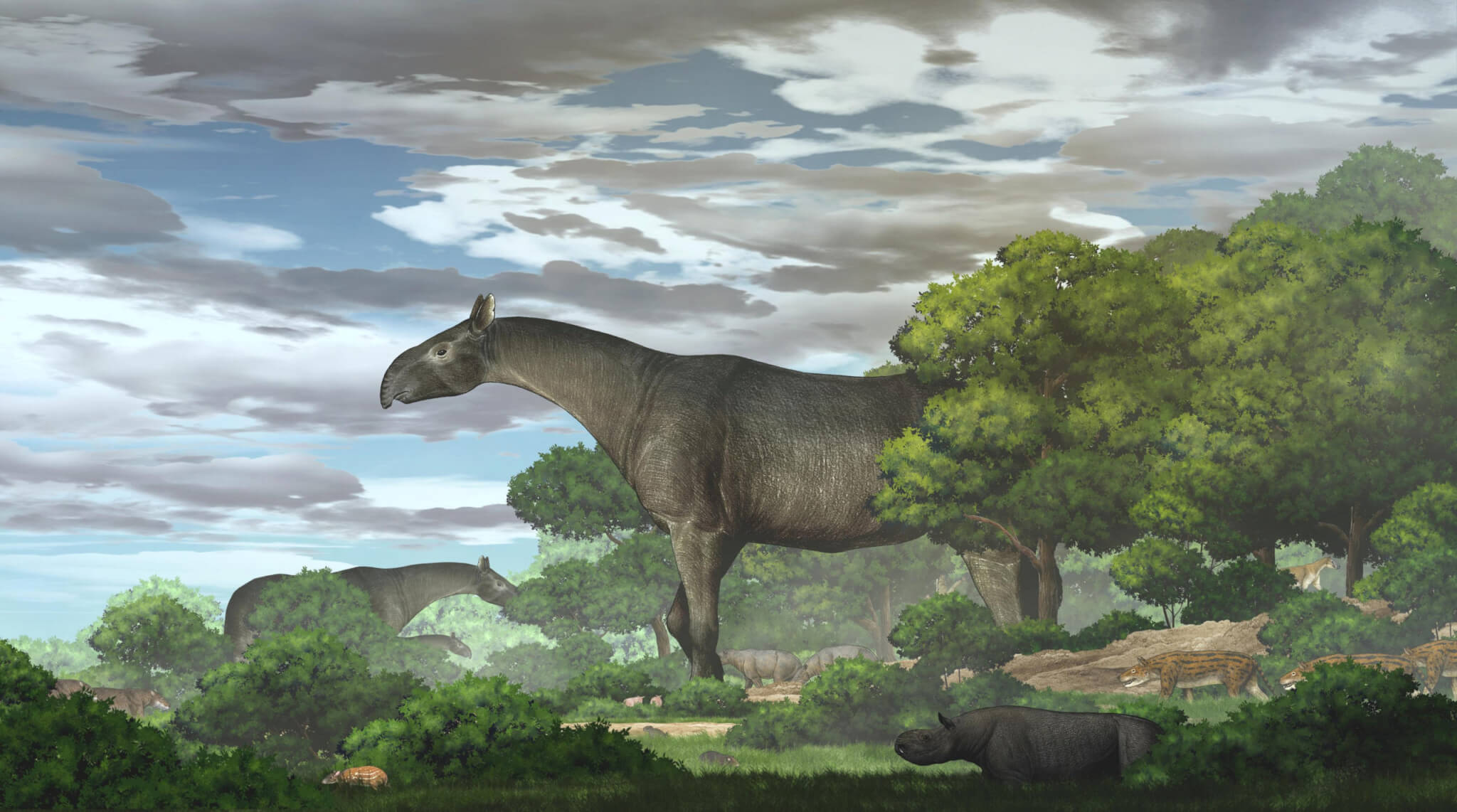
Further south, paleontologists have documented even more colossal predecessors. According to research published in Communications Biology and highlighted by StudyFinds and the Metro, a giant rhino fossil unearthed in Gansu, northwestern China, has been identified as Paraceratherium linxiaense. Professor Tao Deng of the Chinese Academy of Sciences stated that the colossal creature was more than 26 feet long, stood over 16 feet tall at the shoulders, and weighed 24 tons, making it four times the size of an African elephant. The hornless herbivore featured a slender skull, a short trunk, and an unusually long and muscular neck suited for browsing tree tops.
| Species | Geographic Range | Estimated Size / Weight | Estimated Extinction / Era |
|---|---|---|---|
| Paraceratherium linxiaense | China, Pakistan, Mongolia, Kazakhstan | 26+ feet long, 16+ feet tall, 24 tons | Oligocene epoch (34–23 million years ago) |
| Siberian Unicorn (Elasmotherium) | Russia, Kazakhstan, Mongolia, China | Single horn up to a metre in length | Survived until roughly 36,000 years ago |
| Woolly Rhinoceros | Europe, Russia, Siberia | Juvenile specimens weighed significantly; adults heavily furred | Late Pleistocene / Ice Age |
The discovery of Paraceratherium linxiaense sheds fresh light on how these giant mammals migrated across continents before the Tibetan Plateau formed its modern high elevation. Professor Deng explained that the lineage likely dispersed freely along the lowlands and the eastern coast of the Tethys Ocean during the Oligocene epoch, facing prehistoric hyenas, giant crocodiles, and dog-bears known as Hemicyon along the way.
Weather and climate shifts remain central to understanding how these diverse prehistoric herbivores rose and fell across Eurasia. Transport of the newly recovered Siberian woolly rhino specimen to Yakutsk remains on hold until seasonal conditions permit, while archaeologists in North Kazakhstan continue their expert examination of the Beskol quarry site to establish the full context of the human and animal bones.