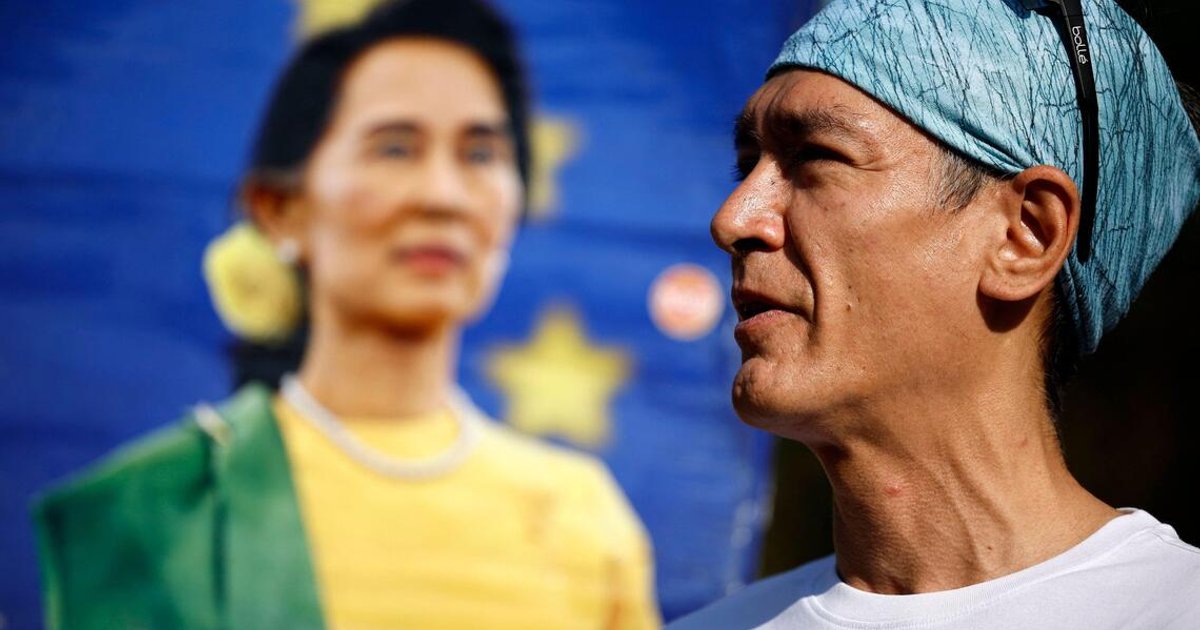
Far-right Alternative for Germany party reelects leaders as protesters and police clash
The AfD held a two-day national conference in Erfurt where delegates re-elected party leaders amid large-scale protests against their policy agenda.
- Core Development: The AfD held a two-day national conference in Erfurt where delegates re-elected party leaders amid large-scale protests against their policy agenda.
- Beat Context: Categorized under World with independent corroboration.
- Reporting Depth: 3 minute analytical read synthesized from verified newsroom sources.
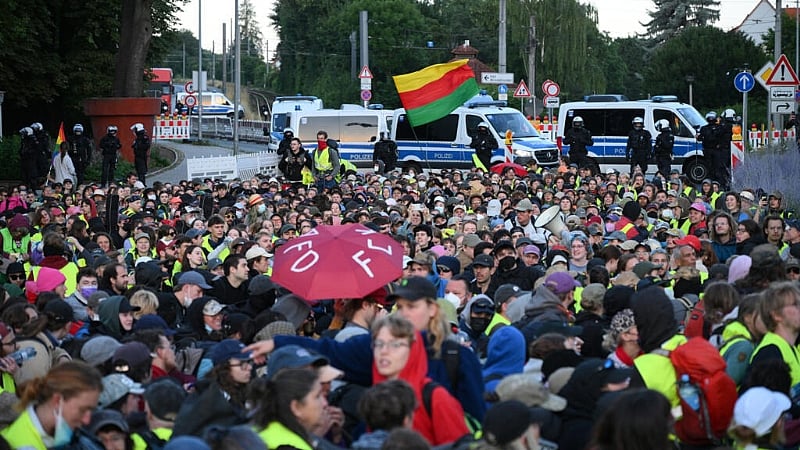
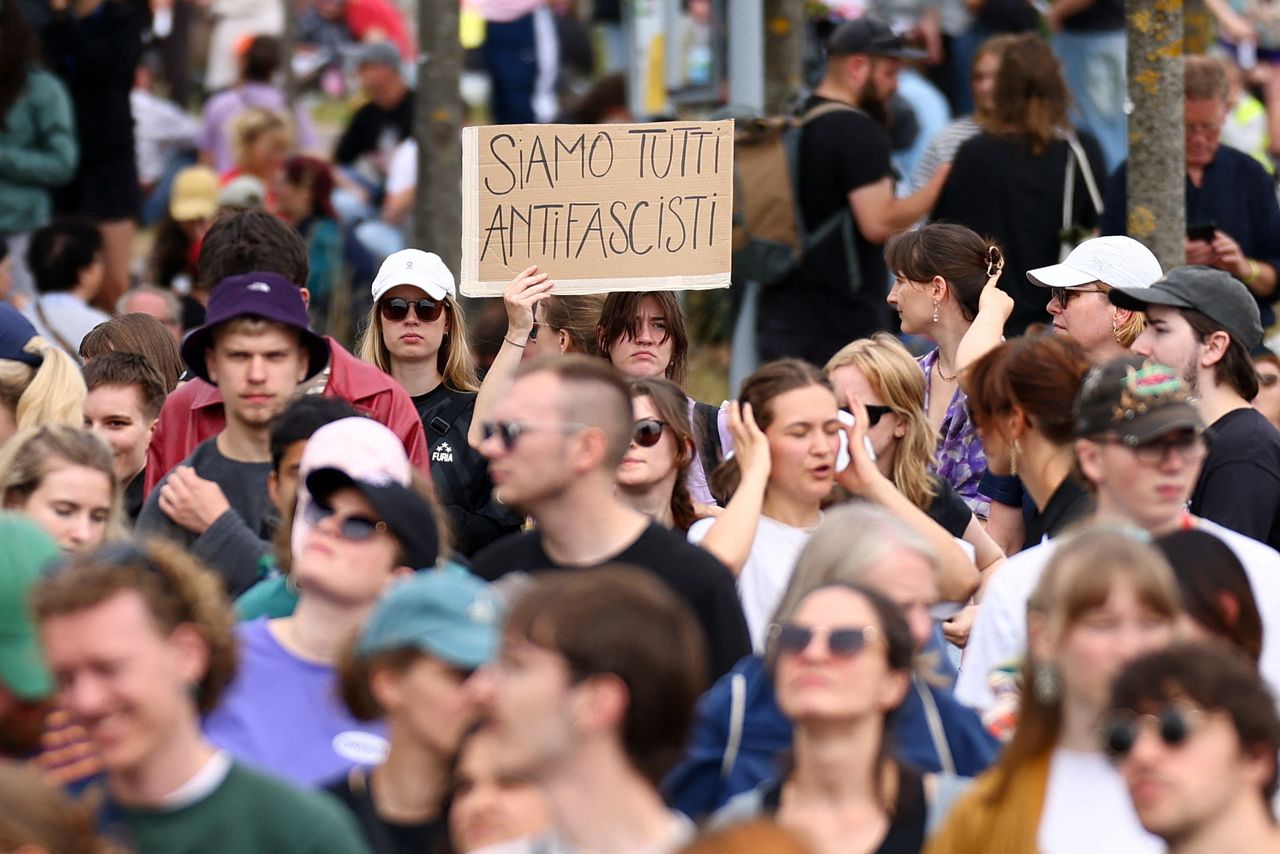
Germany’s far‑right Alternative for Germany (AfD) party convened in Erfurt on Saturday, 4 July 2026, for a two-day national conference marked by both internal consolidation and intense public opposition. As party delegates gathered at the Erfurt Exhibition Center, the event was met by approximately 15,000 protesters, according to police estimates. The protesters, representing a coalition of unions, civil-society groups, and left-wing factions, established sit-in blockades on roads and highways to disrupt access to the venue.
Inside the convention center, the AfD re-elected its co-leaders, Alice Weidel and Tino Chrupalla, who ran unopposed. Weidel, a former Goldman Sachs analyst, secured 81% of the delegate vote, while Chrupalla, a trained painter and varnisher from Saxony, received 70%.
Media additions

The timing of the convention drew sharp criticism from opponents and historians, as it coincided with the 100-year anniversary of a nearby Nazi Party meeting that helped solidify Adolf Hitler’s control over the fascist movement. While political rivals accused the AfD of leveraging this alignment for symbolic impact, the party rejected the suggestion of any deliberate provocation. The party’s regional leader, Björn Höcke, utilized his address to present a vision of national restoration:
"A great Germany is a Germany where one need not fear taking a walk through the city park in the evening. A great Germany is a country where apartment keys can be left hanging on the outside of the door,"
Throughout the event, the AfD emphasized its hard-line stances on immigration and foreign policy. The party advocates for the cessation of military assistance to Ukraine and a re-evaluation of relations with Moscow. Before the opening session, social media streams associated with the party featured the song "Send them back," while merchandise sold within the venue included cards with slogans stating, "YOU will be deported." Weidel addressed the delegates by positioning the party as the sole force capable of preventing national decline:
"For this remains our last chance to save our country. More and more people in this country want to support us in the fight against Germany's decline, in the fight for our fatherland and for our identity,"
Outside, the atmosphere was volatile. Police in riot gear were deployed to manage the crowds, with minor scuffles reported between officers and activists. Lena Raupach, spokesperson for the anti-fascist group Widersetzen, characterized the party's platform as inherently dangerous:
"The AfD pursues fascist policies: It wants mass deportations and terror on the streets. At the same time, however, it doesn’t solve a single real problem,"
Chrupalla dismissed the demonstrators, describing the protesters as individuals "carted in here from all over the country by the establishment parties in trucks." Regarding the disruptive tactics employed by activists, he remarked:
"There are no peaceful seated blockades. There are no democratic roadblocks. Nor are there any gangs of thugs who deserve the harmless label ‘civil society.’ These troublemakers are the last resort of our political rivals,"
The AfD’s growth comes as the party currently sits in the lead in national opinion polls, outpacing the CDU/CSU conservatives led by Chancellor Friedrich Merz. Mainstream political parties maintain a "firewall" policy, precluding any formal coalition with the AfD. Despite this isolation, the AfD is preparing for critical state elections in September in Saxony-Anhalt and Mecklenburg-Vorpommern. Chrupalla expressed confidence regarding these upcoming contests, stating to attendees that the party might soon govern on its own. While the Federal Office for the Protection of the Constitution previously classified the party as an extremist group, a Cologne court in February 2026 suspended the use of that designation while the party’s legal challenge remains under evaluation.
How significant is this development?
Contribute your assessment to the aggregated reader sentiment ledger.
Frequently Asked Questions
Key questions answered in this reportWhat is the key development in: Far-right Alternative for Germany party reelects leaders as protesters and police clash?
The AfD held a two-day national conference in Erfurt where delegates re-elected party leaders amid large-scale protests against their policy agenda.
Why is this World development significant for the UK?
This report covers critical events in our World beat. Independent reporting monitors related UK statements, regulatory shifts, and public responses as further verified details emerge.
How was this reporting corroborated and verified?
Newsarchy UK compiles and cross-references reporting from primary reporting from apnews.com and cross-checked wire reports. All coverage adheres to published editorial standards.
When was this report published?
This briefing was published on July 4, 2026 and is permanently cataloged in the Newsarchy UK World archives.