AfD conference in Erfurt proceeds despite thousands blocking roads
The Alternative for Germany held its national convention under heavy security as thousands of demonstrators attempted to block access to the venue. The event underscores rising tensions ahead of critical state elections where the party currently leads in the polls.

- Core Development: The Alternative for Germany held its national convention under heavy security as thousands of demonstrators attempted to block access to the venue. The event underscores rising tensions ahead of critical state elections where the party currently leads in the polls.
- Beat Context: Categorized under World with independent corroboration.
- Reporting Depth: 3 minute analytical read synthesized from verified newsroom sources.
On Saturday 4 July 2026 the Alternative for Germany (AfD) held its biennial national conference in Erfurt, re‑electing co‑leaders Alice Weidel and Tino Chrupalla even as demonstrators blocked access routes. The clash matters because the party sits at the top of national opinion polls ahead of crucial state elections in Saxony‑Anhalt and Mecklenburg‑Vorpommern.
Police in riot gear watched protesters sit in rows to block highways and roads leading to the convention centre where the meeting is being held. The blockade stretched the city’s transport network, suspending several bus and subway lines, yet most of the party’s delegates slipped into the convention centre and the congress opened on schedule.
Media additions

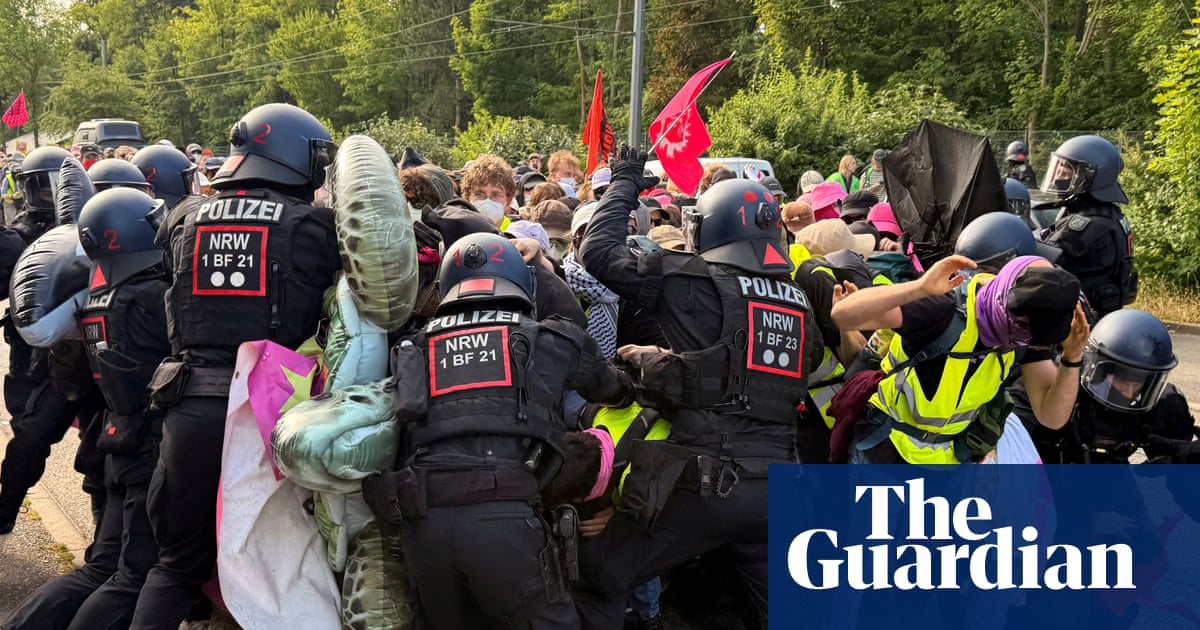
Roadblocks, police and the scale of dissent
Police estimated around 15,000 people joined demonstrations in and around the eastern city. Police told the dpa news agency they counted more than 200 buses of protesters arriving in Erfurt.
Large numbers of police, including reinforcements from across Germany, were deployed ahead of the AfD’s two-day conference.
Protest slogans and on‑stage rhetoric
Demonstrators shouted “1933 to 1945 must never happen again”. Another protester, Ella, was among a group who stuck themselves to tram tracks in a city square. “The democratic parties need to understand that they must impose a ban (on the AfD).”
Inside the convention centre, vintage-style cards were on sale with slogans such as "YOU will be deported". Weidel said, “For this remains our last chance to save our country,” and promised rigorous deportations of “criminals and illegal migrants”. A song called "Send them back" played on the AfD's social media stream minutes before the convention opened. Bjoern Hoecke, seen as one of the party's most radical and controversial leaders, offered a mix of nostalgia and invective, even pointing to the state of Germany's motorway toilets as an example of national malaise. “A great Germany is a Germany where one need not fear taking a walk through the city park in the evening. A great Germany is a country where apartment keys can be left hanging on the outside of the door,” he said.
Political context and reactions
Recent polls put AfD support as high as 29%, compared with around 22% for Merz's CDU/CSU conservatives. Georg Becker, a spokesperson for Widersetzen ("Resist"), an anti-AfD umbrella group behind the Erfurt protests, said: "We want to make it clear that we simply won't tolerate this, that fascism is on the rise here in Germany." Noa Sander, another spokesperson for the Resist protest alliance, told AFP, “The AfD wants mass deportations and ethnic cleansing.”
Mainstream parties have ruled out any cooperation, under a so-called "firewall" strategy designed to isolate the party and keep it out of coalition governments. AfD leaders deny opposing Germany's democratic foundations and earlier this year won a court injunction ordering the domestic intelligence service to suspend a previous classification of the party as "extremist".
Regional elections and the road ahead
The conference comes ahead of elections in the eastern states of Saxony-Anhalt and Mecklenburg-Vorpommern that the AfD hopes will help pave the way for success at national level, a prospect that has alarmed its opponents. Al Jazeera’s Dominic Kane explained that the latest polls in the state put the AfD on 42 percent – which could give the party an absolute majority.
Weidel and Chrupalla were re-elected as the party co-leaders Saturday for another two years, as expected. Weidel received 81 percent of the vote and Chrupalla 70 percent. Chrupalla said: "They are protesting against democratic decision‑making. They believe they alone possess democracy."
What to watch next
- State elections in Saxony‑Anhalt and Mecklenburg‑Vorpommern later in 2026.
- Potential legal challenges to the intelligence service’s “extremist” classification, following the court injunction that temporarily halted the label.
The Erfurt showdown showcases Germany’s deepening political fault line. With the AfD perched at the top of the polls and its opponents mobilising en masse, the outcome of the upcoming state elections will determine whether the party’s parliamentary surge translates into actual governing power.
How significant is this development?
Contribute your assessment to the aggregated reader sentiment ledger.
Frequently Asked Questions
Key questions answered in this reportWhat is the key development in: AfD conference in Erfurt proceeds despite thousands blocking roads?
The Alternative for Germany held its national convention under heavy security as thousands of demonstrators attempted to block access to the venue. The event underscores rising tensions ahead of critical state elections where the party currently leads in the polls.
Why is this World development significant for the UK?
This report covers critical events in our World beat. Independent reporting monitors related UK statements, regulatory shifts, and public responses as further verified details emerge.
How was this reporting corroborated and verified?
Newsarchy UK compiles and cross-references reporting from primary reporting from apnews.com and cross-checked wire reports. All coverage adheres to published editorial standards.
When was this report published?
This briefing was published on July 4, 2026 and is permanently cataloged in the Newsarchy UK World archives.