Alberta voters reject separation from Canada in referendum
In Alberta's first-ever referendum on separation, approximately 76 percent of voters chose to remain in Canada, delivering a major political boost to Prime Minister Mark Carney.
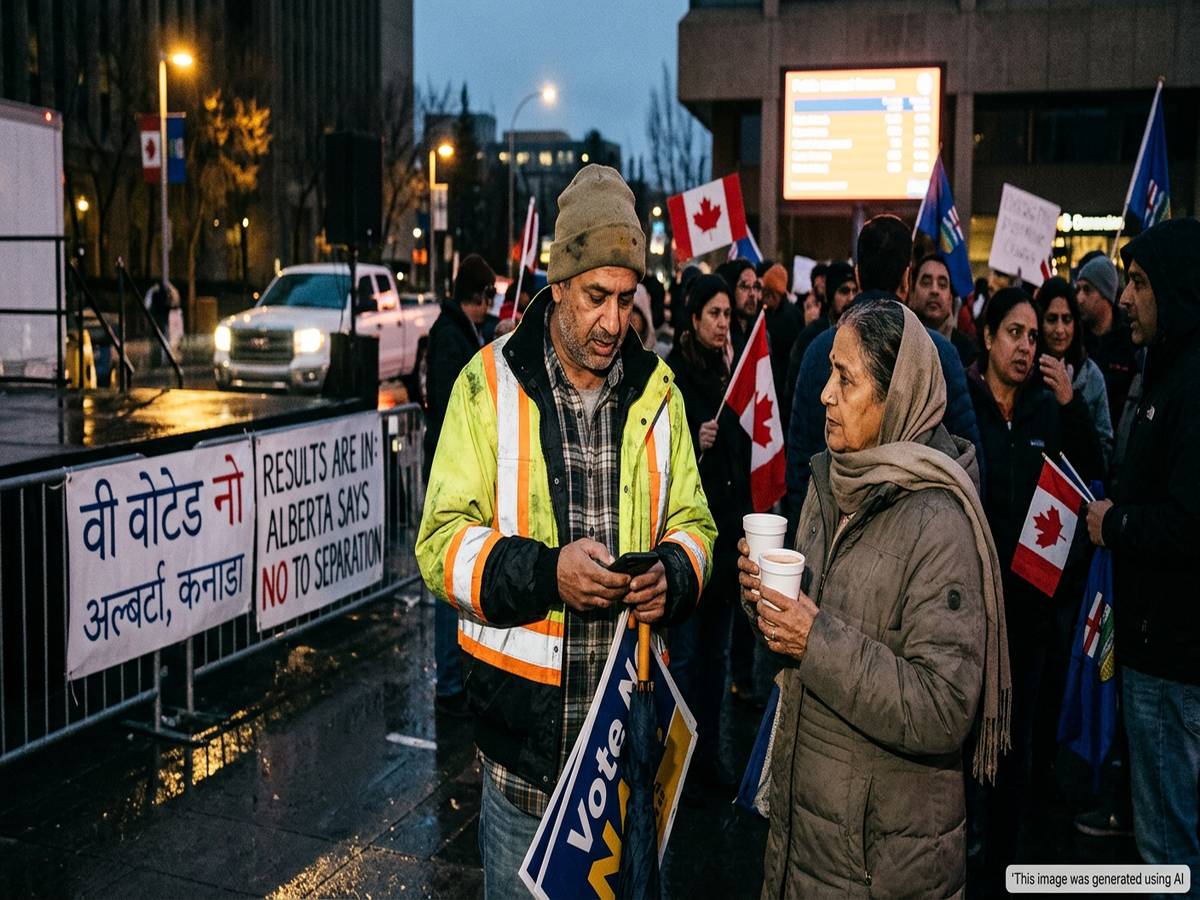
- Core Development: In Alberta's first-ever referendum on separation, approximately 76 percent of voters chose to remain in Canada, delivering a major political boost to Prime Minister Mark Carney.
- Beat Context: Categorized under World with independent corroboration.
- Reporting Depth: 5 minute analytical read synthesized from verified newsroom sources.
Voters in Canada's energy-rich province of Alberta have decisively rejected a proposal to begin the process of separating from the country, according to early and preliminary results announced on Tuesday, October 20, 2026. The historic vote, which marked the province's first-ever referendum on separation, delivered a major political boost to Prime Minister Mark Carney and his national unity campaign. The ballot arrived amid heightened geopolitical tensions, including trade disputes and annexation rhetoric from U.S. President Donald Trump, casting the regional debate onto an international stage.
The referendum, held on Monday, October 19, 2026, was not a direct vote on independence. Instead, the ballot asked whether Alberta should remain in Canada or whether the provincial government should begin a constitutional process that could lead to a future binding referendum on separation. Delays in opening over 100 polling stations on Monday forced extended voting hours, pushing back the release of preliminary figures.
Media additions



With more than 1.8 million votes counted, approximately 76 percent of voters chose to remain in Canada, while 24 percent backed starting the separation pathway, according to unofficial results from Elections Alberta. More than 1.35 million Albertans had already cast advance or special ballots, representing 43 percent of eligible electors.
Prime Minister Carney celebrated the outcome in a statement posted to social media on Tuesday. According to Patrika, Carney wrote that Albertans made a clear decision on October 19 by choosing unity, moving forward together, and looking after one another. Earlier on the campaign trail, Carney had warned voters in Calgary that a vote to leave would be a dangerous bluff leading to deep division.
The referendum was initiated by Alberta Premier Danielle Smith. Although she opposes independence, Smith faced intense pressure from separatists within her governing United Conservative Party and lowered the petition threshold required to place the measure before voters. Following the preliminary counts, Smith stated on X that Albertans voted for a stronger Alberta in a united Canada.
Separatist sentiment in the province stems from decades of western alienation. Residents have long harbored deep-seated grievances against Ottawa over federal energy policies, taxation, and the management of the province's oil and gas sector, which holds the world's fourth-largest proven oil reserves. Separatist advocates, including Jeffrey Rath of the Alberta Prosperity Project and organizer Keith Wilson, argued that Alberta's wealth was drained by less affluent provinces under federal constraints.
External geopolitical pressures heavily influenced voter turnout and sentiment. U.S. President Donald Trump's trade war against Canada, combined with repeated suggestions that Canada should become the 51st U.S. State, galvanized pro-unity support.
Voters expressed competing views at the ballot box. Dave Malka, a 59-year-old resident of Edmonton, criticized the expenditure on a referendum during a time of trade hostility from Washington, telling the Associated Press via The Hindu that citizens should remain united rather than fight among themselves. Conversely, Taylor MacIsaac, a conservative voter from rural Wainwright, supported separation as a positive step for conservative interests.
First Nations organizations strongly opposed the independence push throughout the campaign, pointing out that their land treaties with the Crown predate the creation of Alberta. Legal challenges spearheaded by the Athabasca Chipewyan First Nation and the Blackfoot Confederacy previously resulted in a temporary court stay on the pro-separation petition in April, leading Smith to pivot the initiative to a non-binding provincial ballot question.
| Metric / Estimate | Reported Figure | Source Context |
|---|---|---|
| Votes counted | More than 1.8 million | Elections Alberta unofficial tallies |
| Pro-unity vote share | 76 percent | Remaining in Canada |
| Pro-separation vote share | 23 to 24 percent | Initiating separation process |
| Voter turnout | 43 percent of eligible electors | Advance and special ballots cast |
In addition to the separation question, the ballot featured nine non-binding administrative and constitutional items. Preliminary tallies indicated that eight of these measures passed, though several secured narrow margins. Voters backed measures giving the province greater control over immigration, requiring proof of citizenship to vote, and introducing potential restrictions on social services for non-permanent residents. However, proposals regarding constitutional supremacy over federal laws and provincial appointment of judges faced a nearly split electorate.
Despite the decisive defeat of the separation proposal, separatist leaders asserted that their movement remains active. Keith Wilson observed that at least a quarter of Albertans believe the province deserves better treatment from the federal government. Jeff Rath indicated that organizers plan to continue political advocacy, potentially splitting the conservative base or forming a new pro-independence vehicle ahead of future electoral cycles.
Political analysts have drawn comparisons to Quebec, where sovereigntist movements previously held referendums in 1980 and 1995. While Alberta rejected its immediate separation push, experts note that underlying tensions regarding resource development, provincial autonomy, and Indigenous treaty rights remain unresolved.
What happens next depends on official administrative steps and upcoming political developments:
- October 29, 2026: Elections Alberta is scheduled to publish the official, certified results of the referendum.
- Legislative and Policy Implementation: Premier Smith faces decisions on how to act upon the eight approved advisory measures concerning immigration and provincial powers.
- Federal-Provincial Negotiations: Prime Minister Carney's administration must navigate energy cooperation, pipeline infrastructure plans, and trade diversification with Alberta.
- Future Elections: Observers are watching for potential political realignments within Alberta's United Conservative Party ahead of the next provincial general election.
For ongoing regional updates and international developments, consult World coverage.
How significant is this development?
Contribute your assessment to the aggregated reader sentiment ledger.
Frequently Asked Questions
Key questions answered in this reportWhat is the key development in: Alberta voters reject separation from Canada in referendum?
In Alberta's first-ever referendum on separation, approximately 76 percent of voters chose to remain in Canada, delivering a major political boost to Prime Minister Mark Carney.
Why is this World development significant for the UK?
This report covers critical events in our World beat. Independent reporting monitors related UK statements, regulatory shifts, and public responses as further verified details emerge.
How was this reporting corroborated and verified?
Newsarchy UK compiles and cross-references reporting from primary reporting from BBC and cross-checked wire reports. All coverage adheres to published editorial standards.
When was this report published?
This briefing was published on October 21, 2026 and is permanently cataloged in the Newsarchy UK World archives.