Alexandria Ocasio-Cortez sparks debate after revealing decision to freeze her eggs
US Representative Alexandria Ocasio-Cortez has sparked a widespread national debate after announcing that she has begun the process of freezing her eggs while criticizing federal reproductive healthcare policies.
- Core Development: US Representative Alexandria Ocasio-Cortez has sparked a widespread national debate after announcing that she has begun the process of freezing her eggs while criticizing federal reproductive healthcare policies.
- Beat Context: Categorized under World with independent corroboration.
- Reporting Depth: 4 minute analytical read synthesized from verified newsroom sources.
US Representative Alexandria Ocasio-Cortez has sparked a widespread national debate after announcing that she has begun the process of freezing her eggs. The New York Democrat disclosed the personal medical decision on Saturday, 8 August 2026, through a series of Instagram videos released while Congress was on its August recess. The announcement combined personal transparency regarding female biology with direct criticism of federal reproductive healthcare policies.
The congressional lawmaker, who has been in a decade-long relationship with her fiancé Riley Roberts, explained to her followers that she had been weighing the decision and saving up for the procedure for a very long time. Patients undergoing egg harvesting typically require roughly ten to twelve days of hormone treatment using syringes and alcohol wipes to stimulate egg maturation before an outpatient retrieval procedure, with the unfertilized eggs stored at subzero temperatures for potential future in vitro fertilization. Ocasio-Cortez acknowledged that her disclosure might invite intense public attention, telling her audience, Don't be weird about this even though I know you all will be,
according to International Business Times, before administering an injection on camera.
Media additions


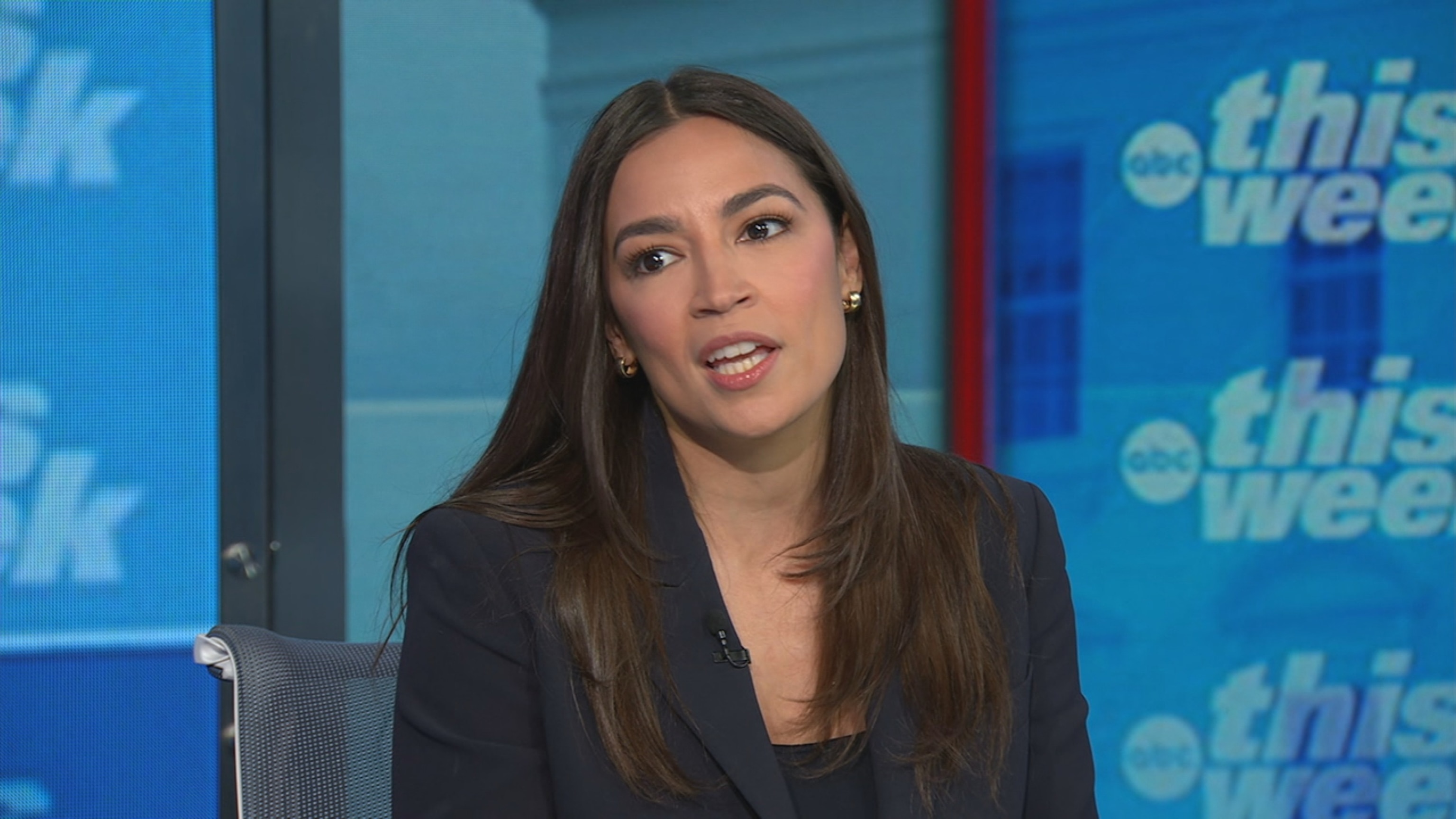
The disclosure preceded a high-profile appearance on national television. On Sunday, 9 August 2026, Ocasio-Cortez appeared on ABC News' "This Week" program, hosted by Jonathan Karl. Ahead of the broadcast, she documented herself preparing and administering hormonal medication in a green room. Reflecting on the timing during her Instagram broadcast, she stated, Tomorrow as part of my job, I am back in DC today because I'm going to be on ABC "This Week", Sunday morning show. I'm going to be delivering an interview on national television. And it's in the morning, and I have to take my shots because of the timing of it, I'm gonna have to my shots in the green room before my interview.
She added, I want you all to see that, because women can do anything. And I think it's badass that I'm gonna be, you know, giving myself shots in the green room, get my glam on, roll out, talk international events, domestic policy, elections, pop out, live my life, do my thing.
Speaking with Karl on the Sunday morning broadcast, Ocasio-Cortez explicitly linked her medical journey to the wider political landscape. As reported by Aol, she criticized the federal administration for restricting healthcare access.
"In this political environment where this administration is denying reproductive care to women across the country, from abortion rights to the ability to carry out a healthy pregnancy, I think it's important for us as leaders to have these conversations and share these processes, especially for working women across the country and normalize them"
Alexandria Ocasio-Cortez, US Representative, via AOL and ABC News
Reactions to the announcement divided sharply along political lines. Reproductive rights advocates praised the congresswoman for breaking stigmas surrounding female biology and family planning. Amanda Litman, co-founder and president of the political action committee Run for Something, expressed gratitude on social media for the lawmaker's honesty and vulnerability, while Democratic strategist Xochitl Hinojosa thanked the congresswoman for addressing a topic frequently omitted from public discourse, as detailed by The Guardian.
Conversely, conservative commentators offered harsh pushback. Writing on social media, commentator Matt Walsh criticized the timing and nature of the plan, noting that the congresswoman would turn 37 in a couple of months and arguing that pregnancy at her age would technically constitute a geriatric pregnancy. Walsh questioned why Ocasio-Cortez chose fertility preservation over immediate marriage and childbearing, contrasting her choices with his own family planning timeline, according to International Business Times. Critics also accused the lawmaker of leveraging personal medical choices to enhance her political standing, particularly amid ongoing speculation regarding potential future national campaigns.
The public rollout arrived alongside persistent chatter about Ocasio-Cortez's political future, given that she has previously polled at the top of early hypothetical 2028 Democratic primary surveys. When Karl questioned her directly about whether she intends to run for president in 2028, she initially deflected to focus on congressional responsibilities and winning the midterms before acknowledging that she had not ruled out the possibility and felt humbled by the support. According to New York Post reporting, Ocasio-Cortez pushed back against the two-dimensional framing applied by media outlets that view political actions solely through the lens of ambition for higher office. She noted that public figures navigate personal milestones as whole human beings rather than tactical political operators.
Ocasio-Cortez noted the unique pressures of growing up in the public eye after being sworn into the House of Representatives at age 29. She also pointed out a double standard in political life, remarking that male politicians are rarely subjected to public speculation regarding their age and family-planning timelines when interviewing for jobs or running for office. Having saved for the procedure for an extended period, she stated that the choice was made to feel more in control of her life and to help educate women on aspects of puberty, pregnancy, perimenopause, and menopause that are rarely discussed openly.
Ocasio-Cortez indicated that she plans to continue documenting elements of the procedure and addressing questions submitted by followers on social media.
How significant is this development?
Contribute your assessment to the aggregated reader sentiment ledger.
Frequently Asked Questions
Key questions answered in this reportWhat is the key development in: Alexandria Ocasio-Cortez sparks debate after revealing decision to freeze her eggs?
US Representative Alexandria Ocasio-Cortez has sparked a widespread national debate after announcing that she has begun the process of freezing her eggs while criticizing federal reproductive healthcare policies.
Why is this World development significant for the UK?
This report covers critical events in our World beat. Independent reporting monitors related UK statements, regulatory shifts, and public responses as further verified details emerge.
How was this reporting corroborated and verified?
Newsarchy UK compiles and cross-references reporting from primary reporting from aol.com and cross-checked wire reports. All coverage adheres to published editorial standards.
When was this report published?
This briefing was published on August 10, 2026 and is permanently cataloged in the Newsarchy UK World archives.