At least eight found dead on migrant boat off Spain's Canary Islands
At least eight migrants were found dead and six others were airlifted to a hospital in serious condition following a rescue operation off the Canary Islands.
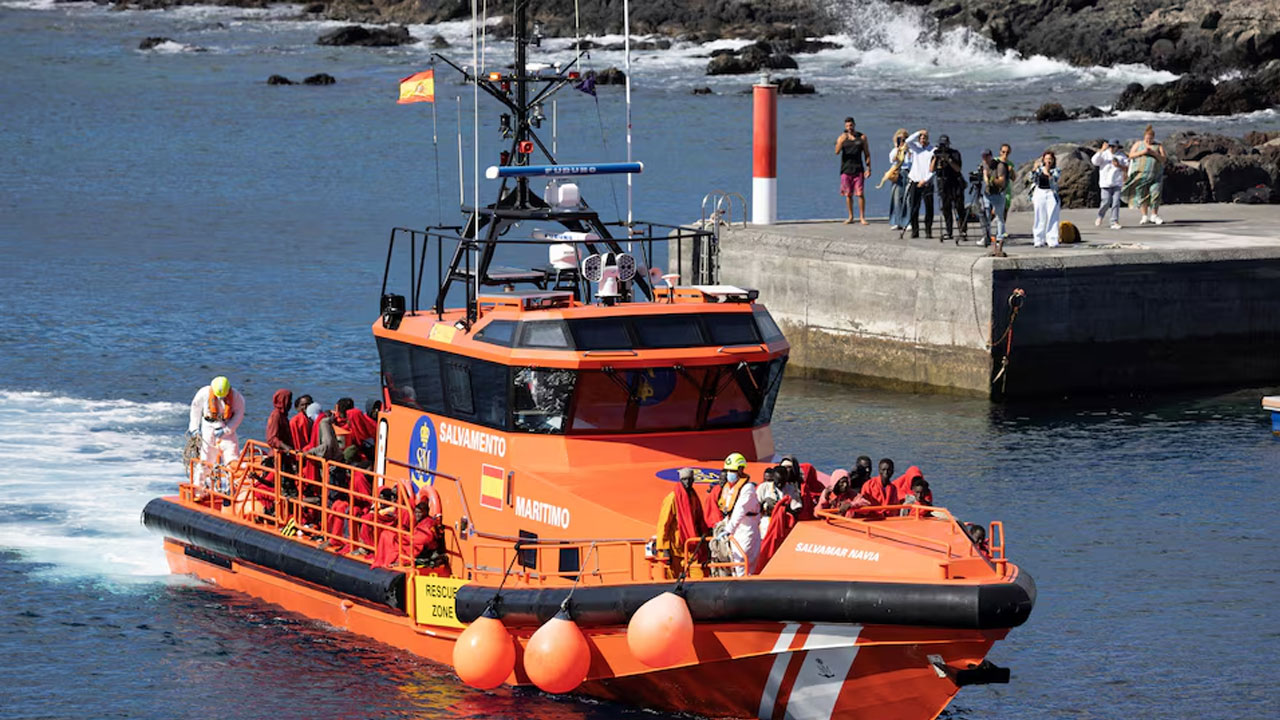
At least eight migrants were found dead aboard a boat carrying about one hundred people near Spain's Canary Islands, according to the maritime rescue service. Between eight and ten bodies were discovered on the vessel, and six individuals were airlifted to a hospital in serious condition following the rescue operation.
The wooden vessel was located roughly seventy-two kilometres south of the island of El Hierro. The rescue operation involved multiple units, including the Salvamar Navia, the Salvamar Mizar, the Helimer 204 helicopter, and the patrol boats Rio Tajo and Rio Guadiana, with the Civil Guard vessel Rio Tajo towing the migrant boat toward the port of La Estaca. A yacht sailing in the area had initially alerted the Maritime Rescue Coordination Centre to the drifting vessel. Rough sea conditions complicated the operation, with waves reaching about two metres, and a Civil Guard officer sustained injuries during the intervention after falling.
Media additions
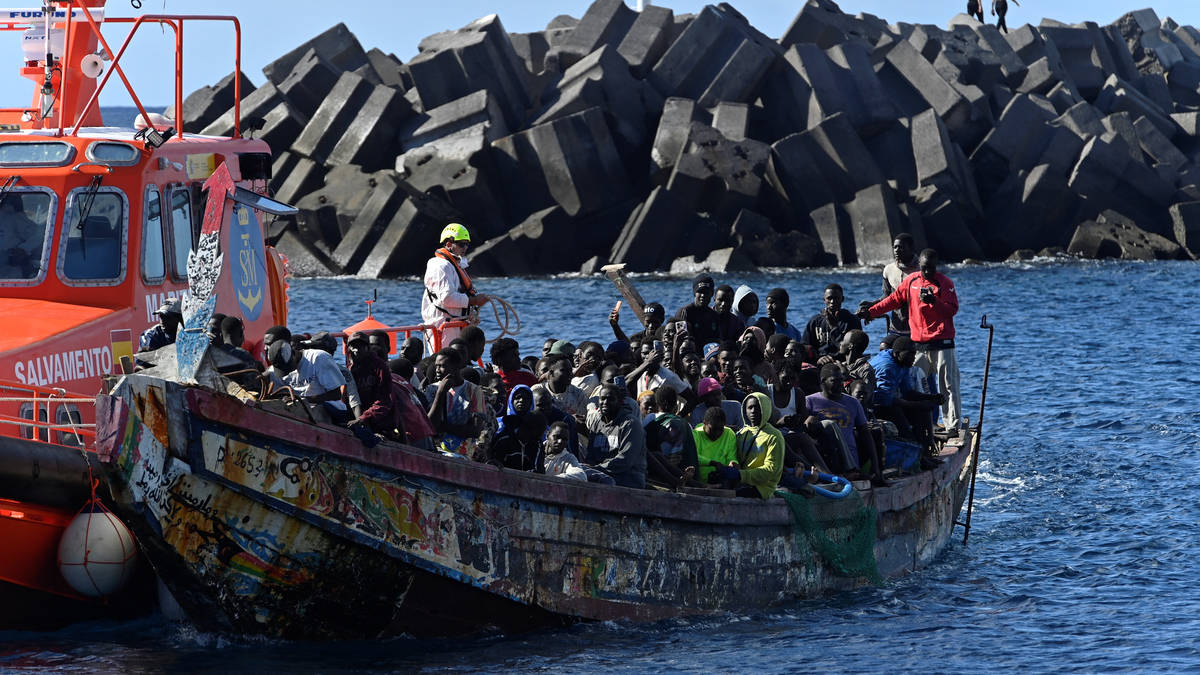

In a separate operation, eighty-four survivors from another boat disembarked at the island's La Restinga port. This port houses a migrant reception centre and field hospital where most arrivals to the island are processed. An AFP journalist observed Civil Guard officers, Red Cross workers, and soldiers from the army's emergency response unit assisting survivors ashore. While some walked wrapped in red thermal blankets, others had to be carried on stretchers or transported in wheelchairs. One survivor chose to remain on the towed boat rather than disembark with the others. Additionally, the rescue vessel Guardamar Urania evacuated forty-nine migrants from a separate inflatable boat southwest of the archipelago, bringing them to the port of Arguineguín in southern Gran Canaria.
The psychological toll of the operations prompted Spain's Maritime Rescue Service to activate specialised psychological support for the personnel involved, with specialists scheduled to arrive on the island to provide individual and group support to affected rescuers.
The tragedy unfolded as the Canary Islands face an unprecedented surge in arrivals that has overwhelmed regional authorities. Migrant arrivals have accelerated since October, culminating in a single-day record of twenty-one hundred people arriving on November 25. Most of these individuals landed on El Hierro, an island with a population of roughly eleven thousand four hundred residents. Regional authorities declared an emergency on the island earlier in the month after more than five thousand people arrived over a nine-day span.
Regional leader Fernando Clavijo expressed deep concern over the disaster, writing on X,
He demanded urgent action from the Spanish government and the European Commission, reiterating calls for the deployment of Frontex, the European Union border agency."A lot of pain and feeling of impotence over this new tragedy"
Fernando Clavijo, regional leader, via X
Clavijo stated, urging authorities in Madrid and Brussels to provide a response commensurate with the crisis."The humanitarian emergency doesn't start on El Hierro, but on the shores of Senegal and Gambia, where we have to act,"
Fernando Clavijo, regional leader, via X
The disaster landed immediately ahead of Spain's general election on Sunday, turning immigration into a central campaign issue. Prime Minister Pedro Sánchez has defended immigration for its economic benefits to Spain, telling public television that the government had spent weeks working with Senegalese and Gambian authorities to curb departures. Increased patrols off Senegal, Mauritania, and Morocco have inadvertently shifted departure points further south to The Gambia, Guinea-Bissau, and Guinea, lengthening the crossing and increasing its danger. Meanwhile, right-wing opposition parties leading in opinion polls have called for significantly tighter border controls.
Alberto Núñez Feijóo, leader of the opposition Popular Party, criticised the government's approach on X, writing that people losing their lives at sea represents the worst consequence of official irresponsibility and calling for an orderly migration policy. Far-right Vox leader Santiago Abascal similarly denounced the abandonment of territories including El Hierro and Ceuta by the Sánchez administration. Public opinion polls indicated that the Popular Party would win the most seats but fall short of an overall majority, leaving any potential government formation dependent on Vox.
The Atlantic route from West Africa to the Canary Islands remains one of the deadliest migration crossings globally, with thousands attempting the journey annually in overcrowded boats despite rough seas and strong currents. Arrivals traditionally increase between September and November when autumn weather conditions offer more favourable sea states.