Catalonia leads high turnout in Spain general strike over housing costs
Millions of workers across Spain participated in the nation's first general strike in 14 years, with Catalonia leading high turnout amid housing protests.
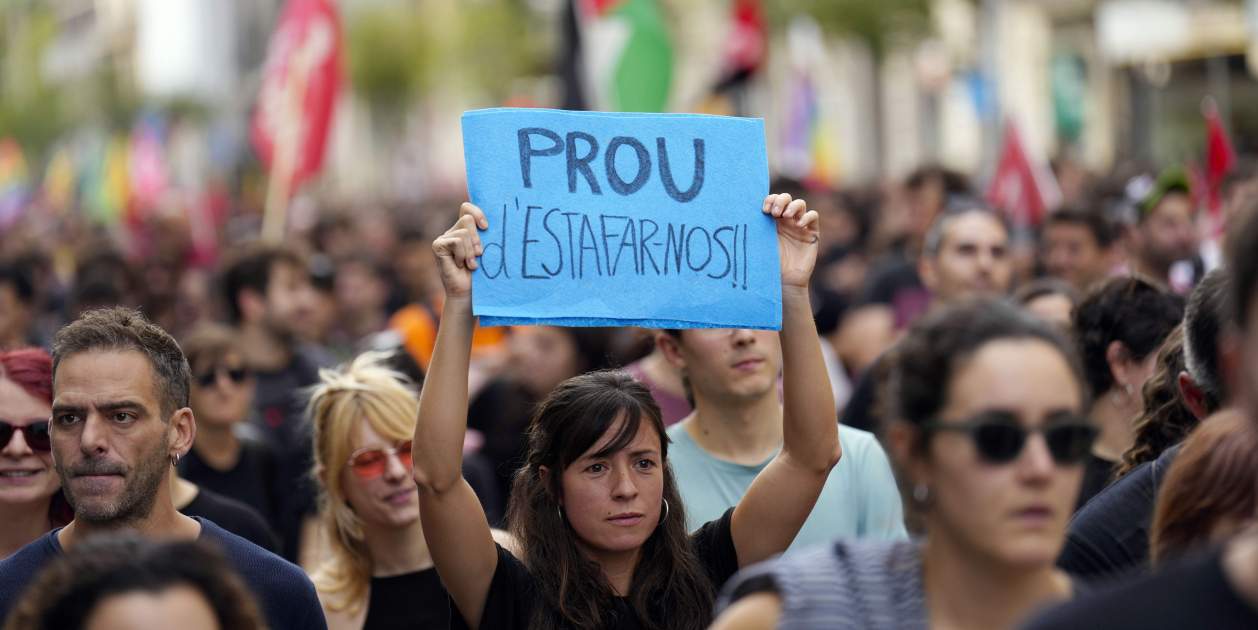
Catalonia led high turnout as workers across Spain launched a general strike over housing costs, altering the political landscape ahead of an upcoming general election.
Millions of workers across Spain took part in the nation's first general strike in 14 years, according to CNBC and AOL.com. International press outlets, including the BBC and Elnacional, highlighted Catalonia as one of the regions where the walkout drew the highest levels of support. Strikers in Barcelona erected roadblocks, some using burning tyres, while public transport and major thoroughfares ground to a standstill. The industrial action was organized jointly by Spain's two largest trade unions, UGT and CCOO, alongside tenants' associations under the rallying cry Salarios, vivienda y precios
— translating to wages, housing, and prices.
Media additions


The widespread disruption follows years of mounting financial strain driven by soaring living costs. According to the Bank of Spain, the country faces a deficit of approximately 750,000 homes, a figure projected to rise above one million within a few years. Rent prices have nearly doubled over the past decade. Data from the Youth Council of Spain indicates that the average rental price consumes almost the entirety of a young worker's monthly salary. Public anger intensified significantly following the eviction and subsequent death of an elderly Madrid resident, Maricarmen Abascal, who became a central symbol of tenant insecurity.
The labour protest coincided with a tense political backdrop. Prime Minister Pedro Sánchez called a snap general election following the parliamentary rejection of government decrees aimed at curbing rental pressures and stopping evictions. While Sánchez's left-wing coalition expressed tacit support for the goals of the strike — asserting it defends public rights, opposition figures criticized the timing. Miguel Tellado, a spokesperson for the conservative Popular Party, characterized the walkout as an election strike
designed to prop up the incumbent administration. Conversely, political analysts noted that the strike offered the left an opportunity to pivot public debate back toward housing, steering attention away from recent political scandals and infrastructure failures, such as a deadly train crash that previously dominated headlines.
| Sector / Metric | Reported Turnout / Impact | Source |
|---|---|---|
| Ports and Automotive | 90% participation | NBC News |
| Meat Industry | 85% participation | NBC News |
| Waste Collection | 82% participation | NBC News |
| Energy Sector | 75% participation | NBC News |
| Healthcare & Social Services | 38% participation | NBC News |
| Postal Service | 35% participation | NBC News |
The strike also severely impacted travel networks across the Iberian Peninsula. Airlines and rail operators implemented minimum service guarantees mandated by authorities. Major hubs like Madrid-Barajas and Barcelona-El Prat operated a reduced percentage of international and domestic flights, while national operator Renfe maintained a portion of its high-speed AVE services. Airlines such as Iberia advised passengers to arrive early and check in digitally, though some budget carriers reported operating normal schedules. Concurrently, adverse weather conditions brought by storms Charles and Bruna prompted meteorological agency AEMET to issue alerts across multiple regions for strong winds and heavy rainfall, complicating afternoon protest marches.
Clashes erupted in various locations as police monitored demonstrations. Near Madrid's Mercamadrid wholesale market, approximately 1,000 protesters gathered before confrontations broke out. CCOO reported that officers deployed pepper spray against picketers, resulting in injuries requiring medical attention for several individuals, while law enforcement confirmed arrests related to blockades and public disorder.
Business associations pushed back against the industrial action. Angela de Miguel, vice president of the CEOE business lobby, argued on state broadcaster TVE that paralyzing commerce was counterproductive and that recruitment challenges stemmed from a lack of housing inventory rather than employer intransigence. Business groups maintained that construction deregulation and lower taxes on building materials represent viable solutions to the affordability crisis.
What to watch next
- The Spanish parliament is scheduled to debate and vote on renewed housing decrees aimed at capping rent pressures and limiting evictions.
- Political parties will continue campaigning ahead of the national general election.
- Further evaluations from economists and transport authorities will measure the broader economic toll of the 24-hour industrial stoppage.
For ongoing international reporting, consult World coverage.