Spain workers launch first general strike in 14 years over housing crisis
Millions of workers across Spain launched a nationwide general strike over the housing crisis, bringing transport and manufacturing to a standstill ahead of an election.

Millions of workers across Spain launched a nationwide general strike over the country's housing crisis on Wednesday, 11 November 2026, marking the first such industrial stoppage in 14 years and setting off a high-stakes political battle less than three weeks before a snap general election.
The 24-hour walkout brought transport services, factories, and public facilities to a standstill across the eurozone's fourth-largest economy. According to reporting compiled by DW and NPR, the strike was jointly backed by the nation's two largest labor federations, the General Union of Workers (UGT) and the Workers' Commissions (CCOO), alongside housing activists and tenants' associations.
Media additions

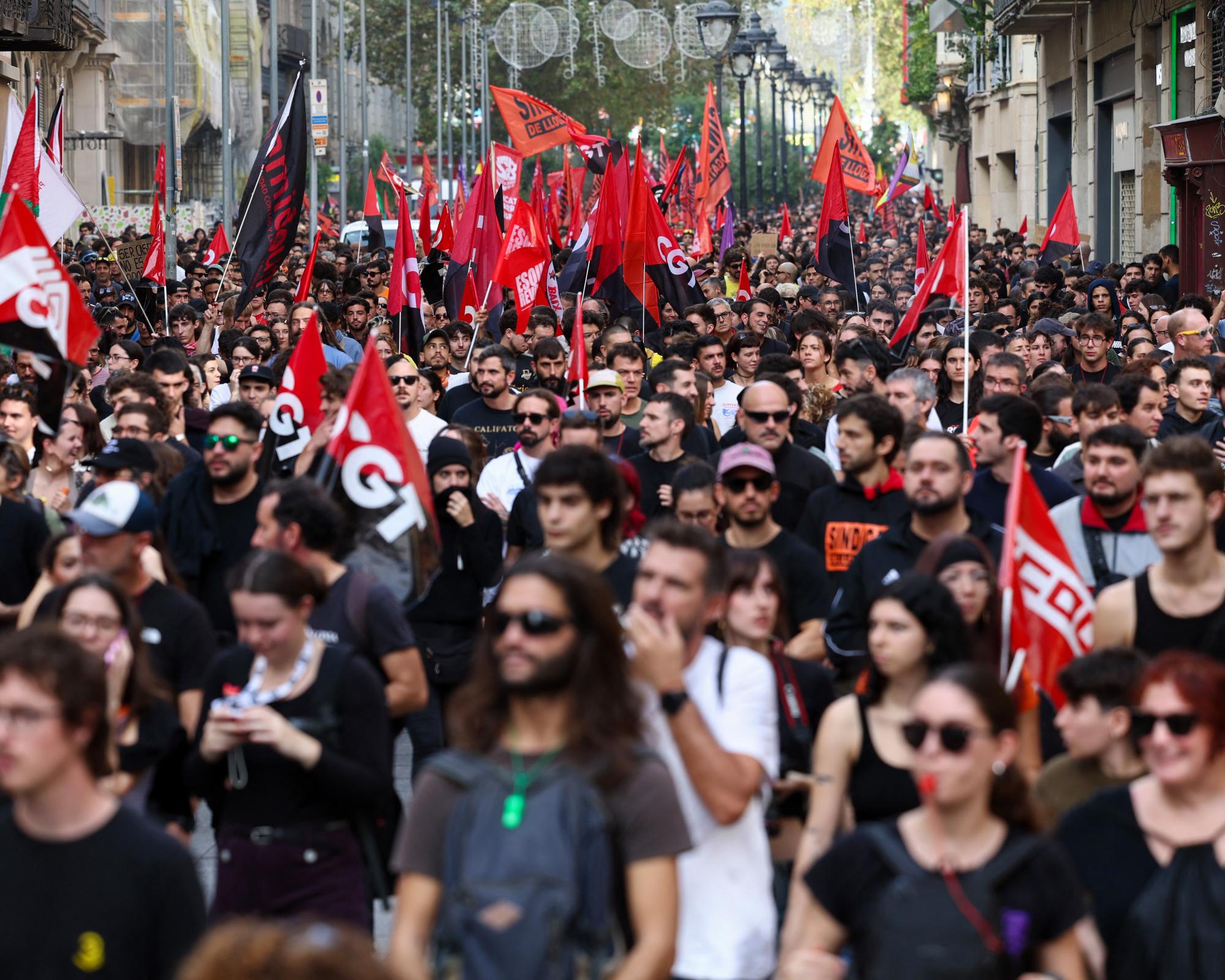

Protesters gathered in major cities, including Madrid and Barcelona, defying severe weather warnings issued by Spain's state meteorological agency across multiple regions. Demonstrators demanded stronger government intervention in the housing market, rent controls, and increased protection for vulnerable tenants. Sandra Mora, a spokesperson for the Madrid Tenants' Union, told national broadcaster RNE, It's extremely important to remind people that we, the workers – who are also renters or who also pay mortgages – are the ones with the power to halt production and bring the economy to a standstill.
Industrial Participation and Disruption
Union organizers reported widespread participation in key economic sectors during the morning walkouts. While these figures were provided directly by labor groups and have not been independently verified, they indicate heavy stoppages in manufacturing, logistics, and energy.
| Sector / Industry | Reported Union Participation Rate |
|---|---|
| Automotive and Port Sectors | 90% |
| Meat Industry | 85% |
| Waste Collection | 82% |
| Energy Sector | 75% |
Public transport faced severe disruptions, with public buses heavily affected in Madrid due to morning rains and roadblocks set up in Barcelona. Some airlines reported flight delays as airport personnel joined the action. Tensions also flared outside Madrid's Mercamadrid wholesale market, where approximately one thousand demonstrators gathered. The Madrid branch of CCOO stated that police used pepper spray, leaving at least 13 people in need of medical attention. Police confirmed one arrest at the market and acknowledged using pepper spray to disperse a separate picket line in the Carabanchel district, as reported by Kulu Media.
Roots of the Crisis
Public anger over housing costs intensified significantly following the eviction and subsequent death of an 87-year-old woman in Madrid named Maria del Carmen Abascal, widely known as Maricarmen.
Data from the Bank of Spain indicates that the country faces a housing deficit of approximately 750,000 homes, a shortfall projected to exceed one million by 2028. Meanwhile, figures from the Youth Council of Spain show that the average monthly rent has climbed to €1,176, consuming roughly 98.7 percent of an average young person's monthly salary. Alicia del Rio, spokesperson for the Madrid Tenants' Union, stated,
"We won't stop until we transform this country's housing model from top to bottom so that houses are for living instead of being at the service of the [landlord] minority."
Alicia del Rio, Spokesperson, Madrid Tenants' Union, via DW
Political Fallout and Upcoming Elections
The strike has added intense pressure on left-wing Prime Minister Pedro Sánchez, who called a snap general election for 29 November 2026, after opposition parties in parliament blocked emergency housing legislation. Sánchez's government expressed political support for the strike, with inner-circle sources describing it as a movement held "in favor of rights" and directed against the political opposition. That stance drew sharp criticism from conservative leaders, with Popular Party (PP) spokesperson Miguel Tellado dismissing the walkout as an "electoral strike" designed to bolster the incumbent administration.
Political science professor Oriol Bartomeus of the Autonomous University of Barcelona noted that the strike provides left-wing parties an opportunity to shift the campaign focus back to housing, though a separate strike by rail workers over two deadly train crashes earlier in the year has also kept crumbling infrastructure at the forefront of voter concerns.
- 11 November 2026: Nationwide general strike brings transport, factories, and services to a halt over housing costs.
- 12 November 2026: The Spanish government attempts to secure parliamentary ratification for two rejected housing decrees in an interim session.
- 29 November 2026: Spain holds its snap general election amid tightening polls between left-wing and right-wing political blocs.
As World coverage continues to monitor the political landscape in southern Europe, the interim parliament is scheduled to vote on the rejected housing decrees, while voters prepare to head to the polls at the end of the month.