China, US agree to $30 billion tariff cut and AI dialogue
Presidents Xi Jinping and Donald Trump concluded a Washington summit by agreeing to reciprocal tariff cuts, an artificial intelligence dialogue, and trade truce extensions.
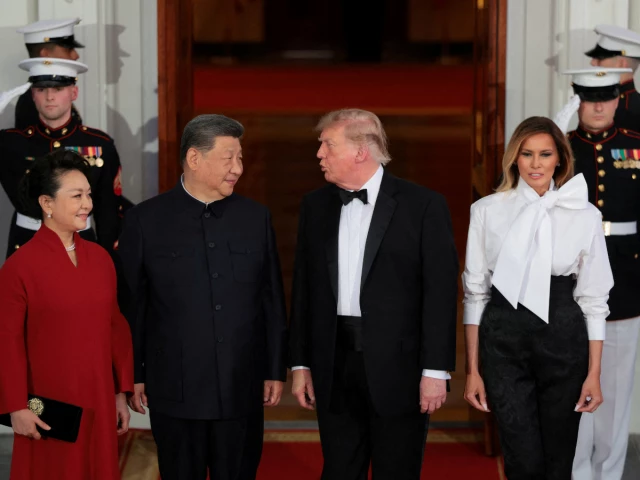
- Core Development: Presidents Xi Jinping and Donald Trump concluded a Washington summit by agreeing to reciprocal tariff cuts, an artificial intelligence dialogue, and trade truce extensions.
- Beat Context: Categorized under World with independent corroboration.
- Reporting Depth: 4 minute analytical read synthesized from verified newsroom sources.
The three‑day summit between Chinese President Xi Jinping and U.S. President Donald Trump in Washington ended on Friday with a package that mixed commercial easing, technological cooperation and diplomatic gestures. The two sides agreed to cut tariffs on roughly $30 billion worth of goods, launch a structured dialogue on artificial intelligence, and set up a trade council that will carry forward earlier Kuala Lumpur talks.
According to the Chinese Foreign Ministry, the tariff cuts target non‑sensitive goods such as agricultural products and holiday decorations. The agreement is part of an eight‑point consensus reached during the visit. The Ministry added that a communication channel will be created for AI‑related incidents and that the next round of AI talks is scheduled for November.
Media additions


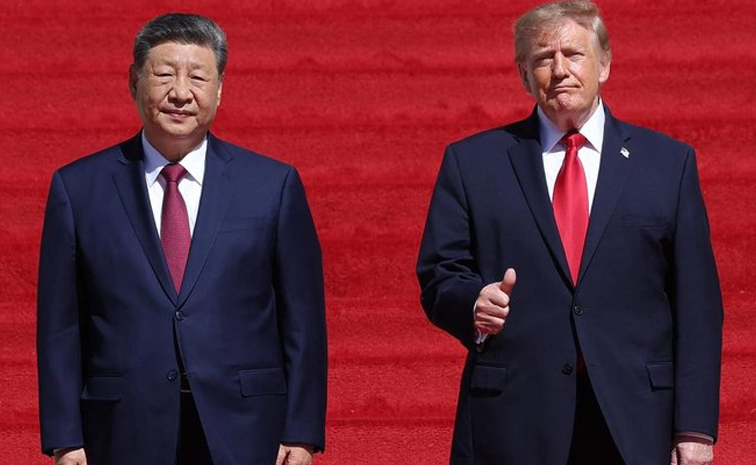
Both governments endorsed the work of their economic teams. The Chinese Foreign Ministry said the two sides will establish a bilateral trade council and extend the outcomes of earlier negotiations in Kuala Lumpur. The trade truce that had been due to expire on 10 November was extended by two months, a move reiterated by U.S. Treasury Secretary Scott Bessent. The extension will keep the truce in force until January.
Rare‑earth supplies and coal imports were also on the table. The White House said the two sides addressed American concerns about rare‑earth shipments, aiming to bring levels back to “appropriate” levels. China agreed to import at least 10 million metric tons of coal from the United States in 2027 and 2028, a detail reported by the Trump administration.
On the technology front, the AI dialogue will cover risks and benefits. The Chinese Foreign Ministry welcomed Washington’s use of the term “super intelligence” instead of “artificial intelligence.” It stressed that all parties should strengthen exchanges and seek consensus as AI technology evolves. The agreement also includes a bilateral communication channel for AI incidents and a broader push to accelerate military crisis communications, the Ministry said.
Foreign‑policy points mirrored the trade and tech agenda. The leaders agreed that Iran must honour its commitment not to develop nuclear weapons and that no country or entity should impose transit tolls on international waterways. The Ministry said the two sides would support each other in hosting the Asia‑Pacific Economic Cooperation (APEC) leaders’ meeting and the Group of Twenty (G20) summit. Trump is expected to attend the APEC summit in China in November, while Xi is slated to return to the United States for the G20 summit in December, to be held at Trump’s National Doral Miami golf club.
Xi’s return to Beijing was confirmed by Chinese state news agency Xinhua, which reported that he landed in Beijing after the visit. The summit was described by U.S. President Trump in an online post as “one of Friendship, Strength, and Success” for both nations. The Chinese side said the visit “enriched the constructive and stable China‑US relationship, upheld the overall stability of bilateral ties, opened a new chapter in China‑US relations, and will have a far‑reaching impact on world peace and development.”
While personal diplomacy dominated the summit, the United Nations General Assembly saw a contrasting tone. Chinese Vice‑President Han Zheng’s remarks at the UN were a pushback against U.S. Pressure on Cuba and the Gulf region, underscoring that the diplomatic climate at the White House was not mirrored on the global stage. Han’s speech highlighted sovereignty and the need to respect it, drawing a sharp contrast to the camaraderie displayed earlier in Washington.
Beyond the immediate agreements, the two sides set a framework for ongoing engagement. A new round of AI‑focused dialogue will take place in November, while the trade council will continue to shepherd trade issues. The agreement also signals a willingness to keep the trade truce alive until January, giving both sides more time to negotiate a broader economic deal.
Looking ahead, the diplomatic calendar is crowded. Trump is slated to attend the APEC summit in China in November, and Xi is scheduled to travel to the United States for the G20 summit in December. The two nations will also maintain their new AI safety channel and a military crisis communications mechanism, although details remain undisclosed.
| Agreement Area | Key Points | Next Steps |
|---|---|---|
| Tariff Cuts | Reciprocal reduction on $30 billion of non‑sensitive goods | Implementation underway |
| Trade Truce | Extended to January | Continued monitoring |
| AI Dialogue | Risk/benefit discussion; safety channel | Next meeting in November |
| Trade Council | Establishment to forward Kuala Lumpur outcomes | Operational |
| Rare Earth & Coal | US rare‑earth shipments stabilised; China to import 10 million mt coal 2027‑28 | Ongoing |
| APEC & G20 | Mutual support for hosting; Trump to attend APEC in China, Xi to attend G20 in US | Upcoming events in November and December |
| Foreign Policy | Iran nuclear commitment; no transit tolls on waterways | Continued dialogue |
| Military & AI Safety | Accelerated crisis communications; AI incident channel | Implementation pending |
As the two largest economies signal a pause on trade hostilities and a new avenue for AI cooperation, the world watches how these agreements will shape the broader geopolitical landscape. The next key milestones are the November AI dialogue and the November‑December international summits, where the practical application of these commitments will be tested.
How significant is this development?
Contribute your assessment to the aggregated reader sentiment ledger.
Frequently Asked Questions
Key questions answered in this reportWhat is the key development in: China, US agree to $30 billion tariff cut and AI dialogue?
Presidents Xi Jinping and Donald Trump concluded a Washington summit by agreeing to reciprocal tariff cuts, an artificial intelligence dialogue, and trade truce extensions.
Why is this World development significant for the UK?
This report covers critical events in our World beat. Independent reporting monitors related UK statements, regulatory shifts, and public responses as further verified details emerge.
How was this reporting corroborated and verified?
Newsarchy UK compiles and cross-references reporting from primary reporting from tribune.com.pk and cross-checked wire reports. All coverage adheres to published editorial standards.
When was this report published?
This briefing was published on September 26, 2026 and is permanently cataloged in the Newsarchy UK World archives.


