COP31 climate talks stall as fossil fuel cuts removed from draft agreement
Annual UN climate negotiations entered unscheduled overtime in Antalya, Turkey, after a revised draft agreement dropped all references to transitioning away from fossil fuels.

Annual United Nations climate negotiations entered an unscheduled overtime on Saturday, November 21, 2026, after a revised draft agreement dropped all references to transitioning away from fossil fuels, triggering fierce resistance from developing nations and European allies.
The two-week summit, known as COP31 and held in the Mediterranean resort city of Antalya, Turkey, was originally scheduled to conclude on Friday, November 20, 2026. Instead, negotiators pulled an all-night session extending into the weekend following intense clashes over the text. According to reporting by Yahoo News Canada, the controversy erupted when a draft released on Thursday removed earlier commitments to move away from coal, oil, and gas following heavy opposition from Saudi Arabia and other major petroleum producers.
Media additions


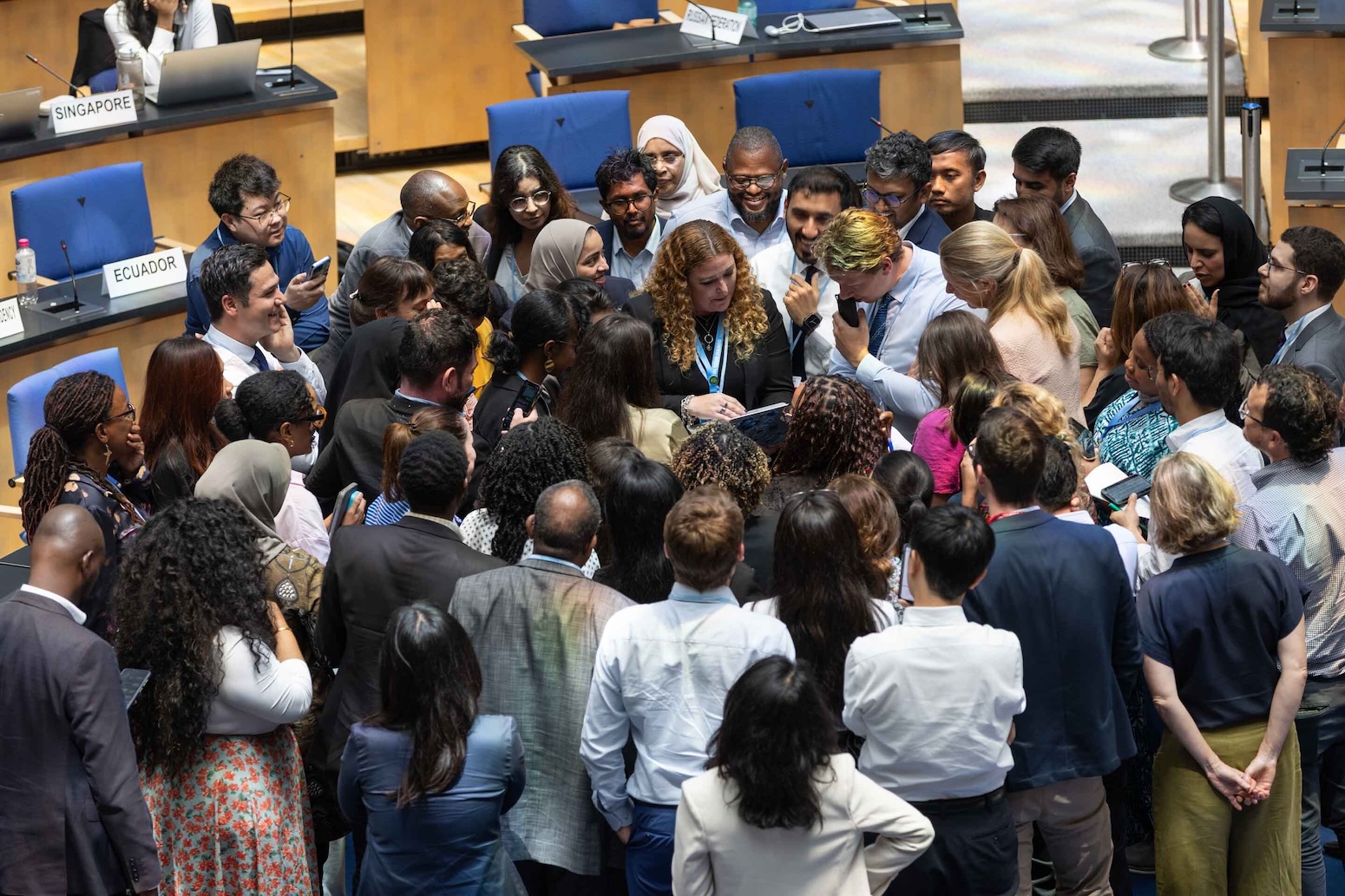
The omission has cast a shadow over international climate cooperation. Experts and activists warned that the summit risks becoming the least successful COP in history. Mohamed Adow, director of Power Shift Africa, told The Globe and Mail that the conference is detached from reality.
"Removing those words from a document will not remove the pollution from the atmosphere. It simply exposes how far these negotiations have become detached from what is needed outside this conference centre."
Mohamed Adow, Director of Power Shift Africa, via The Globe and Mail
The dispute centers on whether a modern climate agreement can ignore the primary drivers of global warming.
Tensions boiled over as a coalition of nations mounted a rare rebellion against the conference presidency. Panama’s Environment Minister, Juan Carlos Navarro, condemned the summit's direction, accusing the oil and gas lobby of hijacking the proceedings.
Navarro further characterized the resistance from petrostates as being driven by a"The COPs have become an exercise in hypocrisy and futility. What we have here is a contest to see who speaks the most, who blows the most hot air."
Juan Carlos Navarro, Environment Minister of Panama, via The Globe and Mail
petroleum mafiaand threatened to formally object or withhold support for the final deal.
Host nations Turkey and Australia defended the stripped-down text by pointing to alternative mitigation strategies. Turkey’s Minister of Environment, Murat Kurum, who oversaw the summit, argued that the overarching electrification goals imply a transition away from fossil fuels without needing explicit naming, noting that previous commitments made at COP28 in Dubai still stand. Australian Climate Change and Energy Minister Chris Bowen, who chaired the negotiations, acknowledged deep divisions but urged perseverance.
"People have strong views of course – I am not stepping away from that. But no one has said to me let's give up and go home."
Chris Bowen, Australian Climate Change and Energy Minister, via Yahoo News Canada
As The Los Angeles Times reported, the draft text attempts to pivot toward an electrification goal, aiming to increase electricity's share of total global energy consumption from roughly 21 percent to 35 percent by 2035. Yet critics pointed out that the current wording does not specify that this electricity must originate from renewable sources such as solar and wind, leaving open the possibility that fossil-fuel-powered generation could be counted. Additionally, the text incorporates targets to scale up carbon capture technology to trap hundreds of millions of tons of carbon dioxide by 2035, a measure that environmental groups argue gives heavy polluters a licence to continue extracting hydrocarbons.
| Proposal / Metric | Previous Target / Context | COP31 Draft Status |
|---|---|---|
| Fossil Fuel Phase-Out | Explicitly acknowledged at COP28 in Dubai | Removed from the COP31 draft following pressure from Saudi Arabia and other producers |
| Global Electrification | Roughly 21% of total global energy consumption currently | Target set to increase electricity share to 35% by 2035 |
| Climate Adaptation Finance | Proposed at $120 billion annually for developing nations | Specific financial figure removed from the latest text |
| Carbon Capture Deployment | Fewer than 0.2% of fossil emissions currently captured | Target introduced to capture 500 million tons by 2035, scaling toward 2.5 gigatons |
Financial disputes compounded the deadlock over mitigation. Poorer and developing nations, particularly vulnerable African and Pacific Island states, argued that emissions targets are meaningless without adequate resources to cope with existing climate impacts. Earlier versions of the agreement included a concrete proposal to provide $120 billion annually to help developing nations adapt to climate change, but that figure was stripped from the Thursday draft. Tasneem Essop, executive director of Climate Action Network International, stated via The Globe and Mail that there is nothing on the table that protects people, or addresses the priorities of the Global South.
Representing the African Group of negotiators, Ghana’s Environment Minister Zanetor Agyeman-Rawlings delivered a blunt assessment of the funding impasse, stating according to Yahoo News Canada that the African continent will not accept an outcome offering declarations without resources, and emphasizing that delegates did not come to the summit to beg. Developing nations stressed that major historic emitters must deliver predictable finance for infrastructure, disaster recovery, and adaptation.
The absence of key global polluters further complicated the summit dynamics. As highlighted by The Winnipeg Free Press, the United States—the world's largest economy and a major historical greenhouse gas emitter—did not participate directly in the Antalya talks. Observers noted that pressing wealthy nations for financial commitments becomes significantly harder when major economic powers are absent from the negotiating rooms.
Preparations for the broader trajectory of international climate policy also reflect deep institutional strain. Technical discussions earlier in the year, such as those covered by Carbon Brief at subsidiary body sessions in Bonn, repeatedly stalled over agenda fights, public finance gaps, and disputes regarding national sovereignty over domestic adaptation spending.
What to Watch Next
- Publication of a new and potentially final agreement text by conference organizers on Saturday.
- Continued wrangling over whether language regarding fossil fuel transitions can be reinstated into the Antalya Accords.
- Decisions on whether compromise financial figures for adaptation will be restored to appease the Africa Group and island coalitions.
- Preparations for the next annual climate summit, scheduled to take place in Ethiopia's capital, Addis Ababa, in November 2027.