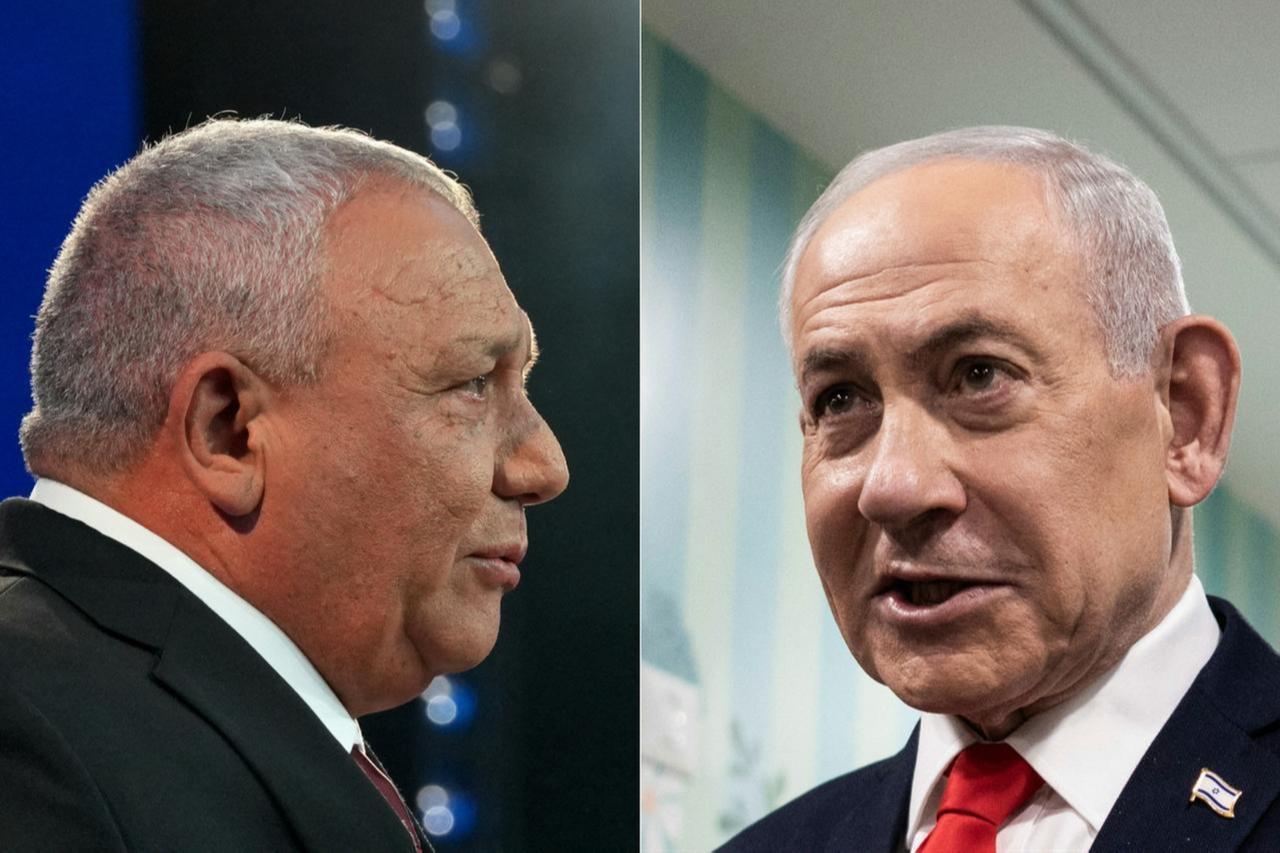
Eisenkot invites Netanyahu's Likud to coalition talks as deadline looms
Opposition leader Gadi Eisenkot has invited Benjamin Netanyahu's Likud party to coalition negotiations as a deadline forces efforts to break an electoral stalemate.
Gadi Eisenkot has invited caretaker Prime Minister Benjamin Netanyahu's right-wing Likud party to coalition negotiations as a fast-approaching deadline forces frantic efforts to assemble a governing majority following a deadlocked election.
The centrist Yashar party announced that the talks reflect a genuine commitment to forming the broadest possible government before the expiration of the mandate granted by President Isaac Herzog. Eisenkot, a former military chief who leads the opposition's Yashar party, has until next month to form a government to replace Netanyahu after an inconclusive October election failed to deliver a clear parliamentary majority for either political bloc.
Media additions


Under Israel's parliamentary system, securing the premiership requires the backing of 61 of the 120 members of the Knesset. Partial and final electoral tallies showed Netanyahu and his far-right and ultra-Orthodox allies capturing 53 seats, remaining the largest single bloc but falling short of a majority. Meanwhile, Eisenkot's Change bloc secured 48 seats, and Arab-led political parties made unprecedented gains by capturing 19 seats.
Faced with this parliamentary stalemate, Eisenkot outlined three distinct paths to power in a detailed social media post, acknowledging that each track requires parties to compromise on previously unyielding campaign pledges. The first path involves negotiations with ultra-Orthodox, or haredi, parties on military conscription exemptions—a platform issue the change bloc had vowed to dismantle. The second path involves a national unity government with Likud. The third path involves a minority government sustained by the outside support of Arab-led factions, a prospect fiercely criticized by political opponents.
| Political Bloc / Party | Key Leaders | Projected Seats |
|---|---|---|
| Netanyahu Coalition | Benjamin Netanyahu | 53 |
| Change Bloc (Yashar & Allies) | Gadi Eisenkot, Naftali Bennett | 48 |
| Arab-Led Parties | Mansour Abbas, Joint List leaders | 19 |
The outreach to Likud immediately triggered friction within the broader anti-Netanyahu camp. Former prime minister Naftali Bennett declared that his party remains committed to ensuring Netanyahu will not be the next prime minister, explicitly ruling out joining his bloc under any circumstances. Simultaneously, Likud presented a rigid set of 10 conditions for any unity government. Netanyahu's most significant demand is that he serve as prime minister for the full four-year term, effectively rejecting a rotation agreement that would install Eisenkot as premier. Likud's terms also demand the retention of far-right allies like National Security Minister Itamar Ben-Gvir, the rejection of Palestinian statehood, maintenance of security zones across Gaza, Lebanon, and Syria, and the appointment of a politically managed inquiry rather than an independent state commission into the security failures of the October 7, 2023, attacks.
Tensions have been further exacerbated by regional security maneuvers. U.S. And Israeli officials confirmed that Netanyahu pressed for renewed military strikes against Iran during the election cycle, drawing a sharp public rebuke from Eisenkot, who warned civil servants and security chiefs to serve the state rather than individual political ambitions. Eisenkot has vowed not to let coalition talks drag on indefinitely, signaling readiness to put a minority national emergency government to a parliamentary vote if broad-based negotiations collapse.
President Herzog is expected to formally receive official election results and begin comprehensive consultations with all political factions, warning that "we must do everything we can, certainly after yesterday, to avoid another round of elections." If Eisenkot fails to assemble a viable government before his mandate lapses, or if political gridlock proves unbreakable, the country faces the prospect of returning to the polls.
What to watch next
- President Isaac Herzog's formal consultations with political faction leaders to officially award the government-forming mandate.
- The conclusion or breakdown of marathon negotiation sessions between Yashar and Likud negotiators.
- Potential parliamentary votes on a minority emergency government or alternative coalition arrangements before the mandate expiration deadline.
Explore broader regional developments via our World coverage, or review historical context on recent political friction including parliamentary speaker shifts and high-stakes diplomatic clashes over military strategy.