Greater Anglia train derails in Essex following East Sussex incident
Transport networks across southeast England face severe disruption following a passenger train derailment near Wickford in Essex, occurring less than a day after a similar incident in East Sussex.

- Core Development: Transport networks across southeast England face severe disruption following a passenger train derailment near Wickford in Essex, occurring less than a day after a similar incident in East Sussex.
- Beat Context: Categorized under World with independent corroboration.
- Reporting Depth: 4 minute analytical read synthesized from verified newsroom sources.
Transport networks across southeast England face severe disruption following a passenger train derailment near Wickford in Essex on Friday, 14 August 2026, occurring less than twenty-four hours after a separate train derailment in East Sussex.
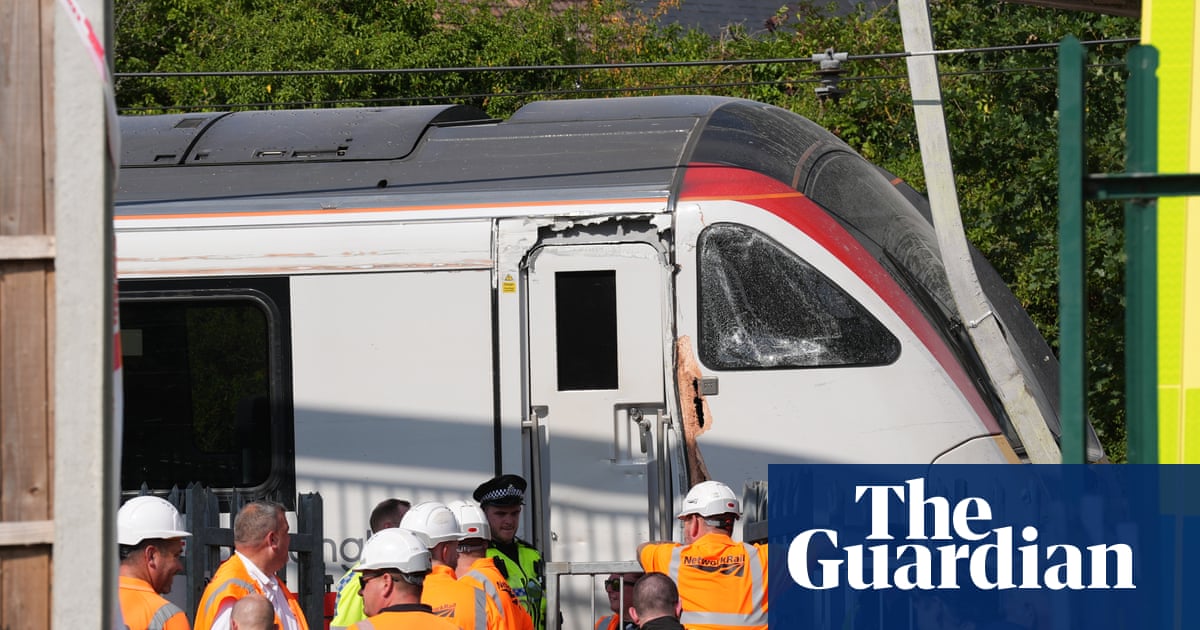
The Greater Anglia train derailed at 2.12pm on Friday south of Wickford railway station, according to the British Transport Police. The service was travelling from Southend towards London Liverpool Street, having left Rayleigh at 2.06pm before failing to reach Wickford as planned. Basildon Borough Council reported that between 40 and 45 passengers were on board when the rear carriages left the tracks but remained in an upright position. Emergency services, including paramedics, firefighters, and a specialist Hazardous Area Response Team alongside two air ambulances deployed as a precaution, rushed to the location. Medical crews assessed 62 patients on board the train, all of whom were discharged at the scene. Responders also assisted in evacuating a second train that was unable to continue its journey due to the derailment, with no casualties among those on board.
Media additions


The incident arrived in the wake of a major incident declared by British Transport Police in East Sussex when three carriages of a Southern train ended up on their side, trapping passengers near Lewes on Thursday afternoon, 13 August 2026. Around 150 people had been on board the service from London Victoria to Eastbourne, which required evacuation. John Whitehurst, chief executive of Greater Thameslink Railway, praised four railway workers onboard the Lewes train—the driver, onboard supervisor, a spare driver, and an off-duty member of staff—for acting quickly to help make the railway safe and support passengers during the evacuation. Two people were taken to major trauma centres with severe injuries, and the British Transport Police stated on Friday that these were not deemed to be life-threatening. Eighteen other individuals were treated at hospital and have since been discharged.
Transport officials and engineering experts have pointed to the severe summer weather as a contributing factor under investigation. Martin Frobisher, group safety and engineering director at Network Rail, stated that the unprecedented hot and dry weather that we have experienced this summer has presented exceptional challenges to the railway. Network Rail noted it had taken several additional proactive steps to manage and mitigate the impact on the railway, including closely monitoring the temperature of tracks, implementing speed restrictions where appropriate, and planning track renewals around high temperatures, while urging the public to avoid premature speculation. John Lawrence, chair of the Institution of Engineering and Technology's Railway Technical Network, told the Science Media Center that heat expansion could cause rails to buckle, a risk compounded by consecutive days and evenings of hot weather, not allowing heat to dissipate. Professor Xueyu Geng of the University of Warwick added that steel rail was known to expand significantly in extreme heat, with a 1C rise in temperature causing approximately 11mm of expansion per kilometre of track. Richard Bowker, a former chair of the Strategic Rail Authority, told the BBC Radio 4 Today programme that the inquiry would look at the effects of heat on the damaged track, including whether the ground below the track had dried out. James MacCleary, the Liberal Democrat MP for Lewes, told Times Radio that concerns had been raised about tracks being a bit bumpier in recent months in the area as a result of sustained heatwaves. Gareth Dennis, a railway engineer and author, noted that while there was no firm evidence connecting the two derailments, the likelihood of two similar derailments in the hottest part of the country happening in quick succession without a common cause was extremely low, adding there was a high likelihood of a track buckle.
Transport Secretary Heidi Alexander met with sector leaders and urged against speculation while the Rail Accident Investigation Branch deployed inspectors to both derailment sites. Department for Transport representatives emphasized that our railways remain amongst the safest in the world and while incidents like this are extremely rare, when they do occur, they are taken very seriously.
The disruption has crippled regional travel. National Rail confirmed that all lines between Wickford and Southend Victoria are closed, resulting in the full cancellation of Greater Anglia services between London Liverpool Street and Southend Victoria. The Southminster branch line is also affected by this issue, and services are currently unable to run between Wickford and Southminster. Ticket restrictions for today have been lifted, and tickets dated for today will be valid tomorrow at no extra cost, though operators have strongly advised customers not to travel between Shenfield and Southend Victoria until further notice, warning that trains are expected to be extremely busy with passengers advised to allow at least one extra hour for their journey.
Key Incident Timeline and Travel Impacts
- Thursday, 13 August 2026 afternoon: Southern Rail train derails near Lewes, East Sussex, trapping passengers and injuring twenty people, two seriously.
- Friday, 14 August 2026, 2.06pm to 2.12pm: Greater Anglia service from Southend leaves Rayleigh and its rear carriages subsequently derail upright near Wickford, Essex; emergency services dispatch significant resources and assess sixty-two patients on site.
- Ongoing: RAIB inspectors gather evidence at Wickford and Lewes; National Rail warns of major cancellations affecting Liverpool Street, Southend Victoria, and Southminster lines with no trains running between Wickford and Southend Victoria until further notice.
How significant is this development?
Contribute your assessment to the aggregated reader sentiment ledger.
Frequently Asked Questions
Key questions answered in this reportWhat is the key development in: Greater Anglia train derails in Essex following East Sussex incident?
Transport networks across southeast England face severe disruption following a passenger train derailment near Wickford in Essex, occurring less than a day after a similar incident in East Sussex.
Why is this World development significant for the UK?
This report covers critical events in our World beat. Independent reporting monitors related UK statements, regulatory shifts, and public responses as further verified details emerge.
How was this reporting corroborated and verified?
Newsarchy UK compiles and cross-references reporting from primary reporting from manchestereveningnews.co.uk and cross-checked wire reports. All coverage adheres to published editorial standards.
When was this report published?
This briefing was published on August 15, 2026 and is permanently cataloged in the Newsarchy UK World archives.