Gulf shipping traffic down after Houthis say they attacked Saudi tanker
Gulf shipping traffic dropped sharply on Wednesday following maritime attacks and Houthi claims, compounding regional trade paralysis.
- Core Development: Gulf shipping traffic dropped sharply on Wednesday following maritime attacks and Houthi claims, compounding regional trade paralysis.
- Beat Context: Categorized under World with independent corroboration.
- Reporting Depth: 4 minute analytical read synthesized from verified newsroom sources.
Gulf shipping traffic dropped significantly on Wednesday, according to shipping data, following a series of maritime attacks and renewed military claims in the region. The sharp decline across vital regional chokepoints unfolded as Associated Press reporting via Winnipeg Free Press highlighted high-stakes diplomatic maneuvering over the Strait of Hormuz, where Iran and the United States signaled a potential breakthrough even as core disagreements remained.
Shipping data from Kpler, cited by Reuters via Aol, showed that just two vessels transited the Strait of Hormuz on Wednesday. This traffic included a Panama-flagged coal carrier entering the waterway and a commodity vessel flagged in the Marshall Islands exiting. The volume represented a steep fall from eight vessels the previous day, and stood in stark contrast to historical patterns. Before the U.S.-Israeli war with Iran began, roughly 130 to 140 ships would typically traverse the waterway daily prior to Iran closing the strait in response to the outbreak of hostilities.
Media additions
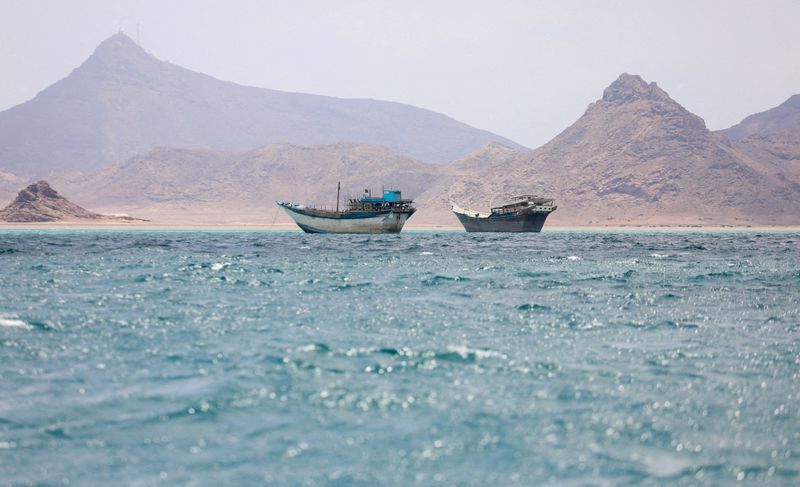
A similar contraction paralyzed the Bab-el-Mandeb strait on Wednesday. Only a single commodity vessel, a Bahamas-flagged dry bulk carrier, crossed the strait, down from 20 vessels the prior day. The paralysis followed an announcement from Yemen's Iran-aligned Houthi movement claiming responsibility for launching missile attacks on two Saudi oil tankers. According to Reuters reporting via Aol, one attack targeted a tanker off the coast of the Saudi Red Sea port city of Yanbu, while the other targeted a tanker in the Gulf of Aden. Saudi Arabia offered no immediate confirmation of either incident.
The British military’s United Kingdom Maritime Trade Operations center reported that a vessel sailing in the Gulf of Aden experienced a loud explosion nearby, confirming that the crew remained safe. The Houthis instituted a naval blockade on Saudi Arabia in the Red Sea last month, citing what they termed a Saudi siege on Yemen—an allegation denied by Riyadh. This escalation threatens to reignite Yemen’s broader civil war, which has historically pitted the Houthi movement against a Saudi-led coalition backing the Yemeni government.
Concurrently, diplomatic efforts to resolve the shutdown of the Strait of Hormuz reached a delicate juncture. Iran announced it was in the final stage of drafting an agreement with Oman concerning the waterway, and U.S. President Donald Trump remarked that an announcement could materialize swiftly. Speaking to reporters, Trump stated that significant progress had been achieved. Vice President JD Vance described the diplomatic push as messy, noting in a Fox News Channel interview that negotiations with Iran take time and can occasionally involve setbacks.
However, the outline of the potential Oman-Iran deal exposes deep fissures with Washington. Regional officials briefed on the talks told AP that negotiators finalized a draft to reopen the strait, which awaits final approval from Iran’s Supreme Leader Ayatollah Mojtaba Khamenei. Under the proposed temporary framework, ships would enter the Persian Gulf via an Iranian-controlled route and exit through an Omani-controlled route, with service fees levied for security and environmental preservation. The U.S. Has strongly opposed any arrangement that permits Iran to charge such fees or cements Tehran's long-term control over the strait, which Washington views as a breach of global maritime norms.
The closure of the strait has throttled the flow of roughly a fifth of the world’s traded oil and natural gas, driving up fuel prices and basic goods while straining the global economy. U.S. And Israeli forces initiated the war with stated goals of dismantling Iran's nuclear program and toppling Tehran's government. With those objectives unmet, the conflict has devolved into a bitter contest over maritime access. Brent crude hovered around $80 per barrel on Wednesday, easing initially before inching upward, remaining below its peak crisis levels.
Further compounding regional instability, the shaky ceasefire between Israel and Hezbollah showed signs of fraying. The Israeli military issued evacuation warnings for the southern Lebanese village of Mansouri and launched precise strikes following what it termed a blatant violation of the June ceasefire. Lebanese and Israeli negotiators meeting in Rome for peace talks saw their discussions end early due to developments on the ground, though a State Department official indicated the productive dialogue could resume.
What to Watch Next
- Potential announcements regarding the finalization and approval of the draft Strait of Hormuz agreement between Iran and Oman.
- Response from the U.S. Administration and regional partners regarding proposed transit routes and service fees.
- Further developments in the Red Sea and Gulf of Aden following Houthi shipping claims and Saudi responses.
- Continuation or rescheduling of the diplomatic talks in Rome concerning implementation of the Israel-Hezbollah ceasefire.
For ongoing updates on regional security and international diplomacy, consult World coverage.
How significant is this development?
Contribute your assessment to the aggregated reader sentiment ledger.
Frequently Asked Questions
Key questions answered in this reportWhat is the key development in: Gulf shipping traffic down after Houthis say they attacked Saudi tanker?
Gulf shipping traffic dropped sharply on Wednesday following maritime attacks and Houthi claims, compounding regional trade paralysis.
Why is this World development significant for the UK?
This report covers critical events in our World beat. Independent reporting monitors related UK statements, regulatory shifts, and public responses as further verified details emerge.
How was this reporting corroborated and verified?
Newsarchy UK compiles and cross-references reporting from primary reporting from winnipegfreepress.com and cross-checked wire reports. All coverage adheres to published editorial standards.
When was this report published?
This briefing was published on August 6, 2026 and is permanently cataloged in the Newsarchy UK World archives.