Houthis kill 10 in Yemen as attacks on Saudi-backed troops escalate
Escalating Houthi missile and drone strikes across Yemen's Marib and Hadramout provinces have killed at least 10 people, shattering a regional lull.

- Core Development: Escalating Houthi missile and drone strikes across Yemen's Marib and Hadramout provinces have killed at least 10 people, shattering a regional lull.
- Beat Context: Categorized under World with independent corroboration.
- Reporting Depth: 3 minute analytical read synthesized from verified newsroom sources.
Yemen's Iran-backed Houthi movement escalated its campaign against Saudi-backed forces with a wave of missile and drone strikes across Marib and Hadramout provinces, killing at least 10 people in ongoing violence, according to a health minister and military sources. The attacks followed an earlier offensive that left dozens dead, shattering a multi-year lull in the Arabian Peninsula conflict and drawing fresh security anxieties across the wider region.
The renewed bloodshed in Yemen comes as regional dynamics shift dramatically under the pressure of the broader conflict involving the United States, Israel, and Iran. Houthi military spokesman Yahya Saree announced that the group carried out a large-scale operation targeting what it termed Saudi military build-ups, while the internationally recognized government reported that air defences intercepted multiple drones over Marib city.
Media additions

According to Al Jazeera, the initial wave of strikes hit camps belonging to the Homeland Shield Forces, Emergency Forces, and the First Military Region, causing heavy casualties because troops had gathered for morning exercises. A senior Saudi official warned journalists that intelligence reports indicated the Houthis and Iraqi armed groups might launch coordinated attacks under the supervision of Iran's Islamic Revolutionary Guard Corps against energy infrastructure, ports, and airports.
Those threats prompted regional realignments. Saudi Arabia, Turkey, and Pakistan finalized a joint defense agreement in Mecca stipulating that an attack on one nation is an attack on all three, though Iranian officials swiftly dismissed the pact. Ebrahim Rezaei, a member of Iran's parliament, criticized the agreement, stating that paper pacts would not provide security just as dependence on Americans failed to do.
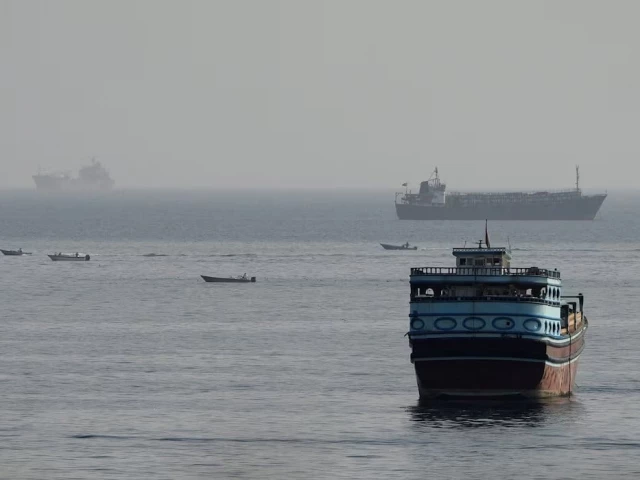
Meanwhile, shipping through vital Middle Eastern waterways remained severely restricted. Data from analytics firm Kpler showed that transit volumes through the Strait of Hormuz and Bab el-Mandeb dropped sharply, though indirect talks between Iran and Oman advanced toward a new regulatory framework for commercial vessels navigating the Persian Gulf gateway.
Recent Middle East Security Developments
- Houthi missile and drone strikes hit residential neighborhoods, displacement camps, and military positions in Marib and Hadramout, killing at least 10 people in the latest reported violence.
- Iran and Oman neared a preliminary framework agreement regarding shipping management through the Strait of Hormuz.
Diplomatic and military fronts remain fluid. While Iraq's Badr Organization leader Hadi al-Amiri appealed to domestic resistance groups to postpone retaliatory strikes against Saudi Arabia for the sake of national interest, military forces across the coalition remain on high alert. Observers note that the trajectory of the crisis will depend heavily on whether broader de-escalation talks between Washington and Tehran can take root before further maritime and territorial skirmishes trigger a wider conflagration.
The escalating military activity in Yemen represents a sharp reversal of the relative calm that had largely prevailed since a truce took effect in 2022. According to reporting from regional and international outlets, the Houthi leadership has increasingly aligned its operations with broader anti-Western and anti-coalition objectives tied to the conflict that erupted when the United States and Israel launched strikes against Iran.
The humanitarian toll in Marib has continued to climb as residential districts and displacement camps sustain direct impacts from ballistic missiles and explosive drones. Local health authorities reported that emergency departments remain mobilized under conditions of severe strain as medical teams treat scores of wounded personnel and civilians.
In addition to the territorial fighting inside Yemen, the maritime theater remains exceptionally tense. Commercial operators have demonstrated extreme caution, with daily transit counts through key chokepoints remaining a fraction of pre-conflict levels despite ongoing discussions between regional states regarding transit protocols.
Analysts monitoring the Arabian Peninsula emphasize that the convergence of domestic grievances, stalled political tracks, and regional proxy dynamics creates a volatile mixture. As coalition commanders weigh their operational responses to the recent cross-border strikes and camp bombardments, diplomatic channels face immense pressure to prevent further escalation across both land and sea corridors.
How significant is this development?
Contribute your assessment to the aggregated reader sentiment ledger.
Frequently Asked Questions
Key questions answered in this reportWhat is the key development in: Houthis kill 10 in Yemen as attacks on Saudi-backed troops escalate?
Escalating Houthi missile and drone strikes across Yemen's Marib and Hadramout provinces have killed at least 10 people, shattering a regional lull.
Why is this World development significant for the UK?
This report covers critical events in our World beat. Independent reporting monitors related UK statements, regulatory shifts, and public responses as further verified details emerge.
How was this reporting corroborated and verified?
Newsarchy UK compiles and cross-references reporting from primary reporting from aljazeera.com and cross-checked wire reports. All coverage adheres to published editorial standards.
When was this report published?
This briefing was published on August 7, 2026 and is permanently cataloged in the Newsarchy UK World archives.