Iran closes Strait of Hormuz after firing on vessel
The Islamic Revolutionary Guard Corps has closed the Strait of Hormuz indefinitely after firing warning shots at a vessel. This action follows the collapse of ceasefire negotiations and escalating military engagements in the region.
- Core Development: The Islamic Revolutionary Guard Corps has closed the Strait of Hormuz indefinitely after firing warning shots at a vessel. This action follows the collapse of ceasefire negotiations and escalating military engagements in the region.
- Beat Context: Categorized under World with independent corroboration.
- Reporting Depth: 3 minute analytical read synthesized from verified newsroom sources.
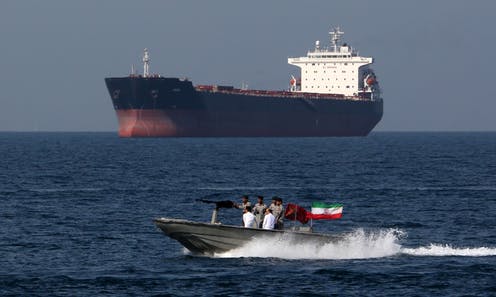
The Islamic Revolutionary Guard Corps (IRGC) Navy announced early Sunday, 12 July 2026, that it has closed the Strait of Hormuz until further notice. The announcement followed an incident in which the IRGC fired warning shots at a vessel, which the Navy claimed had disregarded repeated instructions to maintain an approved course and had switched off its onboard systems. According to statements carried by Iranian state media, the ship was struck and brought to a halt after attempting to navigate via an unauthorized route.
The IRGC stated that the closure is intended to persist until the end of what it described as American interference in the region. Furthermore, the Revolutionary Guards warned that any retaliatory actions or military strikes would be met with a severe response, specifically threatening to target new regional military bases.
Media additions


Escalation in a Critical Chokepoint
The Strait of Hormuz serves as a primary transit artery for approximately one-fifth of the world’s supply of crude oil and liquefied natural gas. The waterway is currently the focus of a deteriorating conflict, with the latest maritime blockade following a series of military engagements throughout the week. US Central Command confirmed the execution of a third round of US airstrikes against Iranian targets, directed by President Donald Trump. These operations were initiated after an attack on the M/V GFS Galaxy, a Cyprus-flagged container ship.
The United States has demanded that Iran cease all attacks on commercial mariners and guarantee unrestricted navigation through the passage. Conversely, Tehran maintains that it holds the right to regulate the strait and has indicated it will not return to pre-war navigation standards, citing plans to implement a system for charging fees to vessels. Under customary international law, countries are generally not permitted to impose tolls on straits used for international navigation.
Diplomatic Stagnation
The blockade has created doubt regarding the status of an interim agreement aimed at ending the war, which commenced on 28 February 2026, following joint US and Israeli strikes. President Trump declared on Friday, 10 July 2026, that the ceasefire is over. Efforts to manage the crisis are being coordinated through intermediaries in Oman and Qatar. Iranian Foreign Minister Abbas Araqchi met with the Omani Foreign Minister, Sayyid Badr Albusaidi, in Oman to exchange views on potential mechanisms for the safe passage of ships. While Omani state media indicated that negotiators would continue discussions at technical and political levels, no immediate resolution has emerged.
Draft proposals reported by international media suggested a potential framework for free navigation through a southern corridor in Omani territorial waters, with vessels transiting the northern corridor through Iranian waters requiring prior approval from Iran.
Broader Regional Tensions
The diplomatic situation is complicated by ongoing security concerns. Following reports that Israel shared intelligence suggesting Iran had devised plans to assassinate President Trump, the President stated he had ordered the military to be prepared to launch thousands of missiles against Iran should such an attempt occur. Simultaneously, the new supreme leader of Iran, Ayatollah Mojtaba Khamenei, issued a statement on Saturday, 11 July 2026, pledging vengeance for the death of his predecessor and father, who died on 28 February 2026.
As international shipping companies monitor developments, US officials have emphasized that the United States is imposing costs to degrade the ability of Iranian forces to disrupt commercial shipping. Meanwhile, Iran continues to signal that it will accept no alternative to its own administrative control over the strait.
How significant is this development?
Contribute your assessment to the aggregated reader sentiment ledger.
Frequently Asked Questions
Key questions answered in this reportWhat is the key development in: Iran closes Strait of Hormuz after firing on vessel?
The Islamic Revolutionary Guard Corps has closed the Strait of Hormuz indefinitely after firing warning shots at a vessel. This action follows the collapse of ceasefire negotiations and escalating military engagements in the region.
Why is this World development significant for the UK?
This report covers critical events in our World beat. Independent reporting monitors related UK statements, regulatory shifts, and public responses as further verified details emerge.
How was this reporting corroborated and verified?
Newsarchy UK compiles and cross-references reporting from primary reporting from usatoday.com and cross-checked wire reports. All coverage adheres to published editorial standards.
When was this report published?
This briefing was published on July 12, 2026 and is permanently cataloged in the Newsarchy UK World archives.