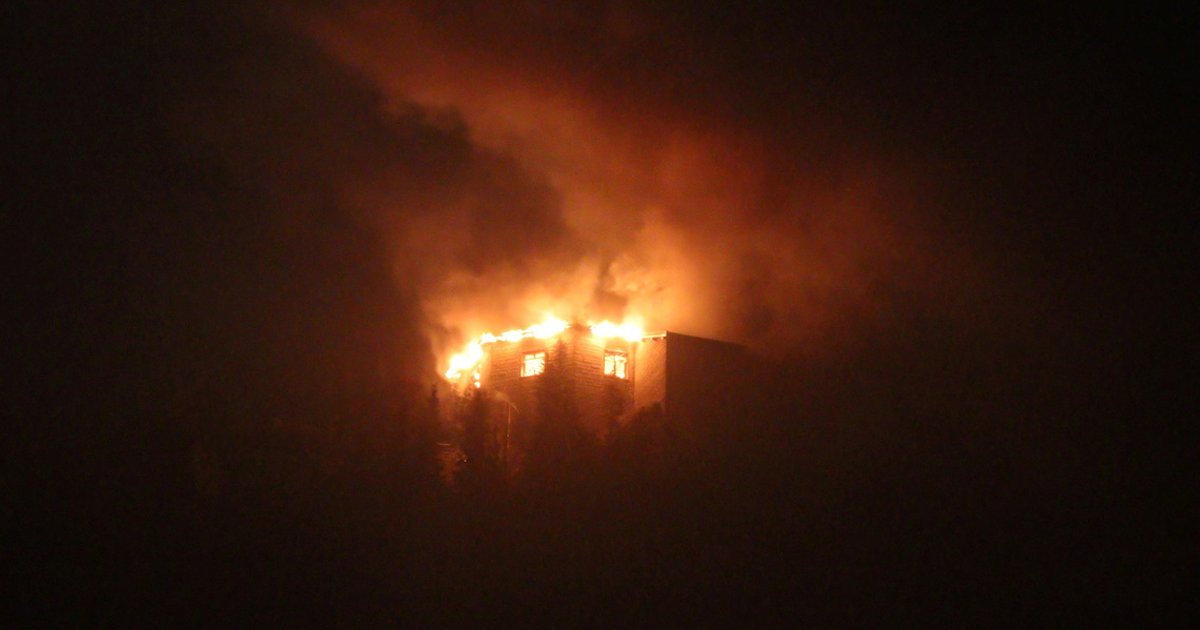
Iran plans to announce new 'exclusion zone' near Strait of Hormuz
Iran plans to declare a restricted exclusion zone near the Strait of Hormuz, placing transiting vessels on a sanctions list amidst an ongoing US blockade.

- Core Development: Iran plans to declare a restricted exclusion zone near the Strait of Hormuz, placing transiting vessels on a sanctions list amidst an ongoing US blockade.
- Beat Context: Categorized under World with independent corroboration.
- Reporting Depth: 3 minute analytical read synthesized from verified newsroom sources.
Tehran plans to declare a restricted "exclusion zone" outside the Strait of Hormuz targeting vessels attempting to transit the waterway. The announcement came from Mohsen Rezaei, the newly appointed head of Iran's Supreme National Security Council, during an interview with state television on Sunday. According to Rezaei, the planned exclusion zone will begin at the outer boundary of the ongoing US naval blockade, stretch toward the Strait of Hormuz, and extend inward into the Persian Gulf.
Any identified vessel entering the zone with the intention of passing through the strait will be placed on an Iranian sanctions list, Rezaei stated. Details regarding the exact geographical boundaries remain sparse, and it remains unclear precisely where Tehran defines the perimeter of the weeks-long American blockade. The blockade itself is aimed at Iranian ports and preventing Tehran from shipping out its oil. The US military reported that over twenty warships are supporting the blockade, which by Sunday had redirected commercial ships and disabled three vessels.
Media additions


The escalation follows a violent sequence of events in the Strait of Hormuz that shattered a month of relative calm. On Saturday, the United States struck three Iranian oil tankers in direct response to Iranian ballistic missiles fired at US warships. Analysts noted that targeting warships marked a dangerous tactical escalation compared to previous incidents involving commercial vessels. In a further contested claim, Iranian state media reported that forces had successfully struck an unmanned American vessel attempting to enter restricted waters. Capt. Tim Hawkins, a spokesperson for the US Central Command, forcefully rejected the assertion, labeling it a total lie.
Diplomatic channels appear severely strained following the collapse of negotiations. Rezaei expressed sharp frustration toward regional mediators in Pakistan, Qatar, and Oman, arguing that intermediaries failed to enforce a mid-June memorandum of understanding that collapsed shortly after signing amid mutual violations by both sides. Consequently, Tehran is pivoting toward demanding strict guarantees for any future diplomatic engagement. Rezaei remarked on state television:
"We had trusted our friends in Pakistan, Qatar or Oman, thinking that since they had stepped in as mediators, one of a mediator’s responsibilities is that if one side violates the agreement, they should stop them. We are now pursuing diplomacy with guarantees."
Mohsen Rezaei, Head of Iran's Supreme National Security Council, via State Broadcaster
Meanwhile, international energy markets continue to navigate the turbulence. US Energy Secretary Chris Wright reported that roughly nine million barrels of oil pass through the strait daily, assisted by regional pipelines and US Navy escorts. Wright acknowledged that while Washington currently bears primary responsibility for securing the corridor, he anticipates international allies will eventually contribute military support to protect global trade. At the same time, Rezaei claimed during his interview that Iran's daily oil trade continues unimpeded, moving between one million and one and a half million barrels.
Broader geopolitical pressures compound the maritime standoff. The Trump administration maintains a dual-track strategy combining military enforcement in the Persian Gulf with aggressive financial penalties targeting foreign institutions handling Iranian assets. Observers note that further military friction in the Strait of Hormuz is anticipated as Tehran prepares to formally enact its declared exclusion zone in the coming days and weeks.
How significant is this development?
Contribute your assessment to the aggregated reader sentiment ledger.
Frequently Asked Questions
Key questions answered in this reportWhat is the key development in: Iran plans to announce new 'exclusion zone' near Strait of Hormuz?
Iran plans to declare a restricted exclusion zone near the Strait of Hormuz, placing transiting vessels on a sanctions list amidst an ongoing US blockade.
Why is this World development significant for the UK?
This report covers critical events in our World beat. Independent reporting monitors related UK statements, regulatory shifts, and public responses as further verified details emerge.
How was this reporting corroborated and verified?
Newsarchy UK compiles and cross-references reporting from primary reporting from orlandosentinel.com and cross-checked wire reports. All coverage adheres to published editorial standards.
When was this report published?
This briefing was published on September 7, 2026 and is permanently cataloged in the Newsarchy UK World archives.