Israeli drone strike on vehicle in Beit Jinn injures several people in Syria
An Israeli drone strike targeting a vehicle in Beit Jinn injured people, drawing condemnation from Damascus and Qatar over the violation of sovereignty.

- Core Development: An Israeli drone strike targeting a vehicle in Beit Jinn injured people, drawing condemnation from Damascus and Qatar over the violation of sovereignty.
- Beat Context: Categorized under World with independent corroboration.
- Reporting Depth: 3 minute analytical read synthesized from verified newsroom sources.
An Israeli drone strike hit a vehicle in southwestern Syria on Saturday, 22 August 2026, injuring several people and drawing sharp condemnation from Damascus and international allies.
The targeted blast struck a small delivery truck on the main road connecting the farmland around Beit Jinn to the town itself in the western Damascus countryside, roughly 55km from the capital near Jabal al-Sheikh. According to local reporting from the area, neighbours rushed a wounded man to hospital after hearing the explosion. Medical sources described his condition as stable, noting an injury to his right hand. Discrepancies emerged over the casualty count: while the Syrian Ministry of Foreign Affairs and Expatriates stated that the drone strike resulted in multiple civilian injuries, official Syrian state media reports indicated a single person was wounded.
Media additions

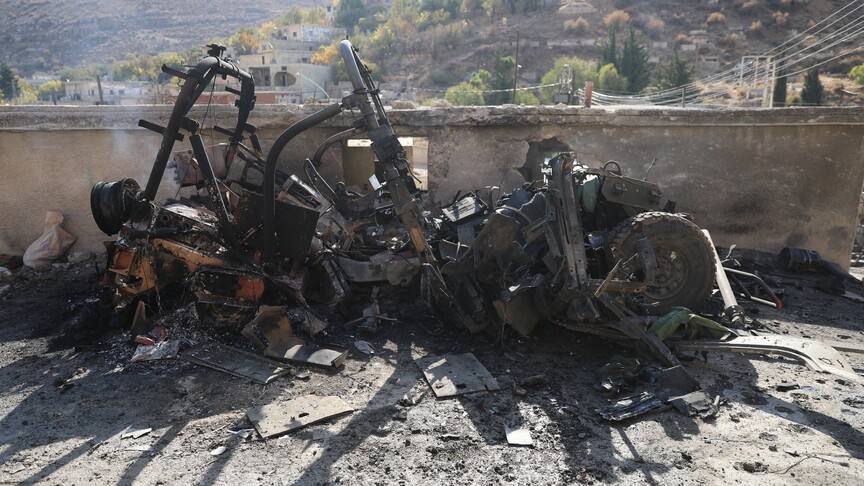
The Israel Defense Forces offered a different account of the operation. The Israeli military confirmed the strike in a statement, asserting that it had targeted a militant in the final stages of preparing an attack in southern Syria whose activity posed an immediate threat to Israeli forces operating in the area.
The Syrian Foreign Ministry condemned the assault in the strongest terms, characterising the vehicle as a civilian target. In a formal statement issued on Saturday, the ministry denounced the action as a flagrant violation of Syrian sovereignty, territorial integrity, and international law. Damascus held Israel fully responsible for the repercussions, warning that such attacks deepen regional tensions, undermine stability, and endanger civilian safety. The ministry called upon the United Nations Security Council and the wider international community to shoulder their legal and political responsibilities to halt the violations.
Doha added its voice to the criticism. Qatar issued a statement expressing strong condemnation and denunciation of the attack, viewing it as an unacceptable aggression that threatens regional security and safety while affirming its solidarity with the current Syrian government.
The strike follows a wider pattern of military escalation across the country. Following the fall of the Bashar al-Assad regime, Israel declared the 1974 disengagement agreement collapsed, moving forces into the demilitarized buffer zone and strategic positions such as Mount Hermon. Since then, Israeli forces have expanded operations, targeting weapons depots, missile stores, and military installations nationwide. Data from the Britain-based Syrian Observatory for Human Rights indicates that Israeli forces have conducted dozens of attacks on Syrian territory.
Tensions have similarly flared further north. Days prior to the Beit Jinn strike, Israeli warplanes launched eight airstrikes against the runway and infrastructure of the Abu al-Duhur military airport in Idlib province. Israeli Defense Minister Israel Katz defended the Idlib operation, stating that the strikes were ordered in response to clear intelligence concerning Turkish intentions at the base, and rejecting domestic political motivations ahead of general elections.
Security analysts suggest the strategy signals a broader territorial ambition. Muhsen al-Mustafa, a researcher at the Omran Center for Strategic Studies in Damascus, noted that Israel appears to be treating southern Syria as a security zone to fill a perceived vacuum, extending its reach far beyond the south to sites like Abu al-Duhur. Despite the ongoing exchanges, a Syrian diplomatic source indicated that Damascus remains committed to de-escalation, pursuing a security arrangement through United States mediation based on the historic disengagement framework.
What to watch next
- United Nations Security Council deliberations regarding Syrian demands for intervention.
- Potential developments in US-mediated security talks between Syrian and Israeli representatives.
- Upcoming Israeli general elections scheduled for October 27, 2026, amid ongoing domestic debate over military operations.
How significant is this development?
Contribute your assessment to the aggregated reader sentiment ledger.
Frequently Asked Questions
Key questions answered in this reportWhat is the key development in: Israeli drone strike on vehicle in Beit Jinn injures several people in Syria?
An Israeli drone strike targeting a vehicle in Beit Jinn injured people, drawing condemnation from Damascus and Qatar over the violation of sovereignty.
Why is this World development significant for the UK?
This report covers critical events in our World beat. Independent reporting monitors related UK statements, regulatory shifts, and public responses as further verified details emerge.
How was this reporting corroborated and verified?
Newsarchy UK compiles and cross-references reporting from primary reporting from aa.com.tr and cross-checked wire reports. All coverage adheres to published editorial standards.
When was this report published?
This briefing was published on August 22, 2026 and is permanently cataloged in the Newsarchy UK World archives.