Jordan court sentences three men to hang over October church massacre that killed nine
A Jordanian court sentenced three men to death by hanging for a deadly October church attack that killed nine people in Hamoud village.
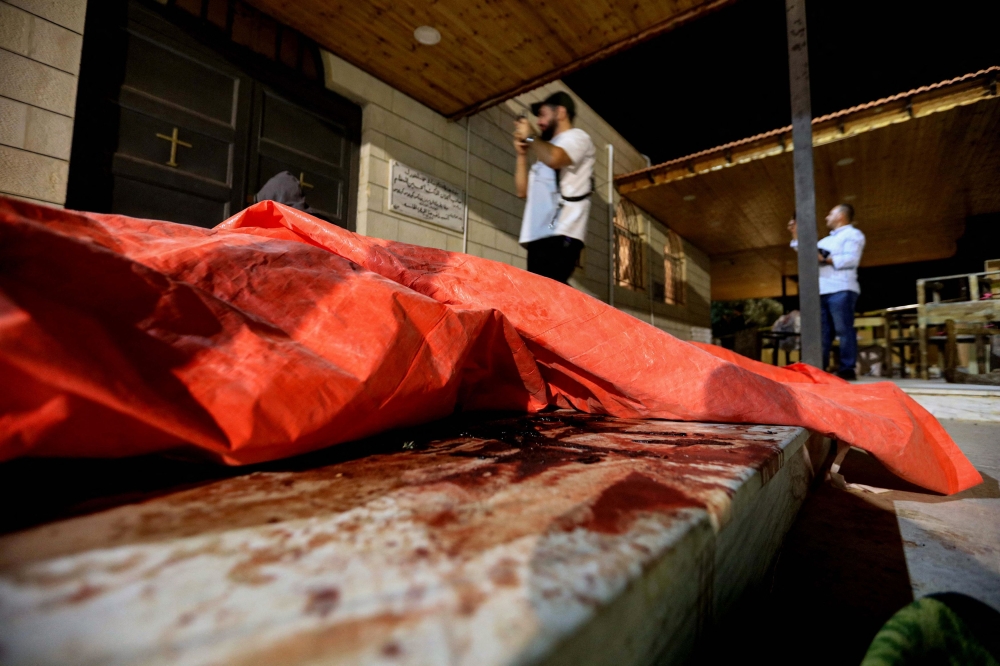
A Jordanian court on Sunday sentenced three men to death by hanging for their roles in last month's deadly gun attack on a Greek Orthodox church in the kingdom's south, bringing swift legal condemnation to a massacre that has profoundly rattled the nation.
The State Security Court issued its ruling on November 15, 2026, finding the trio guilty of committing terrorist acts resulting in death, weapons offenses, conspiracy, and promoting extremist ideology. According to reporting compiled by Malaymail and Al Jazeera, the bloodshed unfolded on October 23, 2026, when armed assailants stormed a funeral procession at St. George’s Church in Hamoud village, located within the Karak governorate.
Media additions

Nine people lost their lives and 25 others sustained injuries during the assault. Authorities identified the primary culprits as two Jordanian brothers and their relative by marriage. Following the attack, the suspects fled and were arrested three days later.
Beyond the three death sentences handed down for the direct perpetrators, the court also convicted two additional defendants on weapons charges, sentencing them to six years in prison for supplying arms to the attackers. Furthermore, one of the main perpetrators faced an additional conviction for providing funds intended to finance terrorist operations under anti-money laundering statutes.
The tragedy sent shockwaves through Jordan, a Muslim-majority kingdom where Christians account for roughly three percent of the population, numbering approximately 300,000 citizens within a broader population of 11.5 million. King Abdullah II condemned the massacre immediately after it occurred, writing on X that the attack would be met with the harshest retaliation and vowing that attempts to divide Jordanians would fail.
Reactions from the victims' families and community representatives reflected deep anguish blended with a demand for accountability. Farah Al-Masarwah, whose father Ala Al-Masarwah was killed in the carnage, shared her emotional turmoil on Facebook, stating she received the verdict with tears that left her uncertain whether she wept for joy or remorse. Another relative, Meral Zuraitat, daughter of Maher Zuraitat, wrote that justice had spoken and restored rights to innocent souls.
In a tangible display of mourning, the Council of Church Leaders in Jordan announced the complete cancellation of all Christmas-related celebrations for the year. Church authorities instructed congregations to transform their Christmas trees into symbols of hope, unity, and peace while designating specific memorial spaces to light candles for the victims. Meanwhile, regional context highlighted past security vulnerabilities in the region; The New Region and The Straits Times recalled a series of deadly 2016 militant attacks in Karak—including assaults near a tourist-heavy Crusader castle and security checkpoints—that previously left 10 people dead and were largely blamed on the Islamic State.
| Legal Role / Defendant | Judicial Charge | Sentence Issued |
|---|---|---|
| Three main perpetrators (two brothers and a relative) | Terrorist acts resulting in death, weapons offenses, conspiracy, and promoting extremist ideology | Death by hanging |
| Two secondary defendants | Weapons offenses and supplying arms to the attackers | Six years imprisonment |
The legal road ahead involves mandatory constitutional and judicial reviews before any executions can take place. According to Newscord and the Orange County Register, the State Security Court's ruling remains subject to appeal. Under Jordanian law, death sentences are automatically reviewed by the Court of Cassation within a 30-day window. Capital punishment cannot be carried out until the Cassation Court certifies the verdict and the King grants his official royal endorsement.