Calanus copepods reveal hidden bacterial foundation in Pacific food chains
New research shows Calanus copepods in the tropical Pacific rely heavily on bacteria for nutrition, while marine ecosystems face threats from warming and mining.

Microscopic marine crustaceans are reshaping our understanding of oceanic food webs, even as competing geopolitical powers vie for control of the seabed below them.
Recent scientific investigations reveal that Calanus copepods — drifting crustaceans that serve as a critical food source for fish and seabirds — depend heavily on bacteria across parts of the Pacific Ocean. According to research led by Hyuntae Choi and Kyung-Hoon Shin of Hanyang University ERICA alongside Brian Popp of the University of Hawaiʻi at Mānoa, roughly half of the nutritional foundation supporting copepods in the warm, nutrient-poor tropical Pacific traces back to bacteria. The copepods were collected on cruises between 2015 and 2020 using research ships such as the Isabu and the icebreaker Araon, with adult samples pulled from a depth of about 660 feet (200 meters) across regions stretching from the tropical and subtropical Pacific through the subarctic Pacific and the Bering Sea as far as the Bering Strait and the southern Chukchi Sea.
Media additions
This microscopic reliance shifts dramatically by latitude. Near the Bering Strait and the southern Chukchi Sea, algae supply more than half of the copepods' nutritional foundation, driven largely by single-celled dinoflagellates rather than diatoms. The findings, published in the journals Earth and Science Advances, underscore how warming-driven changes in ocean stratification and nutrient dynamics are actively reshaping planktonic ecosystems. In the tropical Pacific, the water column is strongly layered with a warm surface layer that mixes little with nutrient-rich water below, limiting algal growth. Satellite measurements of chlorophyll in those tropical waters ranged from 0.03 to 0.13 milligrams per cubic meter, compared with levels as high as 7.86 near the Bering Strait. For tropical waters, statistical modeling attributed roughly 31 percent of the copepods' food base to bacteria feeding on organic matter, with nitrogen-fixing cyanobacteria adding about 20 percent and algae contributing about 47 percent. Farther north, the share from algae increased with latitude, reaching about 74 percent in the southern Chukchi Sea, where dinoflagellates accounted for about 52 percent while diatoms remained near 15 percent.
Yet these same marine environments are facing unprecedented industrial pressures from deep-sea mining. As governments scramble to secure critical minerals for green technologies and defense applications, commercial prospecting is colliding directly with fragile ocean habitats. According to reporting by CNN, industrial-scale mining tests in the Clarion-Clipperton Zone, a vast expanse of the central Pacific located between Hawaii and Mexico, resulted in a sharp drop in animal abundance directly in the path of mining machinery.
Further analysis by London’s Natural History Museum researchers, detailed via Crude Oil Prices Today | OilPrice.com, found that the number of worms, minute crustaceans, and other small animals fell by 37 percent following a test conducted at a depth of 4,000 meters. The variety of these creatures dropped by 32 percent. The study, funded by prospective miner The Metals Company, also revealed that excess sediment released during testing diluted the food supply for zooplankton and small squid, raising concerns of widespread starvation across the marine food web.
Comparative Deep-Sea Mining Impacts and Findings
| Metric / Finding | Reported Figure | Source Context |
|---|---|---|
| Animal abundance reduction in mined paths | 37% decrease | Observed during commercial mining tests in the Clarion-Clipperton Zone |
| Faunal biodiversity loss | 32% decrease | Natural History Museum analysis of seafloor samples |
The pursuit of these mineral riches has triggered a broader geopolitical competition. While dozens of nations and hundreds of scientists have called for a moratorium on seabed mining, the regulatory landscape remains fractured. The International Seabed Authority, a UN-backed body operating under the United Nations Convention on the Law of the Sea, has issued 31 exploration contracts but has not yet approved commercial extraction. Because the United States has not ratified the convention, its ambitions proceed outside that international framework.
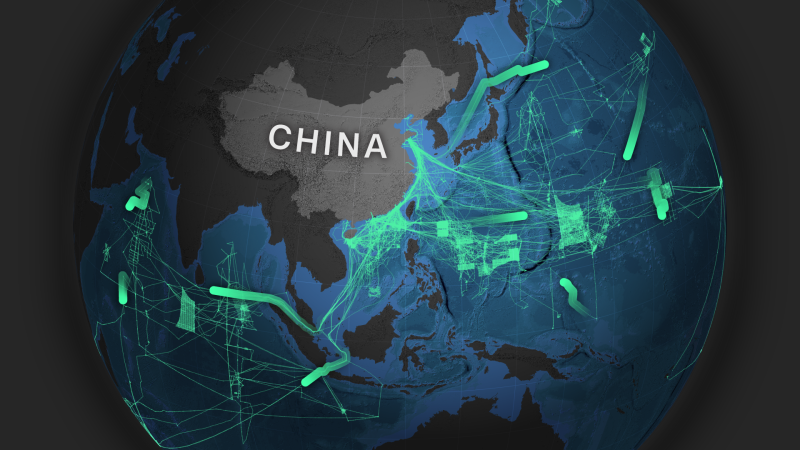
Concurrently, investigative tracking reveals that Chinese state-affiliated research vessels spend a fraction of their time in designated deep-sea mining zones, instead logging extensive voyages in strategic waterways across the Pacific, Indian Ocean, and Arctic.
Maritime experts cited by CNN suggest these dual-use missions may serve military and intelligence-gathering purposes, including bathymetric mapping and acoustic profiling to assist submarine navigation and detection. These activities frequently intersect with disputed waters and transit near critical undersea communication cables, raising alarms among regional neighbors such as Taiwan and the Philippines.
What to Watch Next
- Decisions by the International Seabed Authority regarding commercial mining permits and environmental regulations.
- Implementation timelines for U.S. Executive actions aimed at accelerating domestic and offshore mineral leasing.
- Future field expeditions tracking how warming waters and shifting nutrient levels impact Arctic and tropical Pacific marine food webs.
As world leaders weigh the economic demands of the energy transition against mounting environmental degradation, the microscopic organisms sustaining Pacific fisheries face a dual threat from warming oceans and industrial seafloor disturbance.