Lindsay Clancy’s lawyer seeks removal of juror obstructing murder verdict
Lindsay Clancy’s lawyer seeks removal of juror obstructing murder verdict

- Core Development: Lindsay Clancy’s lawyer seeks removal of juror obstructing murder verdict
- Beat Context: Categorized under World with independent corroboration.
- Reporting Depth: 5 minute analytical read synthesized from verified newsroom sources.
Lindsay Clancy’s lawyer seeks juror’s removal as deadlock deepens
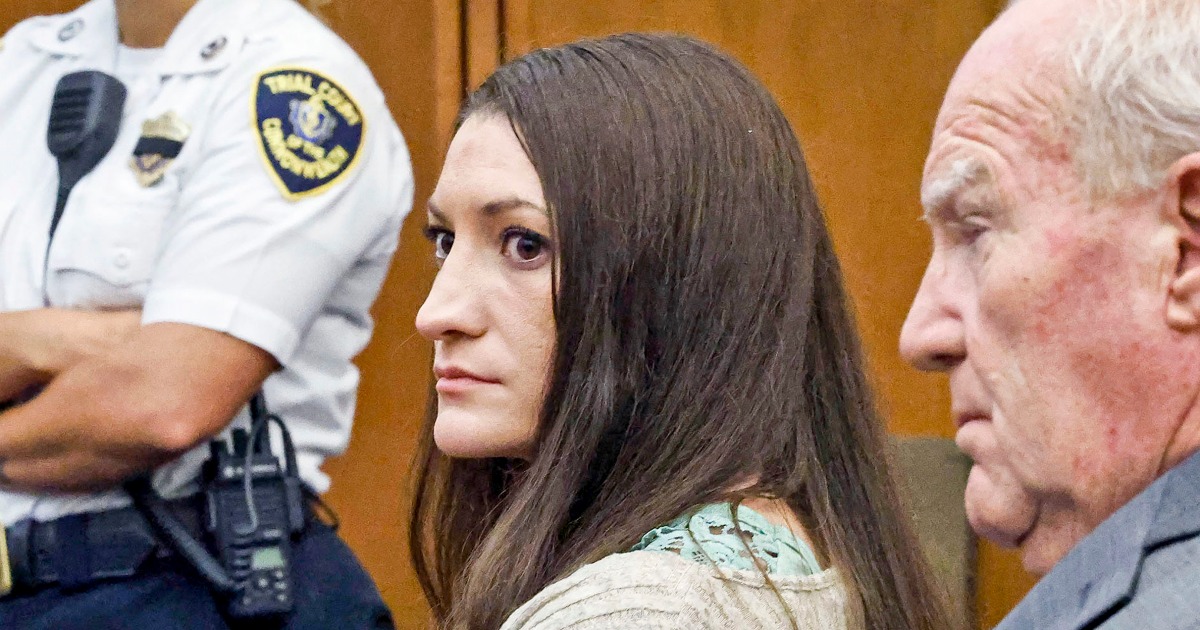
On Sept 3, defense attorney Kevin Reddington asked Plymouth Superior Court Judge William F. Sullivan to dismiss a juror he claims is refusing to follow the judge’s instructions on reasonable doubt. The motion comes after the jury has reported two separate deadlocks in a week‑long deliberation over whether former labor‑and‑delivery nurse Lindsay Clancy should be held criminally responsible for the 2023 killings of her three children.
Judge Sullivan denied the request, saying it would be “improper” for him to side with any juror and that each juror had already affirmed they could follow his instruction. The decision leaves the jury — nine women and three men — to resume deliberations on Friday, with the specter of a mistrial looming if a third deadlock is recorded.
Media additions


Why the juror issue matters now
The defense argues that a single holdout is preventing a verdict and could force a mistrial, which would reset the timeline and require a new jury. A mistrial would also give the prosecution the option to seek a faster retrial, an outcome Reddington says he wants to avoid. “Why would I want a mistrial? I kicked the, out of their case,” he told reporters,
.“Why would I want a mistrial? I kicked the s—t out of their case.”
Kevin Reddington, defense attorney, via NBC News
Both sides therefore have a stake in whether the judge will intervene.
What the parties say
Reddington’s motion rested on a note from the jury foreperson that, according to the defense, identified “one juror who refuses to listen to the law…on reasonable doubt.” He argued that the judge’s “soft instruction” at a sidebar was insufficient for a juror who “spurned the instructions of this court.” NBC News reported Reddington’s claim that the juror’s refusal could produce a “shameful” mistrial.
Prosecutor Jennifer Sprague countered that the court “has no way to determine what the deliberations are” and that “there is no objection to the questions or the reinstruction,” as reported by Eonline. She stressed that probing the content of deliberations would breach the confidentiality essential to jury deliberations.
Judge Sullivan, speaking to the media, emphasized his role as a neutral arbiter. He reiterated that each juror had been individually asked whether they could follow his instructions and had affirmed they could, adding, “I don’t feel it is proper for me to say I agree with one juror or the eleven.” Boston Globe quoted the judge on his reluctance to “side with one side or the other of the deliberations.”
Legal context and expert reactions
Retired Superior Court judges Thomas Drechsler and Jack Lu told the Globe that removing a juror mid‑deliberation is exceedingly rare and often hinges on whether the juror has breached a clear instruction. Lu noted, “Never, ever,” in reference to never having seen a juror dismissed for such a reason.
Criminal‑defense lawyer Jason Benzaken said the judge’s “characterization that there is a juror refusing to listen” might be a “characterization” rather than an established fact, highlighting the difficulty of assessing the claim without insight into private deliberations.
Post‑conviction specialist David Nathanson argued that if a juror cannot follow the law, the judge should replace the juror with an alternate, a step he says “would not be a punishment but an effort to make sure the process is fair.”
Trial background
Clancy, 36, has pleaded not guilty to three counts of first‑degree murder for the deaths of her children Cora (5), Dawson (3) and Callan (8 months) on Jan 24 2023. She has asserted an insanity defense, contending she suffered from postpartum psychosis and heard auditory hallucinations commanding her actions. The prosecution maintains she was aware her conduct was wrong and planned the killings, pointing to evidence that she sent her husband on errands before the murders.
Key moments in the trial include:
- July 27 2026 – Trial begins in Plymouth Superior Court.
- August 5 2026 – Journal excerpts read to jurors, showing Clancy wrote “I want help.”
- August 6 2026 – Autopsy photos of the children shown; defense alleges a “hot‑mic” remark from a prosecutor.
- August 19 2026 – Judge dismisses the jury for “unforeseen circumstance,” without detail.
- Sept 1‑2 2026 – Jury reports deadlock, judge urges reconsideration.
- Sept 3 2026 – Foreperson’s note about a non‑compliant juror; Reddington files removal motion; Sullivan denies, jury sent home.
Since the jury first reported a deadlock on Sept 2, it has logged more than 35 hours of deliberation over six days, according to NBC News. The judge has already used the “Tuey‑Rodriguez” or “dynamite” charge, an instruction urging jurors to keep deliberating unless they genuinely cannot reach a verdict.
Possible outcomes
The jury can return one of several verdicts:
- First‑degree murder – carries a mandatory life sentence.
- Second‑degree murder or manslaughter – lesser sentences.
- Not guilty – result in immediate release.
- Not guilty by lack of criminal responsibility – would likely lead to commitment to a state psychiatric hospital, with periodic review.
If a third deadlock is recorded, Judge Sullivan may declare a mistrial. The Plymouth County District Attorney’s Office would then decide whether to pursue a retrial, a decision that could delay any final resolution for months.
What to watch next
Friday’s session will determine whether the jury can break the impasse. Key points to follow:
- 9 a.m. – Scheduled judge’s inquiry into the holdout juror’s ability to follow the law.
- Mid‑day – Potential re‑reading of reasonable‑doubt instructions.
- Afternoon – Jury sent home or verdict delivered, depending on consensus.
- If a third deadlock occurs – Expect a formal declaration of mistrial and statements from District Attorney Tim Cruz on next steps.
The case continues to draw national attention, with supporters gathering outside the courtroom and online communities sending letters to Clancy. Reddington told reporters the defense has “witnesses lined up” for a possible second trial, suggesting the legal battle may extend well beyond the immediate verdict.
For ongoing coverage of the trial, see the World section of Newsarchy UK.
How significant is this development?
Contribute your assessment to the aggregated reader sentiment ledger.
Frequently Asked Questions
Key questions answered in this reportWhat is the key development in: Lindsay Clancy’s lawyer seeks removal of juror obstructing murder verdict?
Lindsay Clancy’s lawyer seeks removal of juror obstructing murder verdict
Why is this World development significant for the UK?
This report covers critical events in our World beat. Independent reporting monitors related UK statements, regulatory shifts, and public responses as further verified details emerge.
How was this reporting corroborated and verified?
Newsarchy UK compiles and cross-references reporting from primary reporting from eonline.com and cross-checked wire reports. All coverage adheres to published editorial standards.
When was this report published?
This briefing was published on September 4, 2026 and is permanently cataloged in the Newsarchy UK World archives.