Maria Corina Machado Returns to Venezuela After Months in Exile
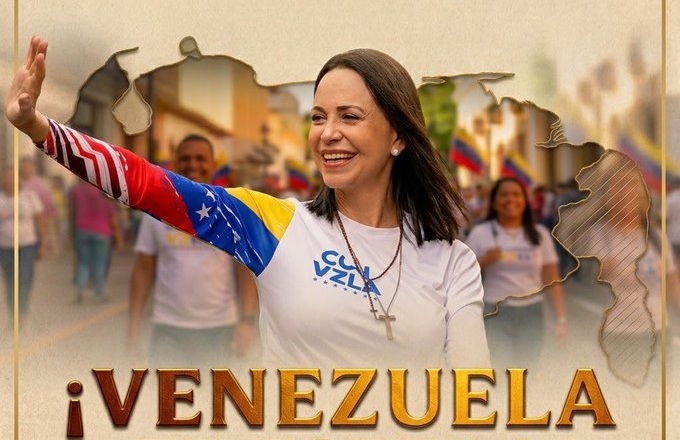
Venezuelan opposition leader Maria Corina Machado has returned to the country following months in exile, intensifying political pressure on interim President Delcy Rodriguez to schedule presidential elections.
- Core Development: Venezuelan opposition leader Maria Corina Machado has returned to the country following months in exile, intensifying political pressure on interim President Delcy Rodriguez to schedule presidential elections.
- Beat Context: Categorized under World with independent corroboration.
- Reporting Depth: 5 minute analytical read synthesized from verified newsroom sources.
After almost a year in exile, Venezuelan opposition leader and Nobel Peace Prize laureate María Corina Machado arrived back on Venezuelan soil on Sunday. Her first appearance since December 2025 comes while the country remains under the rule of interim President Delcy Rodríguez, who has stayed in office far beyond the 90‑day period originally authorized. The timing has intensified questions about the future of Venezuelan democracy and the role of the United States.
In December 2025, Machado fled the country after a brief detention in January 2025. She had been in hiding for 11 months before escaping to Norway, where she received the Nobel Peace Prize for her “peaceful challenge” to Venezuela’s authoritarian rule. The exit came just weeks before U.S. Forces seized Nicolás Maduro in January 2026 and transferred him to New York for criminal charges, an operation that has been widely reported in the international press.
Media additions
Since that operation, the U.S. Has backed Delcy Rodríguez, Maduro’s former vice‑president, as the interim head of state. Rodríguez was initially to serve only 90 days, but her term has stretched without a vote to extend it, and no presidential election has yet been scheduled. The lack of an election timetable has prompted opposition parties to demand a concrete date, a stance that has been echoed by spokespersons such as David Smolansky.
Machado’s return followed a series of attempts that the opposition says were thwarted. According to her party, there were seven separate attempts in the last three months. One attempt involved a charter boat that was cancelled because the vessel was deemed unfit for navigation. Another involved a flight to Curaçao that was denied landing permits. The opposition claims that Venezuelan authorities blocked these entries, a claim that the government denies. U.S. Officials have said that they have advised Machado against returning on safety grounds but have not said they are preventing her.
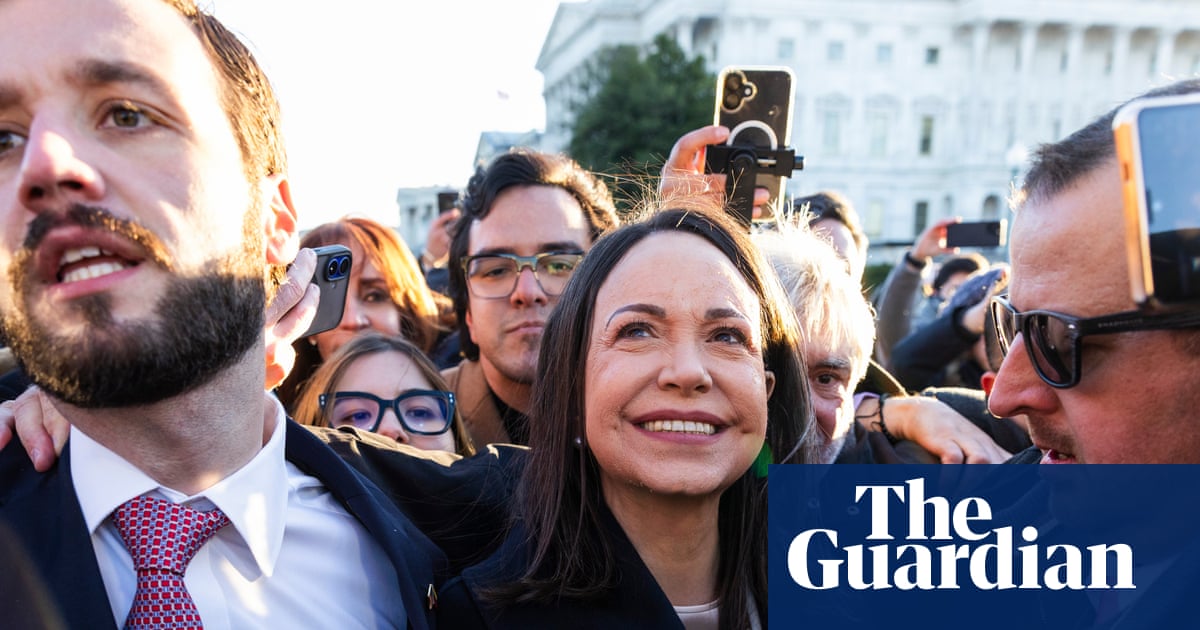
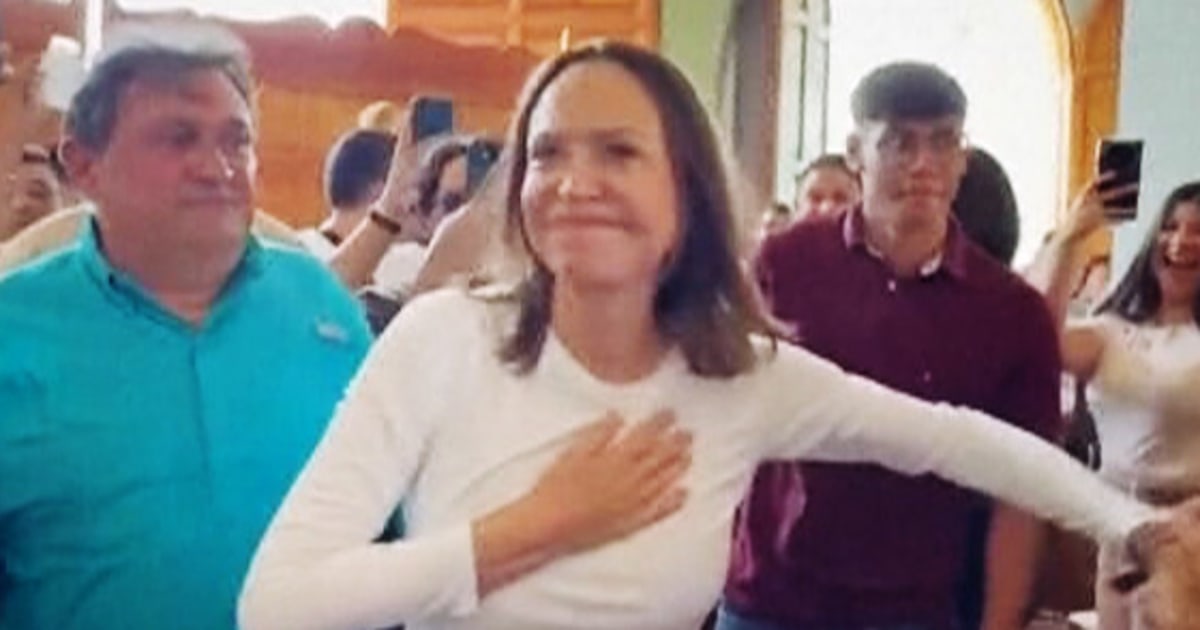
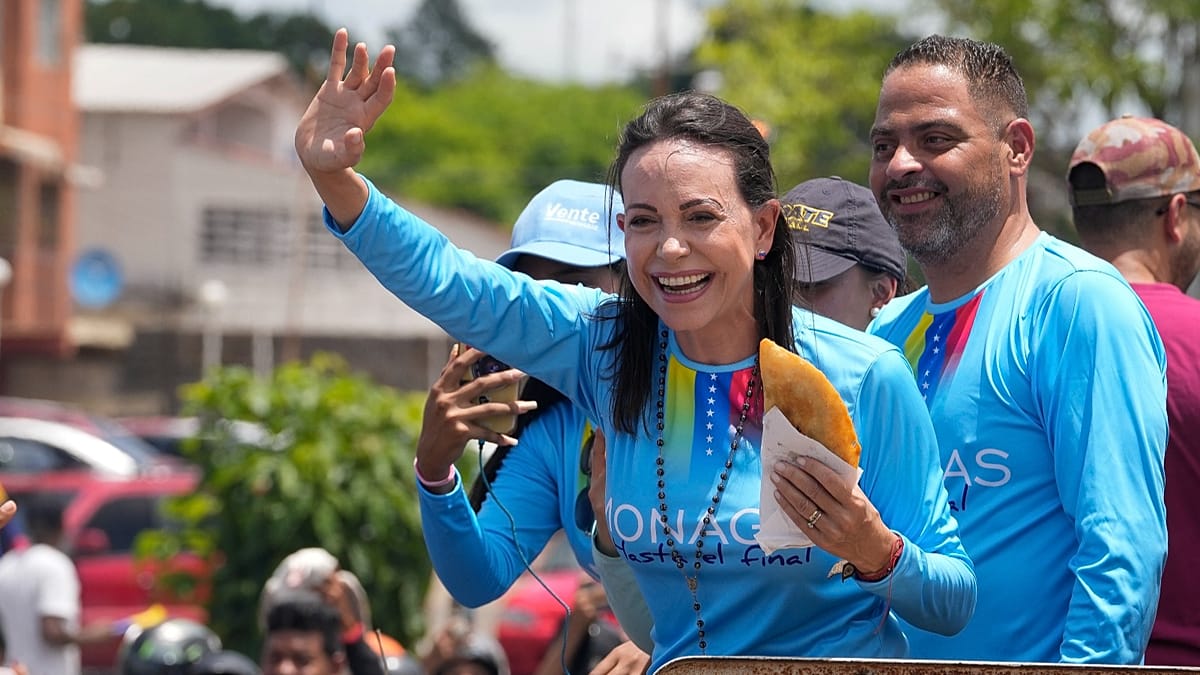
On Sunday, Machado was greeted by a crowd of supporters in the Church of Santa Rosa in Barquisimeto, a town 220 miles west of Caracas. She was photographed shaking hands and hugging people while phones recorded the moment. Her arrival was confirmed on the social‑media platform X by fellow opposition figure Edmundo González, who wrote that Machado’s return “is a very important day for Venezuelans.” González, who has remained in exile in Spain, added that he would join her soon in pursuit of a political transition.
When asked about the return, U.S. President Donald Trump said he was unaware of the event, but added that he considered Machado a “very nice woman” and that he hoped she was safe. U.S. Secretary of State Marco Rubio stated that Machado has “every right to enter her country whenever she wants to return,” while also noting that the United States believes that Venezuela must first stabilize its economy and rebuild institutions before holding elections. These statements have been reported by outlets such as NBC News, The Guardian, and KNBA.
Opposition activists have highlighted that Machado’s presence could influence the political discourse. David Smolansky described her return as a “major step toward a democratic transition and free, fair, and verifiable presidential elections in the near future.” The opposition movement has also reaffirmed Machado as its leader, even as the interim government has remained unresponsive to calls for an election timetable. Supporters of Machado organized demonstrations in Caracas and other cities, demanding an election date and protesting the perceived obstruction of her return.
| Attempt | Location | Outcome |
|---|---|---|
| 1 | Panama | Blocked by Venezuelan authorities |
| 2 | Curacao | Landing permits denied |
| 3 | Charter boat (unspecified) | Operator cancelled due to vessel condition |
| 4‑7 | Various (unspecified) | Blocked or denied entry |
Timeline of key events:
- December 2025 – Machado leaves Venezuela for Norway.
- January 2026 – U.S. Forces capture Nicolás Maduro.
- October 2026 – Machado returns to Venezuela.
The return has drawn international attention. The Guardian and NBC News reported that the U.S. Has not publicly endorsed Machado’s return, while Anadolu Ajansı highlighted her gratitude toward U.S. Leaders for their support. The Guardian also noted that the U.S. May have played a role in blocking her return, a claim disputed by U.S. Officials. Yahoo News Singapore emphasized that Machado’s return is a “face and fire” moment for the opposition, contrasting her prominence with the interim government’s U.S. Backing.
Within Venezuela, the political landscape remains divided. The interim administration has not moved toward an election timetable, and the National Assembly has not voted to extend Rodríguez’s term. The opposition insists that the country’s democratic future depends on a clear electoral schedule, a view that has been echoed by the United Nations, where Rodríguez told the General Assembly that Venezuelans will decide “the right moment” for the next election. The United States, through Secretary of State Rubio, has emphasised economic and institutional stability as prerequisites for a new election.
Looking ahead, Venezuelan leaders and opposition groups are preparing for a possible negotiation round that could set the stage for elections. The U.S. Has indicated a willingness to support democratic processes, but its exact role remains unclear. The opposition continues to press for a concrete election date, while the interim government has yet to announce any timetable.
The return of María Corina Machado is a landmark moment for the Venezuelan opposition and the country’s contested political order. It highlights the enduring tension between the interim leadership and opposition demands, and underscores the international community’s ongoing interest in Venezuela’s political trajectory. The next steps for the country will likely involve renewed discussions about electoral timelines and the broader framework for a democratic transition, with the international community watching closely.
How significant is this development?
Contribute your assessment to the aggregated reader sentiment ledger.
Frequently Asked Questions
Key questions answered in this reportWhat is the key development in: Maria Corina Machado Returns to Venezuela After Months in Exile?
Venezuelan opposition leader Maria Corina Machado has returned to the country following months in exile, intensifying political pressure on interim President Delcy Rodriguez to schedule presidential elections.
Why is this World development significant for the UK?
This report covers critical events in our World beat. Independent reporting monitors related UK statements, regulatory shifts, and public responses as further verified details emerge.
How was this reporting corroborated and verified?
Newsarchy UK compiles and cross-references reporting from primary reporting from NBC News and cross-checked wire reports. All coverage adheres to published editorial standards.
When was this report published?
This briefing was published on October 25, 2026 and is permanently cataloged in the Newsarchy UK World archives.