MI5 accuses Chinese institute of spying on UK AI and tech research
MI5 has accused a Chinese research institute of channeling funds into British university projects to strengthen Beijing's espionage capabilities, prompting government warnings to universities.

- Core Development: MI5 has accused a Chinese research institute of channeling funds into British university projects to strengthen Beijing's espionage capabilities, prompting government warnings to universities.
- Beat Context: Categorized under World with independent corroboration.
- Reporting Depth: 3 minute analytical read synthesized from verified newsroom sources.
Britain’s domestic security service has publicly accused a Chinese research institute of channeling funds into British university projects to strengthen Beijing's espionage capabilities, marking a significant shift in how intelligence warnings are delivered to academic institutions. On Wednesday, 30 September 2026, MI5 issued its first-ever independent open espionage alert targeting the China General Technology Research Institute, which also operates under the name China Academy of General Technology.
According to the published alert, the organization acts as a conduit for espionage tied to China’s Ministry of State Security, the civilian intelligence and security service of Beijing. The targeted research spans several sensitive technology fields. British academics and scientists participated in projects covering artificial intelligence, cybersecurity, covert communications systems, and steganography. Steganography involves concealing secret messages or files inside ordinary content such as photos or standard objects so they remain invisible to casual observers.
Media additions

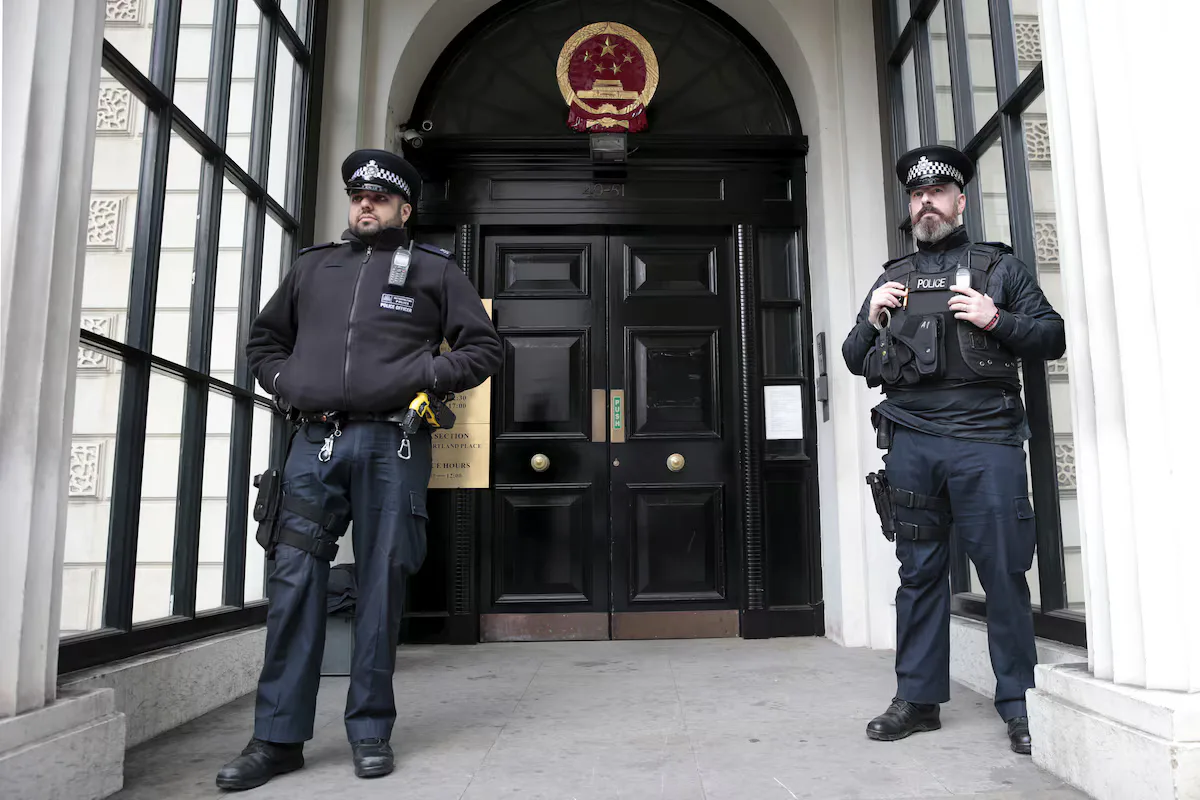

Security assessments indicate that more than 100 academics and scientists based at British institutions participated in these funded projects. However, the security service acknowledged these individuals engaged with the institute in good faith. The true identity of the funding source, tied directly to China's intelligence operations, had been obfuscated, meaning researchers were largely unaware they were assisting foreign intelligence work.
The public warning quickly translated into administrative and legal directives. Security Minister Dan Jarvis wrote to university vice-chancellors demanding that all existing and planned collaborations with the institute be severed immediately. Institutions were warned that continued engagement could carry legal consequences under the 2023 National Security Act, which criminalizes assisting foreign intelligence services when individuals ought to have reasonably known what they were doing, or receiving material benefits from such services.
Universities UK, representing more than 140 institutions, responded through chief executive Vivienne Stern by stating that the sector takes research security extremely seriously. Universities are actively reviewing the alert while balancing national security risks against the international collaboration essential for world-leading innovation and research. Officials advised researchers working with Chinese institutions to establish the ultimate source of funding and seek independent legal advice if continuing research ultimately funded by the institute.
Meanwhile, the Chinese Embassy in London strongly rejected the claims. A spokesperson for the embassy described the accusations as entirely fabricated and argued that educational exchanges and collaboration between UK universities and China are conducted on a voluntary, lawful, and mutually beneficial basis. Beijing urged UK authorities to stop spreading falsehoods and undermining bilateral research cooperation and educational exchanges, noting that solemn representations had already been made.
This public notice arrives amid broader scrutiny of foreign intelligence activities targeting Western academic and professional networks. Last year, MI5 Director-General Ken McCallum stated that Chinese spies posed a daily threat to national security, utilizing fake job advertisements to persuade specialists to disclose information, alongside separate warnings issued to British parliamentarians regarding agents posing as recruiters. In June, intelligence services within the Five Eyes alliance—comprising the United States, Britain, Canada, Australia, and New Zealand—issued a joint warning that Chinese spies were aggressively using online job platforms to recruit individuals with access to confidential information.
What to Watch Next
- Public confirmations from UK universities regarding the formal termination of their collaborations with the China General Technology Research Institute.
- Potential follow-up actions or prosecutions initiated by authorities under the 2023 National Security Act against any institutions or individuals failing to comply with the ministerial directives.
- Whether MI5 adopts this public alert format as a standard operational tool for future intelligence warnings rather than a singular event.
How significant is this development?
Contribute your assessment to the aggregated reader sentiment ledger.
Frequently Asked Questions
Key questions answered in this reportWhat is the key development in: MI5 accuses Chinese institute of spying on UK AI and tech research?
MI5 has accused a Chinese research institute of channeling funds into British university projects to strengthen Beijing's espionage capabilities, prompting government warnings to universities.
Why is this World development significant for the UK?
This report covers critical events in our World beat. Independent reporting monitors related UK statements, regulatory shifts, and public responses as further verified details emerge.
How was this reporting corroborated and verified?
Newsarchy UK compiles and cross-references reporting from primary reporting from cryptobriefing.com and cross-checked wire reports. All coverage adheres to published editorial standards.
When was this report published?
This briefing was published on October 1, 2026 and is permanently cataloged in the Newsarchy UK World archives.