Netanyahu offers Eisenkot first turn as prime minister in unity government
Israeli caretaker Prime Minister Benjamin Netanyahu agreed to let Gadi Eisenkot serve first as prime minister in a rotating national unity government, altering a weeks-long political deadlock.

Israeli caretaker Prime Minister Benjamin Netanyahu agreed on Saturday to let Yashar party chairman Gadi Eisenkot serve first as prime minister in a rotating national unity government. The announcement alters a weeks-long deadlock that has paralyzed the executive branch since the general election on Oct. 27.
The incumbent leader's statement on Saturday represented a sharp reversal from his previous insistence on heading any administration himself. According to JNS, Netanyahu argued in a Hebrew-language post on X that although his Likud faction won the most seats, his responsibility as a leader requires him to set aside the principle of the largest party. Given the gravity of the existential danger and the possibility that a government will be formed that lacks the ability to confront it,
Netanyahu wrote, he agreed that Eisenkot would take the premiership first while he serves as alternate prime minister at the beginning of the term.
Media additions

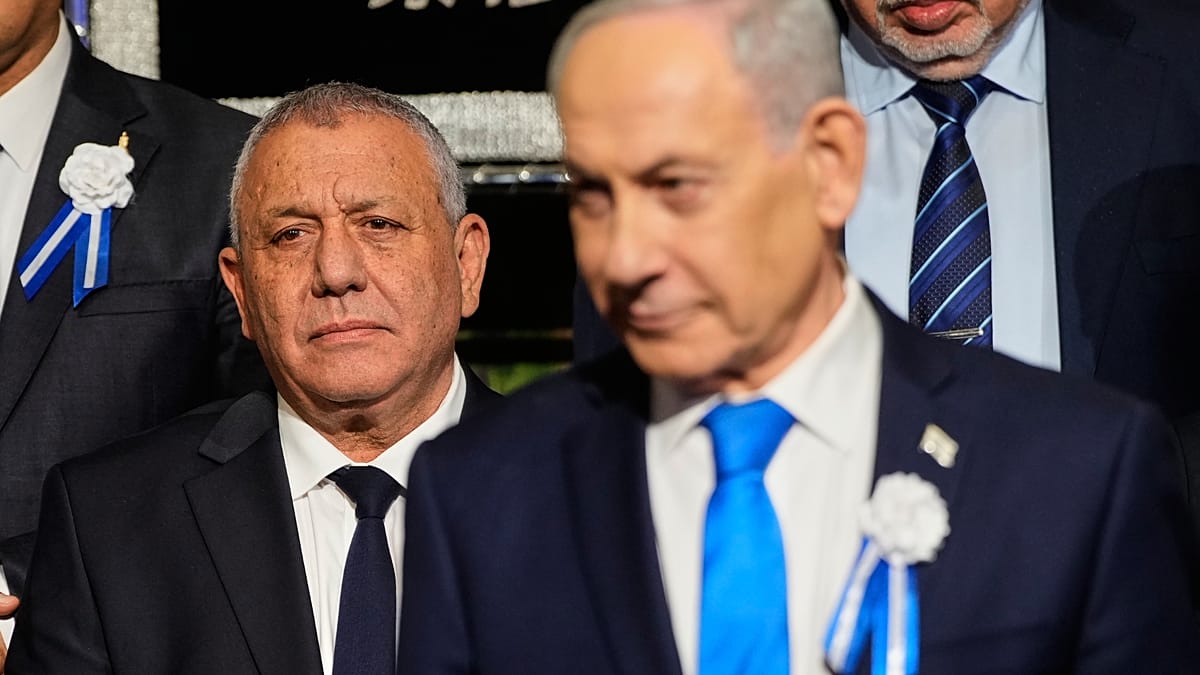

The offer follows intense political friction. Al Jazeera reports that Eisenkot was originally tapped by Israeli President Isaac Herzog to form a government after the inconclusive October ballot failed to grant either bloc a clear governing majority. In the 120-seat Knesset, Netanyahu and his traditional alliance of far-right and ultra-Orthodox parties secured 53 seats, while Eisenkot and his prospective partners held 48 seats. Because neither side crossed the 61-seat threshold required for an outright majority, Eisenkot spent weeks negotiating while accusing Likud of stalling to trigger fresh elections.
Eisenkot responded to the rotation proposal on Saturday evening by inviting Netanyahu and his negotiating team to immediate talks. According to Euronews, Eisenkot stated: If Likud is ready for genuine unity, I am prepared to see how serious it is over the next 24 hours.
The two leaders agreed to meet at 10 am local time on Sunday at the Dan Accadia Hotel in Herzliya to conduct accelerated negotiations on basic guidelines and policy issues.
| Political Bloc / Party | Key Leaders | Knesset Seats |
|---|---|---|
| Netanyahu Alliance | Benjamin Netanyahu, Bezalel Smotrich | 53 |
| Eisenkot Prospective Alliance | Gadi Eisenkot, Yair Golan, Avigdor Liberman | 48 |
| Arab-led Parties (Joint List & Ra'am) | Yousef Jabareen, Mansour Abbas | 19 |
Reactions across the Israeli political landscape were sharply divided. JNS notes that B'Yachad deputy leader Yair Lapid slammed the offer, writing:
Lapid insisted that an Eisenkot-led government must be sworn in first before any coalition expansion talks begin. Democrats leader Yair Golan echoed this distrust, posting on X that Netanyahu had lost and urging leaders to respect the election results without him."Netanyahu’s proposal is yet another transparent con by a serial fraudster who has cheated every partner and broken every agreement."
Yair Lapid, B'Yachad deputy leader, via JNS
Conversely, former Prime Minister Naftali Bennett welcomed the move, stating that Netanyahu had made the right call. However, Bennett warned that the burden of proof now rests on Netanyahu to demonstrate genuine intent rather than lip service. Far-right Finance Minister Bezalel Smotrich also endorsed the offer, telling Euronews that he spent hours discussing the matter and was willing to act as a guarantor for the agreement.
Legal precedent complicates the executive arrangement. Euronews points out that the alternate prime minister position was established via a Basic Law amendment during a previous power-sharing pact between Netanyahu and Benny Gantz. Under Israeli legal precedent, while regular cabinet ministers must resign if indicted on serious criminal charges, this requirement exempts the prime minister and alternate prime minister, allowing Netanyahu to assume the post despite ongoing corruption proceedings.
The political maneuvering unfolds against a tight calendar. Eisenkot holds the mandate to form Israel's next government, a mandate that expires on Dec. 6, though a 14-day extension remains legally available. Whether Eisenkot accepts the final terms and whether their respective political partners will support a unity government remain uncertain as delegations gather in Herzliya.
What to watch next
- Sunday morning coalition negotiations between Netanyahu and Eisenkot at the Dan Accadia Hotel in Herzliya.
- Eisenkot's official deadline to assemble a government, which expires on Dec. 6, alongside decisions on whether to request a 14-day extension.
- Decisions by opposition partners and ultra-Orthodox factions regarding whether to accept terms for a unified administration or push for minority alternatives involving external support from Arab-led parties.
For ongoing updates on regional developments, consult World coverage or track previous diplomatic milestones through Eisenkot invites Likud coalition talks as deadline looms.