New wild cat species discovered in Bolivia marks first find in a century
Researchers have identified a new wild cat species in Bolivia's cloud forests, marking the first discovery of a living feline species in over a century.

- Core Development: Researchers have identified a new wild cat species in Bolivia's cloud forests, marking the first discovery of a living feline species in over a century.
- Beat Context: Categorized under World with independent corroboration.
- Reporting Depth: 4 minute analytical read synthesized from verified newsroom sources.
Scientists have formally identified a new species of wild cat native to Bolivia, marking the first time a living cat species has been discovered and newly named in over a century according to Yahoo News. The feline, named Leopardus tilcayo and commonly known as the tilcayo cat, inhabits the humid cloud forests of the Bolivian Yungas where the Andes mountains meet the Amazon basin. Researchers say the breakthrough not only introduces a previously unknown small cat to science but also fundamentally reshapes how conservationists understand the taxonomy and evolutionary history of South American small wild cats.
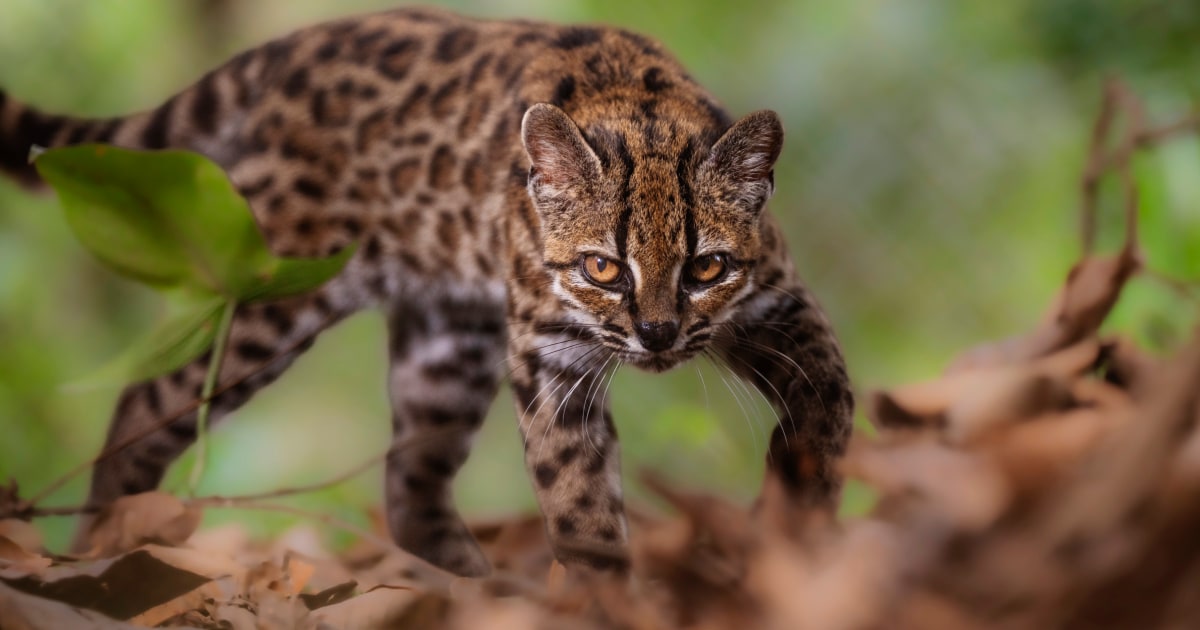
The discovery began when a local man found a small spotted kitten on a road near a forest in Bolivia and took it home believing it to be a domestic pet. After about a year of living with the animal, the owner recognized it was a clearly wild creature and surrendered it to the Senda Verde wildlife sanctuary. Paola Nogales-Ascarrunz, a biologist and National Geographic Explorer who leads the Bolivian Felid Research and Conservation Program, visited the sanctuary and photographed the unusual animal. She initially suspected it belonged to the known tiger cat species Leopardus tigrinus, but subsequent comparisons with guidebook references from neighboring Brazil revealed that the Bolivian cat possessed significantly larger rosettes and distinct physical traits.
Media additions

It took years for Nogales-Ascarrunz to develop advanced skills in genetic analysis. Working alongside Eduardo Eizirik, a geneticist at the Pontifical Catholic University of Rio Grande do Sul in Brazil, and study co-lead author Jonas Lescroart from the University of Antwerp, the team examined the complete genomes of 38 individuals across the Leopardus genus, including 26 tiger cats and historical museum specimens. Their findings, published in the journal Current Biology, demonstrated that the tilcayo diverged from other tiger cat lineages roughly 1.4 million years ago—an evolutionary distance comparable to that separating modern lions from extinct cave lions.
Researchers chose the specific epithet tilcayo to honor ancestral knowledge according to Discoverwildlife. Local communities in the region have recognized the animal for generations, referring to it by that name. As Nogales-Ascarrunz noted, the term does not carry a specific translation in Spanish or the Quechua language, but rather represents local generational familiarity with the elusive predator.
Physically, the tilcayo cat is smaller than a typical domestic cat. It measures approximately 18 inches in length from head to body and weighs about 3 pounds. It is further distinguished from northern tiger cats by its muted fur color, larger spot markings, and a longer, more slender tail according to Discoverwildlife reporting. Because tiger cats are cryptic animals that remain exceptionally difficult to spot in the wild, much of their daily biology remains shrouded in mystery. Scat analysis suggests small rodents form part of their diet, while camera-trap evidence indicates nocturnal habits according to Whbl.
The genomic analysis also reshaped broader feline taxonomy. What scientists historically categorized as a single widespread species, Leopardus tigrinus, has proven to be a complex of multiple distinct species. Previous studies had already parsed out separate groups, but the new research expands the count to five recognized tiger cat species while identifying a new subspecies in Peru named Leopardus tigrinus antisuyo according to Yahoo News reporting.
| Tiger Cat Lineage | Primary Geographic Range | Key Taxonomic Status |
|---|---|---|
| Leopardus tigrinus | Northern South America | Long-standing species; reevaluated via genomics |
| Leopardus guttulus | Southern South America | Recognized as distinct in 2013 |
| Leopardus pardinoides | Andes mountains | Proposed as distinct in 2024 |
| Leopardus emiliae | South America | Supported as distinct species by recent research |
| Leopardus tilcayo | Bolivian Yungas cloud forest | Newly discovered species described in 2026 |
These taxonomic shifts carry immense consequences for wildlife management. Conservationists emphasize that treating tiger cats as a single widespread species obscured localized extinction risks. With the population now split into multiple distinct units, each requires independent conservation assessments according to Gizmodo. The research team has already shared its findings with the International Union for Conservation of Nature so that upcoming Red List evaluations can treat each lineage separately.
The Bolivian Yungas ecosystem faces escalating pressures from deforestation, agricultural expansion, human-caused fires, and mining according to Whbl. Conservationists stress that protecting remaining native forest and maintaining habitat corridors are urgent priorities for safeguarding the newly validated species, whose total wild population remains entirely unknown.
What to Watch Next
- The International Union for Conservation of Nature is slated to incorporate these genomic findings into its upcoming Red List reassessment of small spotted cats.
- Researchers plan to deploy additional camera traps across the Bolivian Yungas ecoregion to document wild populations and gather behavioral data.
- Further genetic surveys of related small cat taxa, such as margays, are expected as scientists apply modern genomic sequencing to historical museum collections according to Yahoo News.
For broader international reporting and ongoing environmental updates, readers can consult the World coverage section.
How significant is this development?
Contribute your assessment to the aggregated reader sentiment ledger.
Frequently Asked Questions
Key questions answered in this reportWhat is the key development in: New wild cat species discovered in Bolivia marks first find in a century?
Researchers have identified a new wild cat species in Bolivia's cloud forests, marking the first discovery of a living feline species in over a century.
Why is this World development significant for the UK?
This report covers critical events in our World beat. Independent reporting monitors related UK statements, regulatory shifts, and public responses as further verified details emerge.
How was this reporting corroborated and verified?
Newsarchy UK compiles and cross-references reporting from primary reporting from NBC News and cross-checked wire reports. All coverage adheres to published editorial standards.
When was this report published?
This briefing was published on September 17, 2026 and is permanently cataloged in the Newsarchy UK World archives.