Nicaragua's Ortega says country will 'never again' hold elections
President Daniel Ortega stated that Nicaragua will no longer hold elections to prevent opposition forces from challenging his government. This declaration follows constitutional reforms that placed the nation's institutions under direct presidential authority.
Nicaragua's Ortega says country will 'never again' hold elections
EXECUTIVE BRIEFKey Takeaways & Signal
Core Development: President Daniel Ortega stated that Nicaragua will no longer hold elections to prevent opposition forces from challenging his government. This declaration follows constitutional reforms that placed the nation's institutions under direct presidential authority.
Beat Context: Categorized under World with independent corroboration.
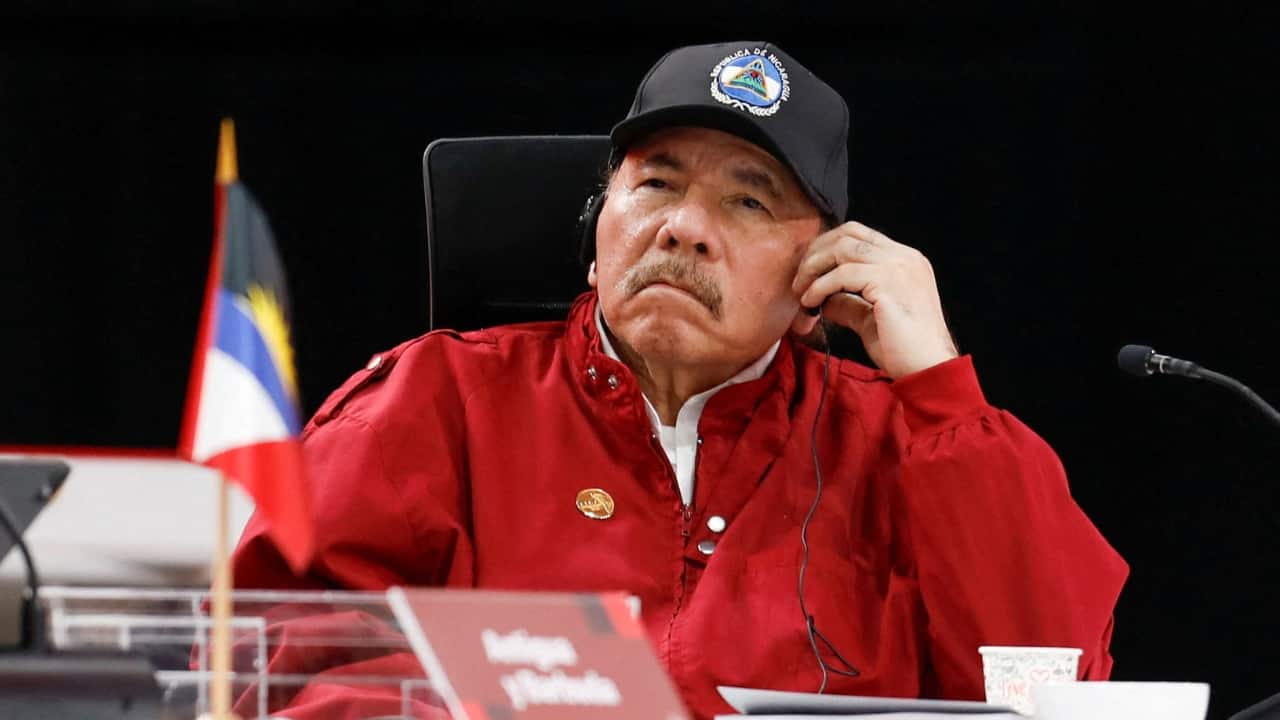
Nicaragua will no longer conduct elections, according to a declaration made by President Daniel Ortega on Sunday, 19 July 2026. Speaking before supporters at the Plaza de la Fe in Managua during events commemorating the anniversary of the 1979 Sandinista revolution, the 80-year-old leader stated that the country would close off any remaining avenues for opposition forces to challenge his government.
Ortega, who has held power continuously since 2007 following an earlier term in the 1980s, framed the decision as a defensive measure.
"There won't be any more elections here for them to try to seize the government and seize power."
Media additions
Image via ibtimes.sg
He told the crowd that the era in which political parties could be installed by the United States had concluded. In addressing the political opposition, he stated his intention to work with the National Assembly to pass new legislation to build a barrier, describing this effort as a "wall" of laws. He said this measure was intended to prevent those he characterized as coup plotters and traitors from returning to power, regardless of foreign financial support.
The announcement follows a period of 61 days during which Ortega did not make a public appearance. His remarks formalize a shift toward a consolidated, one-party state, a process that international observers and human rights groups have monitored for years. Salvador Marenco, coordinator of the Costa Rica-based Nicaragua Nunca Más Human Rights Collective, noted that Ortega had already effectively eliminated meaningful competition during electoral cycles in 2011, 2016, and 2021.
The political structure of the country underwent significant changes in 2025, when constitutional reforms were enacted to extend presidential terms from five years to six and elevate Rosario Murillo, the President's wife, to the position of co-president. These reforms placed the nation's legislative, judicial, and electoral institutions under the direct authority of the presidency. According to United Nations experts, this consolidation has transformed the state into an authoritarian regime.
The government's relationship with the United States remains strained. The current administration has designated the Ortega-Murillo government as a dictatorship, imposing sanctions on more than 2,350 Nicaraguan officials and their family members. Ortega, in his recent address, criticized U.S. Foreign policy, specifically referencing a military operation in Venezuela that occurred on 3 January 2026.
The internal political landscape is defined by the absence of formal opposition. Many prominent critics of the government have been imprisoned, forced into exile, or stripped of their citizenship, while independent civic organizations have had their legal status revoked. Human rights organizations have reported that more than 300 individuals were killed during the government's response to civil unrest that began in April 2018. United Nations experts have suggested that certain actions taken by the government against dissent may constitute crimes against humanity.
Looking Ahead: What to Monitor
Legislative Action: The National Assembly is expected to begin drafting and approving the "wall" of laws mentioned by the President in the coming weeks.
International Response: Observers are waiting to see if the U.S. Government, as well as multilateral bodies like the Organization of American States, will introduce additional sanctions or formal condemnations following the declaration.
Succession Dynamics: With the formal end of electoral processes, the future of the administration is now tied to the internal stability of the Ortega-Murillo leadership and the succession planning surrounding an aging executive branch.
READER INTELLIGENCE PULSE
How significant is this development?
Contribute your assessment to the aggregated reader sentiment ledger.
Click an option to register your anonymous assessment.
Frequently Asked Questions
Key questions answered in this report
What is the key development in: Nicaragua's Ortega says country will 'never again' hold elections?
President Daniel Ortega stated that Nicaragua will no longer hold elections to prevent opposition forces from challenging his government. This declaration follows constitutional reforms that placed the nation's institutions under direct presidential authority.
Why is this World development significant for the UK?
This report covers critical events in our World beat. Independent reporting monitors related UK statements, regulatory shifts, and public responses as further verified details emerge.
How was this reporting corroborated and verified?
Newsarchy UK compiles and cross-references reporting from primary reporting from ibtimes.sg and cross-checked wire reports. All coverage adheres to published editorial standards.
When was this report published?
This briefing was published on July 21, 2026 and is permanently cataloged in the Newsarchy UK World archives.