South Korea's education minister quits over exam cheating chaos
South Korean Education Minister Choi Kyo-jin resigned after public confusion and backlash over rushed security protocols for the national college entrance exam.
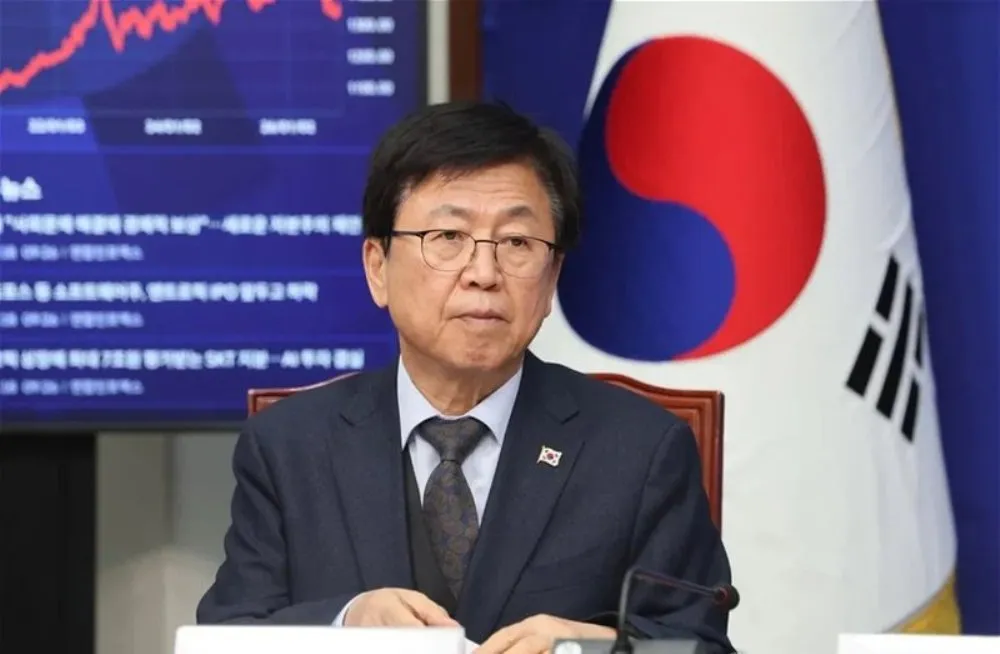
South Korean Education Minister Choi Kyo-jin resigned on Sunday, 22 November 2026, taking responsibility for public confusion caused by last-minute measures to prevent artificial intelligence-assisted cheating during the country's college entrance examination. President Lee Jae Myung accepted the resignation within an hour, according to announcements reported by outlets including Yonhap News Agency. The presidential office formally approved the departure later that day, instructing Prime Minister Han Seong-sook to take full responsibility for follow-up administration and ensure a thorough official response.
The government had rushed to enforce tighter restrictions following revelations from the top scorer in a national tax-accountant examination. That candidate admitted to using a miniature camera, a smartphone, and generative artificial intelligence tools to cheat. The resulting scandal raised immediate fears that similar high-tech methods would infiltrate the country's annual college entrance examination, known locally as the Suneung or CSAT, which took place on Thursday, 19 November 2026.
Media additions


The Suneung is a high-stakes, nine-hour academic milestone that plays a major role in admissions to top universities and the future career prospects of young people in South Korea. Statistics from the education ministry show that 551,864 candidates registered for the test, while 497,526 actual test takers sat for the examination.
To combat potential tech-enabled cheating, authorities introduced last-minute security protocols. Two days before the exam, officials added 8,400 staff members, including roughly 1,800 personnel tasked with detecting smart devices and 6,600 corridor supervisors. Stationery rules were altered just one day before the exam, stripping away previously permitted items such as machine-readable markers, erasers, correction tape, and mechanical pencil graphite. Invigilators were left to undergo expedited online training, while candidates were permitted to bring only pencils into exam rooms.
Additional precautionary measures including restricting public Wi-Fi access around testing facilities, inspecting candidates' eyewear for hidden devices, and requiring students to cover clothing buttons with stickers to block miniature cameras. The chaotic rollout drew fierce backlash from students, parents, and educators, who complained that the abrupt rule changes added intense anxiety to an already pressured environment.
During the exam itself, authorities broadcast nationwide emergency alerts to mobile phones across the country. Ministry officials subsequently confirmed that these emergency alerts helped uncover 54 of the total 111 suspected electronic device violations recorded on exam day. In total, the ministry reported five cases where candidates were directly observed using a device during the exam, though officials noted it remained unconfirmed how many students actually used AI to answer test questions or whether all found phones were intended for cheating.
Choi compounded his political vulnerability during a parliamentary education committee hearing ahead of the exam. When asked by a lawmaker if he was completely confident that the ministry could catch every instance of AI cheating, the 72-year-old minister replied, Perhaps because of my age, I don’t think I could,
as quoted by Fakti. The remark provoked widespread public backlash, leading the minister to withdraw from public press briefings and leave announcements to a vice-minister.
In his formal resignation statement released by the ministry, Choi acknowledged the widespread disruption:
"As the minister in charge, I believe I cannot escape criticism that we failed to prepare in advance. Now that the exam has concluded, I feel a deep sense of responsibility and am offering my resignation,"
Choi Kyo-jin, Education Minister, via Yonhap News Agency
Political reactions to the resignation varied sharply across factions. The ruling Democratic Party urged the prompt appointment of a qualified successor with the necessary expertise and sense of responsibility. Conversely, the opposition People Power Party argued that a mere ministerial resignation fell short of true accountability, demanding a wider investigation into the government's crisis response and stronger guarantees for the fair administration of national exams.
Tragedy also struck the academic community during the same turbulent week. According to reports from Easternmirrornagaland and Yonhap News Agency, a candidate who earned a top score on the Legal Education Eligibility Test (LEET) was found dead on Thursday, 19 November 2026, amid separate allegations of cheating. Police stated that they would continue investigating the allegations.
What to watch next
- Prime Minister Han Seong-sook will oversee immediate follow-up administration and policy responses, as instructed by President Lee Jae Myung.
- The presidential office stated that the formal nomination process for a new education minister will proceed according to established legal procedures.
- The Ministry of Education aims to resolve all remaining misconduct cases and candidate appeals ahead of the official Suneung score releases scheduled for 11 December 2026.