Spain declares national emergency as wildfires force mass evacuations
Spain has invoked national emergency powers to manage escalating wildfires as major evacuations also take place along France's Atlantic coast. These measures follow a series of summer heatwaves that have caused record-breaking fire damage across Europe.
Spain declares national emergency as wildfires force mass evacuations
EXECUTIVE BRIEFKey Takeaways & Signal
Core Development: Spain has invoked national emergency powers to manage escalating wildfires as major evacuations also take place along France's Atlantic coast. These measures follow a series of summer heatwaves that have caused record-breaking fire damage across Europe.
Beat Context: Categorized under World with independent corroboration.
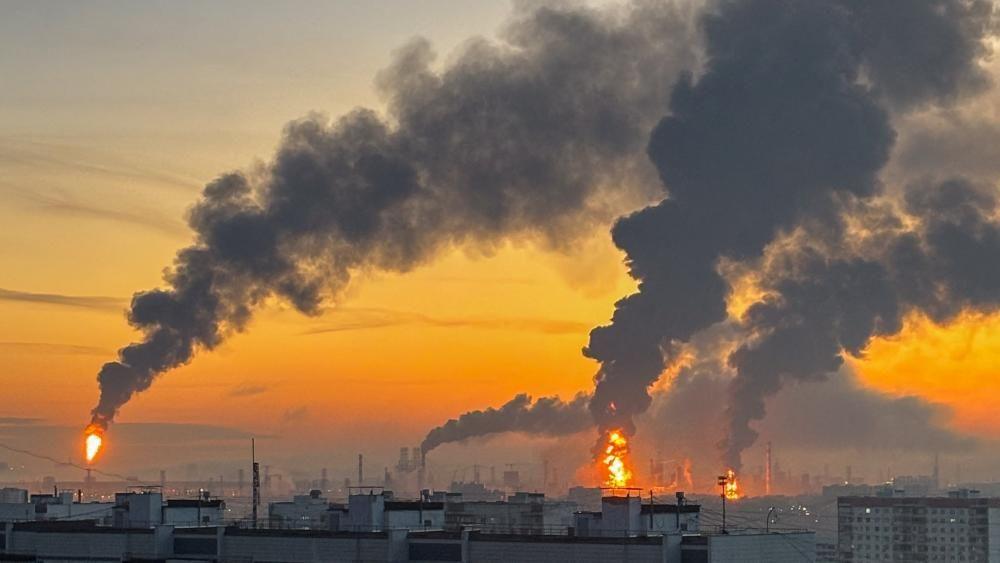
Spain declared a national emergency on Friday, 24 July 2026, in response to an intensifying wildfire crisis. This marks the first time the country has invoked such measures specifically to combat forest blazes. The government’s decision allows central authorities to take direct control over the coordination of emergency responses, as multiple fires continue to rage in the mountains west of Madrid and in the neighbouring Avila province.
The escalation follows widespread evacuations across the region, which have displaced more than 10,000 residents. In Navaluenga, located in Avila province, local inhabitants have been forced to wear masks against heavy smoke as firefighting helicopters draw water from the town's river. Reflecting on the scale of the disaster, resident Javier Martin said:
"I've lived here for 36 years and I've never seen anything like it. Nor did I expect it. I thought they were going to get it under control last night, but it was already late, and it was all out of control."
Media additions
Image via thecourier.com.auImage via independent.co.ukImage via westernadvocate.com.au
Javier Martin, resident, via Reuters
The Spanish interior ministry is now overseeing operations involving more than 270 emergency personnel and 40 ground units, alongside specialist contingents from the Military Emergency Unit. This level of emergency alert is rare; the last time the nation enacted such a measure was during a massive power blackout last year.
The situation is also severe in France, where authorities have ordered the total evacuation of the Cap Ferret peninsula, a tourism hotspot on the Atlantic Coast. Approximately 40,000 people—many of whom are tourists occupying campsites and rental properties—have been forced to leave, with many transported to safety by boat. The crisis in France has been compounded by a secondary blaze that erupted near Biscarosse on Thursday, forcing an additional 23,000 people to evacuate, including those at a children's summer camp and a residential care facility for the elderly.
French President Emmanuel Macron has formally requested assistance through the European Union’s civil protection mechanism. The request aims to secure aerial firefighting reinforcements, including two Canadair aircraft from Croatia, two Air Tractor planes from Portugal, and two heavy Black Hawk helicopters provided by the Czech Republic and Slovakia. French Interior Minister Laurent Nunez stated that security forces were engaged in a battle against the wildfires during an evening update on Thursday.
Environmental and Historical Context
Europe is experiencing an exceptionally volatile summer, with three successive heatwaves resulting in tinder-dry vegetation and significant strain on water supplies. Data from the EU's European Forest Fire Information Service indicates that, across the continent, more land has been consumed by fire so far in 2026 than the annual average calculated over the past two decades. In Spain alone, more than 350 fires have been recorded this year, with an estimated 1,300 square kilometers burned. This includes a major fire in the Guadalajara province that ranks as the country's second-largest on record. Furthermore, thirteen people were killed in a fire in southern Spain earlier this month.
Operational Challenges
In France, the Cap Ferret blaze has already devastated 8,700 hectares, while the fire near Biscarosse has burned 2,500 hectares. Local officials have asked farmers to contribute by providing water tanks to assist with containment efforts. Sophie Brocas, the prefect for the Nouvelle Aquitaine region, established a timeline for evacuations from four villages on the Cap Ferret peninsula, stipulating that residents and visitors must exit via designated piers or the peninsula's single road.
What to Watch Next
International Coordination: Deployment of EU-provided specialist aircraft to support French firefighting efforts on the Atlantic coast.
Political Response: Future developments regarding the pact between Spanish political parties to address climate change and long-term adaptation to increased fire risks, as proposed by Prime Minister Pedro Sánchez.
Weather Patterns: Continued monitoring of extreme temperatures, with forecasts indicating highs reaching 44 C in some areas of southeastern Spain.
READER INTELLIGENCE PULSE
How significant is this development?
Contribute your assessment to the aggregated reader sentiment ledger.
Click an option to register your anonymous assessment.
Frequently Asked Questions
Key questions answered in this report
What is the key development in: Spain declares national emergency as wildfires force mass evacuations?
Spain has invoked national emergency powers to manage escalating wildfires as major evacuations also take place along France's Atlantic coast. These measures follow a series of summer heatwaves that have caused record-breaking fire damage across Europe.
Why is this World development significant for the UK?
This report covers critical events in our World beat. Independent reporting monitors related UK statements, regulatory shifts, and public responses as further verified details emerge.
How was this reporting corroborated and verified?
Newsarchy UK compiles and cross-references reporting from primary reporting from westernadvocate.com.au and cross-checked wire reports. All coverage adheres to published editorial standards.
When was this report published?
This briefing was published on July 24, 2026 and is permanently cataloged in the Newsarchy UK World archives.