Voting under way in Sweden with far right eyeing first role in government
Sweden is holding a tense general election featuring a tight margin between left and right blocs, with the far-right Sweden Democrats eyeing a role in government.
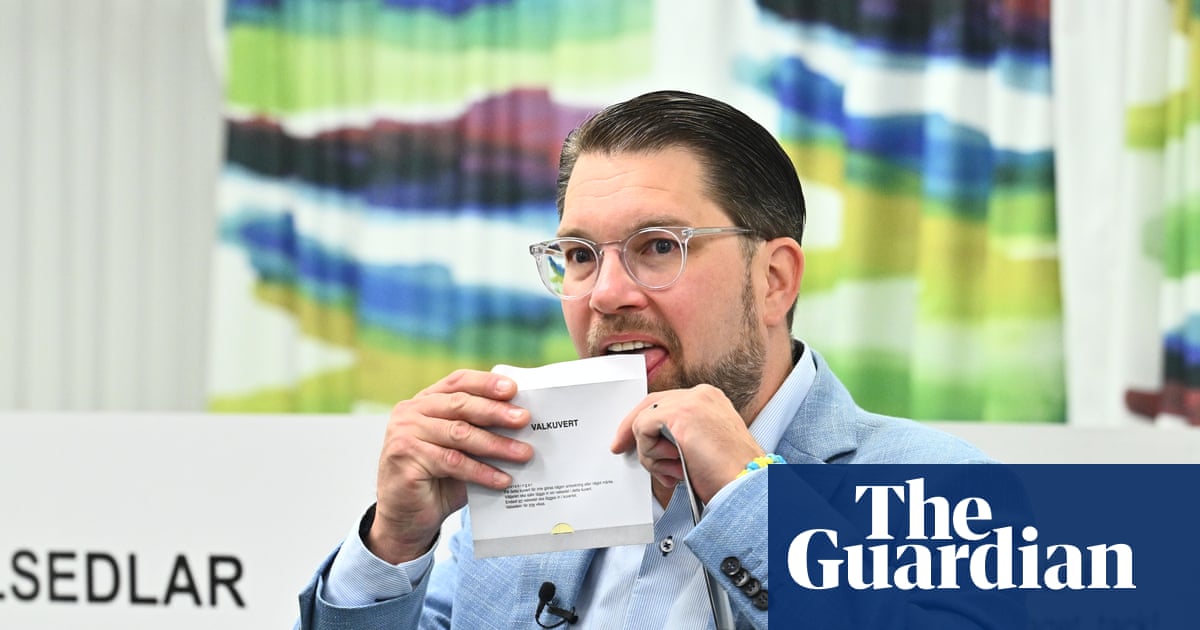
Voters across Sweden are heading to the ballot boxes in an exceptionally close general election on Sunday, reported by The Guardian, that could bring the far-right Sweden Democrats into government for the first time in the country’s history. Polling stations opened across the nation at 8am local time, following an unusually heated and polarised campaign marked by personal attacks, accusations of misinformation, and Maga-inspired political advertisements. Al Jazeera notes that the outcome will decide whether the right-leaning bloc retains power or the centre-left opposition reclaims leadership of the European Union nation.
The high-stakes contest pits the incumbent right-leaning Tidö parties against the opposition left-leaning bloc. According to The Guardian, the rightwing government coalition consists of the Moderates, the Christian Democrats, and the Liberals, backed by the Sweden Democrats as Sweden's second-biggest party. Opposing them is the left-leaning bloc led by the Social Democrats alongside the Centre party, the Green party, and the Left party. While outgoing Prime Minister Ulf Kristersson’s three-party centre-right coalition has relied on outside support from the anti-immigration, far-right party since breaking a longstanding political taboo, a victory for the right this time would grant the Sweden Democrats direct Cabinet posts and key ministerial positions.
Media additions

The campaign leading up to Sunday’s vote was particularly contentious. The Guardian highlights that the Sweden Democrats deployed slogans reminiscent of American politics, such as “make Sweden Sweden again”, alongside controversial bus advertisements that were ultimately removed after drivers refused to operate vehicles displaying them. The party’s leader, Jimmie Åkesson, faced accusations of sexism during a television debate, while another leading figure, Gustav Gellerbrant, went on leave following a media investigation linking his partner to Russian state actors and propaganda. Meanwhile, Prime Minister Kristersson focused heavily on law and order, criminal penalty discounts, and immigration, trading fierce blows with opposition leader Magdalena Andersson over gender-based violence.
| Metric / Factor | Right-Leaning Tidö Bloc | Left-Leaning Opposition Bloc |
|---|---|---|
| Key Parties | Moderates, Christian Democrats, Liberals, Sweden Democrats | Social Democrats, Centre Party, Green Party, Left Party |
| Leadership | Ulf Kristersson (Moderates) | Magdalena Andersson (Social Democrats) |
| Core Campaign Focus | Law and order, immigration restrictions, everyday living costs | Strengthening the welfare state, cost-of-living support |
Voters have expressed concern primarily over healthcare, law and order, immigration, and the broader economy, though Radio Sweden senior political correspondent Fredrik Furtenbach observed that much of the debate devolved into an auction-style contest of parties promising financial handouts. Opposition leader Magdalena Andersson cast her ballot alongside her husband at a school in Nacka, south of Stockholm, telling reporters after voting that the country faces a stark choice between a government dominated by the Sweden Democrats for the first time or a new spirit of cooperation led by her. Abba’s Benny Andersson also showed public support for the Social Democrats by performing a reworked version of Mamma Mia at party headquarters, swapping the title words with the candidate's name.
As Al Jazeera reports, millions of citizens are eligible to participate in a country where voter turnout regularly surpasses eighty percent. Pre-election opinion polls had previously credited the left-wing bloc with a comfortable lead, but the gap narrowed dramatically in the final days, with one poll indicating a mere 0.3 percentage point difference between the opposing sides.
Polling stations close at 8pm local time, at which point the first exit polls will be published. A forecast from broadcaster SVT is scheduled to follow an hour later, with the first preliminary vote count expected between 10.30pm and 11pm. Regardless of how quickly the initial numbers arrive, political analysts anticipate that complex coalition negotiations will stretch on for weeks or even months as parties fight to shape the future direction of the nation.