Trump warns Xi Jinping that Chinese aid for Iran is unacceptable
President Donald Trump warned Chinese President Xi Jinping that any direct or indirect Chinese support for Iran is unacceptable during Washington talks.

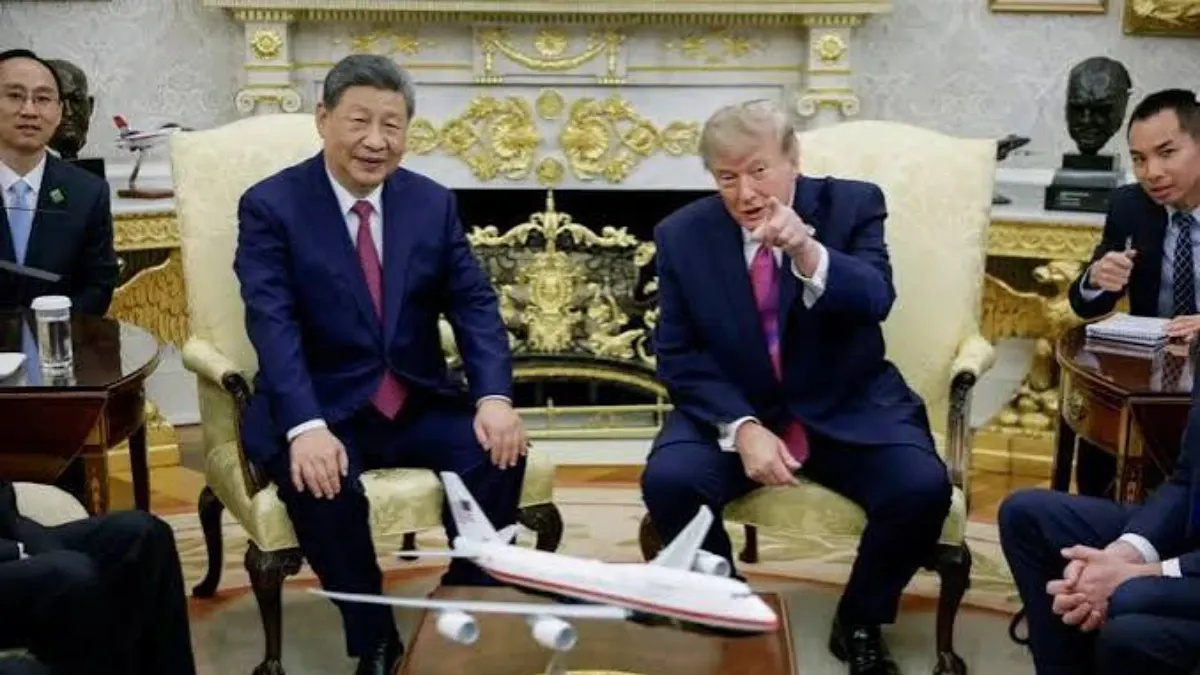
President Donald Trump warned Chinese President Xi Jinping that any direct or indirect Chinese support for Iran is completely unacceptable, as the White House sought to curb Beijing's economic and military ties to Tehran during a high-level summit in Washington. According to The Independent, US Ambassador to Beijing David Perdue stated that American officials made it abundantly clear that assistance ranging from military equipment and parts to intelligence sharing would face severe pushback. While Business Upturn reports that Beijing offered assurances during the meetings that it was not providing such aid, US intelligence assessments cited by CNN suggest that Chinese groups have previously supplied satellite imagery and intelligence enabling threats against shipping in the Strait of Hormuz and precision strikes on regional American bases.
The high-stakes diplomatic exchange unfolded against a backdrop of persistent military and economic friction across the Middle East. Although a temporary ceasefire was struck earlier in the year following the outbreak of hostilities on February 28, recent reporting from The Times Kuwait indicates that the Pentagon is actively reviewing contingency plans — including a potential redesignation of the campaign as Operation Sledgehammer — should diplomatic efforts fail entirely. Secretary of State Marco Rubio and other senior military leaders have maintained that the prior phase of major combat operations concluded successfully, but American forces remain stationed in heightened readiness with an expanded regional presence.
Media additions

Economic pressures are mounting on both sides of the conflict. Tehran recently advanced a proposal through international mediators aimed at reopening the strategically vital Strait of Hormuz within seven days. Iranian Foreign Minister Abbas Araqchi outlined a framework in New York involving an end to hostilities on all fronts, the lifting of the US naval blockade on Iranian ports, the release of frozen funds, and the waiver of oil sanctions. However, a senior Iranian official told Reuters that the critical waterway will remain sealed until every condition is met, and Tehran will maintain an inflexible stance regarding its nuclear program even if the maritime blockade is lifted.
| Diplomatic and Military Track | Stated Position / Action | Key Officials Involved |
|---|---|---|
| US-China Summit | Trump warned Xi against aiding Iran; Beijing offered assurances of non-interference. | Donald Trump, Xi Jinping, David Perdue |
| Iran Ceasefire Proposal | Offered to reopen the Strait of Hormuz in seven days contingent on blockade removal and unfreezing of assets. | Abbas Araqchi, Anonymous Iranian Official |
| Pentagon Contingency Planning | Weighing the adoption of Operation Sledgehammer to reset war powers authorization clocks if fighting resumes. | Marco Rubio, Dan Caine, Pete Hegseth |
The diplomatic friction extends far beyond bilateral talks with China. British Foreign Secretary Ed Miliband met with his Iranian counterpart in New York to warn that the United Kingdom will tolerate no hostile activity, intimidation, or threats on British soil from Iran-linked proxies, following earlier legislative bans targeting the Islamic Revolutionary Guard Corps. Meanwhile, regional alliances are shifting as Saudi Arabia faces ongoing drone and missile strikes from Yemen's Houthis. Turkish Parliament Speaker Numan Kurtulmus confirmed that a mutual defense pact signed between Turkey, Saudi Arabia, and Pakistan, dubbed the Mecca Joint Defence Agreement, awaits formal parliamentary ratification when lawmakers return from recess next month.
Humanitarian fallout continues to ripple through the region. Prolonged supply chain disruptions and renewed civil conflict in Yemen have severely strained medical infrastructure, leaving vulnerable populations facing acute crises in overcrowded hospitals from Mokha to Aden. At sea, the human cost of the protracted naval campaign was laid bare as acting Navy Secretary Hung Cao disclosed that multiple sailors aboard the USS Abraham Lincoln carrier strike group attempted suicide during an extended deployment supporting operations.
The immediate focus turns to whether the assurances delivered by Beijing during the Washington summit will translate into verifiable changes in Chinese commercial and military dealings with Tehran. As diplomatic channels remain strained and negotiations over the Strait of Hormuz hang in the balance, Washington and its allies prepare for either a negotiated reopening of maritime trade routes or a sudden collapse of the ceasefire that could trigger renewed military engagements.