Ukraine hits Crimea Bridge in record 1,336-drone barrage
Ukraine launched a record 1,336 drones in its largest overnight aerial barrage of the war, striking the strategic Crimea Bridge and key Russian sites.
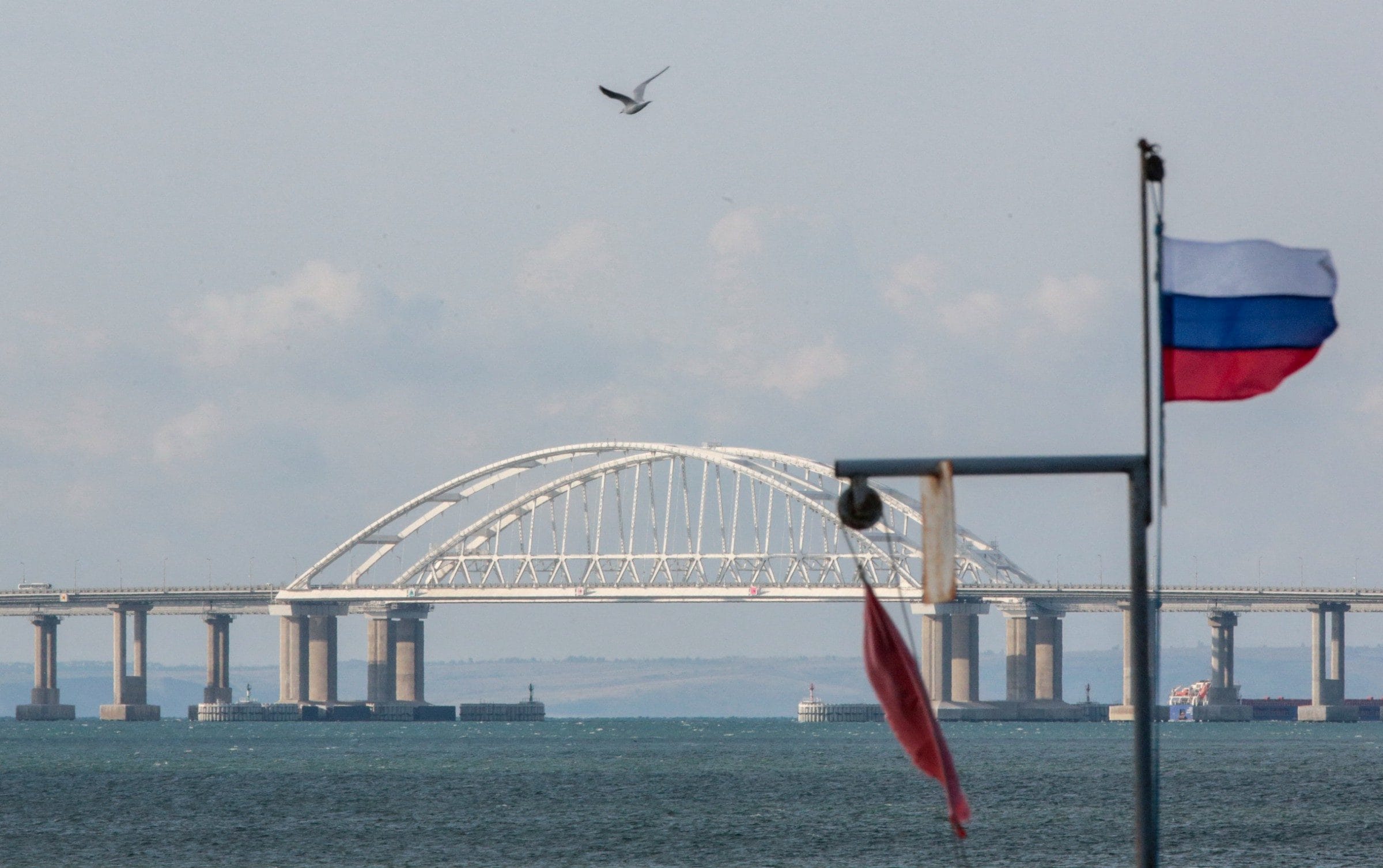
Ukraine has struck the strategic bridge linking Russia to annexed Crimea during its largest overnight drone strike of the war so far, according to reports from multiple outlets. The strike formed part of a massive aerial barrage that saw Ukraine launch 1,336 drones at Russia overnight, according to Vladimir Putin's defence ministry. The figure surpasses the previous single-night record of 1,254 drones recorded on 29 October, continuing a pattern of increasing scale and frequency in Ukrainian drone attacks.
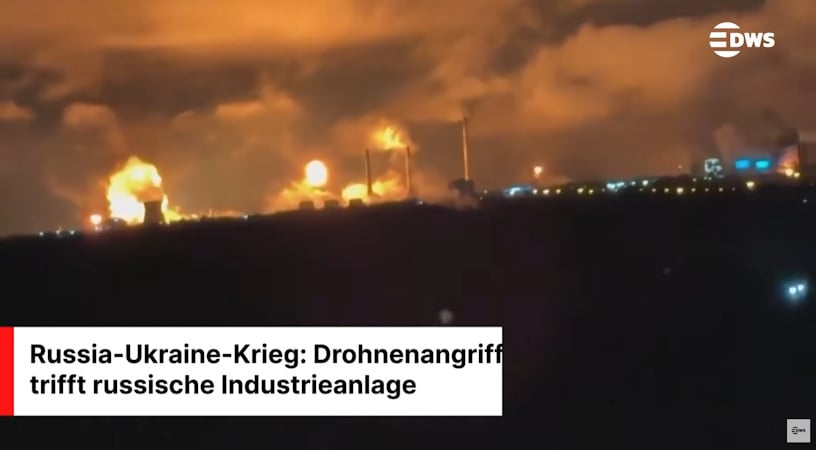
Moscow's Mayor Sergei Sobyanin stated that around 600 of the incoming drones were intercepted on approach to the Russian capital. The massive aerial assault followed a wave of Ukrainian strikes hitting a major Russian petrochemical plant, an oil refinery, and a military production site. Kyiv maintains that its long-range strikes are justifiable retribution for Moscow's ongoing missile and drone attacks on Ukrainian cities and energy infrastructure, which have killed hundreds of civilians and regularly knock out power and heating for millions.
Media additions


The latest exchange comes as Russian attacks on Ukraine left 50,000 without power in the southern Odesa region, according to the DTEK power company. Strikes were recorded across multiple regions, including the frontline Zaporizhzhia region where one person was killed, while a Ukrainian drone killed a truck driver in the Russian border region of Belgorod.
The 12-mile (19 km) Crimea Bridge, built between 2016 and 2019 by the Kremlin’s childhood judo partner – billionaire oligarch Arkady Rotenberg – is the longest bridge in Europe and serves as Moscow’s only direct road and rail link between mainland Russia and the Crimean peninsula. Stretching across the Kerch Strait, the crossing is a signature infrastructure project for President Vladimir Putin. Pro-Ukrainian monitoring channel Crimean Wind reported that a strike hit one of the arches along the bridge at around 5:38 am local time on Monday, while the Russian Telegram channel Mash reported that a drone warhead struck an arch on the Crimean side, leaving an estimated 2,000 vehicles stranded in queues. Rail services also faced disruption, with Interfax reporting passenger trains from Moscow, St Petersburg, and Adler delayed by up to four-and-a-half hours.
Crimea’s Russian-installed governor, Sergey Aksyonov, confirmed the hit on Telegram, stating that vehicle restrictions would remain in place until roughly midday while emergency teams responded. An emergency response headquarters was established in Kerch, and drivers were urged to use ferry crossings between Crimea and Russia’s Port Kavkaz. Mr Aksyonov did not report whether anyone had been killed or injured in the strike. Kremlin spokesman Dmitry Peskov described the damage as minor and insisted that traffic across the bridge continued. In a rare admission of air defence vulnerability, Mr Peskov told reporters: Unfortunately, no system in the world can provide 100 percent protection against such large-scale strikes on various targets.
The crossing has been a frequent target since Russia’s full-scale invasion in February 2022. An October 2022 truck bombing killed four people and closed the crossing for months. A July 2023 naval-drone attack killed two civilians, and in June 2025, Ukraine’s security service detonated underwater charges against the bridge’s submerged pillars, closing it for several hours. While Russia increasingly relies on an overland corridor through occupied southern Ukraine to move military supplies, the Kerch crossing remains critical, particularly after Ukrainian drone strikes in July wiped out roughly 75 per cent of Russia’s Kerch Strait ferry capacity.
The escalation coincides with the run-up to a trilateral meeting in Shenzhen on 19 November, where Vladimir Putin, Donald Trump, and Xi Jinping are expected to hold talks on the sidelines of the APEC summit. US officials state that the war in Ukraine is not expected to feature on the formal agenda, with Donald Trump indicating he intends to discuss denuclearisation and the Iran war. Volodymyr Zelenskyy has warned that the Shenzhen meeting risks becoming a 21st-century version of the 1945 Yalta Conference, with major powers attempting to redraw spheres of influence without smaller countries at the table.
Diplomatic efforts remain stalled following a fresh round of talks in Abu Dhabi. Vladimir Putin has reiterated hardline territorial demands and stated that any deployment of foreign troops would be seen as a continuation of war. Volodymyr Zelenskyy disclosed that the United States had proposed Kyiv cede some territory in exchange for NATO membership—an idea Dmitry Peskov criticised Zelenskyy for making public, while Moscow has repeatedly ruled out Ukrainian membership in the alliance. Since a brief humanitarian truce around Oleshky expired at the start of November, Russian forces have launched more than 5,300 attack drones and 130 missiles into Ukrainian territory, according to figures released by Volodymyr Zelenskyy.