US Forest Service releases Bigfoot files from Montana and Oregon investigations
The U.S. Forest Service published historical Freedom of Information Act records documenting Bigfoot investigations in Montana and Oregon spanning decades.
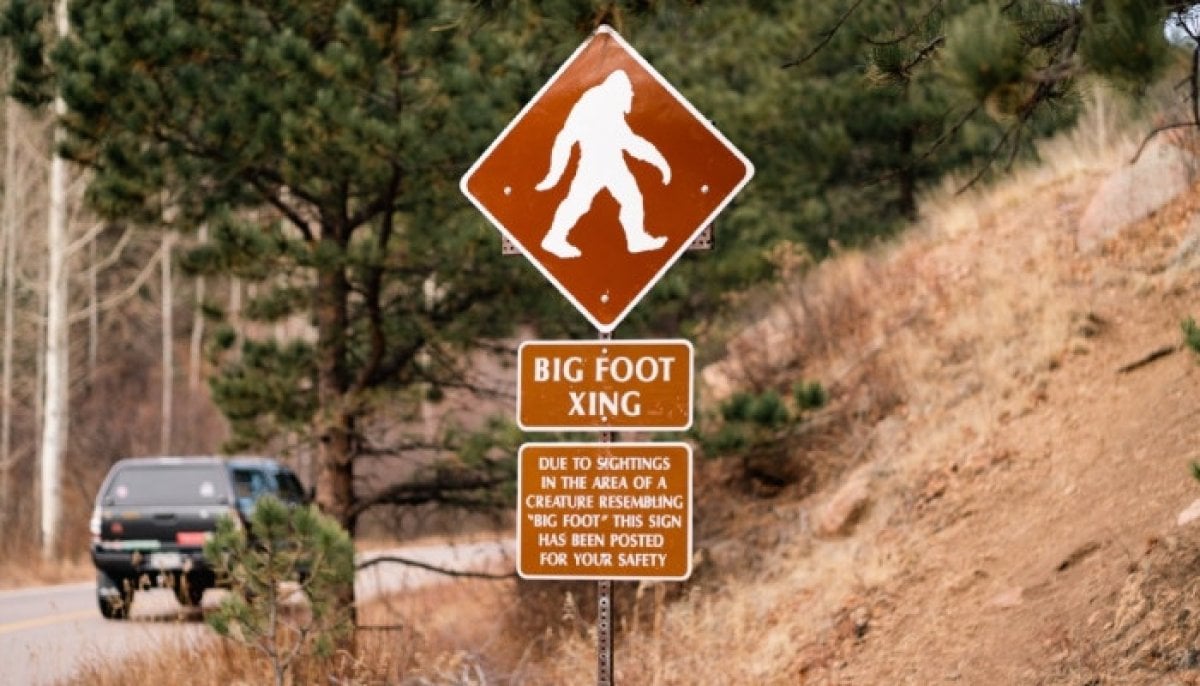
The U.S. Forest Service posted three historical files on October 15 under the heading "Bigfoot/Sasquatch Records" in its Freedom of Information Act reading room, documenting investigations in Montana and Oregon that span more than six decades.
The release, first reported by The Washington Post and confirmed by The News, AOL, KPTV, WKRC, News On 6, Demokratis, and The Sunday Guardian, does not establish the creature's existence. A Forest Service spokesperson said the agency considers public interest when deciding which historical records to release but would not say whether more Bigfoot documents would follow.
Media additions


The 1982 Umatilla National Forest investigation
The most detailed government inquiry began on June 17, 1982, after Forest Service patrolman Paul Freeman reported seeing a large, unidentified creature in the Umatilla National Forest and later found unusual footprints in the Mill Creek watershed. The forest spans parts of southeastern Washington and northeastern Oregon; KPTV and News On 6 describe the site as in Oregon, while WKRC and The Sunday Guardian note Washington.
Wildlife biologist Rodney L. Johnson examined three reported track sites — labelled Sites A, B, and C — photographed the impressions, and made plaster casts at two locations. His June 18 memo recorded one print at roughly 15 inches long and 7 inches wide. Johnson concluded the tracks at Sites A and B were made by "something other than a 300-pound plus two-footed being," noting the impressions were shallower than the investigators' own boot prints, appeared and disappeared abruptly, and maintained an approximately 4-foot stride across different slopes. He added that anyone who faked them "went to a great deal of trouble and detail."
"The tracks at both sites were not to the 'bottom' of the mud. The small toes lack a definite 'pad' at the tips as would be expected. If the tracks were faked, someone went to a great deal of trouble and detail. The 'print' marks on the foot would have to be very hard to duplicate. They appear very natural. I would almost suspect a cast made of an actual foot would have had to be used to make the 'fake' feet. If this were the case though, the other creases in the foot should have shown."
Rodney L. Johnson, wildlife biologist, June 18, 1982 memo, via AOL
Border Patrol tracker Joel Hardin was more direct in a July 28 memo to the Forest Service office in Walla Walla, Washington, calling the tracks "a very clever attempt to perpetrate a hoax" and suggesting someone had used a foot coated in soft plaster or rubber. His assessment did not identify who made the tracks. A later Forest Service report echoed the conclusion: "Trusting that this memo will suffice to close this 'Bigfoot' case."
Montana accounts: Petty Creek and the 2003 Clark Fork Valley tracks
The second file is a six-page account written around 1980 by Leo T. Kinney, describing events he placed in the 1940s near Petty Creek, Montana, in the area around Alberton. Kinney and three other hunters returned to retrieve an elk carcass in 1949 but found only entrails. Large tracks led away through the snow, suggesting whatever made them had carried the carcass clear of the ground. The group followed the tracks for about half a mile before stopping.
The following year, W.W. Schmitz reportedly found similar tracks in the same general area, smelled a strong odor, and heard grunting. No one saw the creature in either encounter. Kinney wrote that the hunters "held a conference and decided that we were not particularly anxious to catch up to whatever it was, and though we didn't confess it at this time, in later conversations we found out that we all had a very uneasy feeling and could feel chills running up and down our backs."
The third record is a January 15, 2003, clipping from the Clark Fork Valley Press in Plains, Montana, describing hundreds of unusual footprints discovered near River Road West in Sanders County. The newspaper reported one impression measured approximately 16.5 inches long and 8.5 inches wide, with an average stride of about 5 feet. Rain reportedly washed away most tracks the next day. One witness estimated the animal weighed 800 to 1,000 pounds based on a print, though the weight was not measured. A local man named Mesing, quoted in the article, said he was unsure whether he believed in Bigfoot but that the tracks "were right there."
| Record | Date | Location | Key Details |
|---|---|---|---|
| Umatilla National Forest investigation | June 17, 1982 | Mill Creek watershed, Umatilla National Forest (WA/OR) | Three track sites examined; plaster casts made; one print ~15" x 7"; 4-foot stride; concluded likely hoax by Johnson and Hardin |
| Leo T. Kinney account | Written ~1980 (events 1949–1950) | Petty Creek, Montana (near Alberton) | Elk carcass missing; large tracks in snow; carcass carried above ground; strong odor and grunting reported 1950; no visual sighting |
| Clark Fork Valley Press clipping | January 15, 2003 | River Road West, Sanders County, Montana | Hundreds of tracks found; one print ~16.5" x 8.5"; 5-foot stride; rain destroyed most tracks next day |
Agency posture and public reaction
The Forest Service has not taken a position on Bigfoot's existence. In California's Stanislaus National Forest, agency staff once hosted a "Bigfoot in Your Backyard" forum and acknowledged they could neither confirm nor deny the creature's existence. The newly released documents are records of reports and investigations, not findings of biological evidence.
Jeremiah Byron, host of the Bigfoot Society podcast, questioned the timing in an interview with The Washington Post: "Why is all this cryptid and Bigfoot-related stuff happening now? I'm hoping what this means is that they could be ramping up government entities to start releasing information." The News notes the release follows renewed interest after residents in rural Ontario, Canada, reported suspected sightings earlier this year.
Carleton University philosophy professor Josh Redstone previously told The Guardian that Bigfoot is a prime example of how fascinating the unverified can be for humans: "For people who believe in Sasquatch, there's an excitement around the possibility of discovering something new." The Bigfoot Mapping Project has collected more than 16,000 reports of alleged encounters, though scientists have never confirmed the creature's existence.
What to watch next
- Whether the Forest Service releases additional files from its "Bigfoot/Sasquatch Records" collection.
- If other federal agencies follow suit with cryptid-related disclosures.
- Independent analysis of the 1982 plaster casts and photographs now accessible in the FOIA reading room.
- Any response from the Bigfoot research community to the specific measurements and investigator conclusions in the released memos.
The documents are available for public review in the U.S. Forest Service's Freedom of Information Act Reading Room under Frequently Requested Records. As The Sunday Guardian noted, the files show that federal land managers logged and investigated reports of the creature and kept the paperwork for decades, in one case sending a wildlife biologist and a Border Patrol official into the field, but they contain no verified biological evidence, confirmed specimen, or scientific finding establishing that Bigfoot exists.