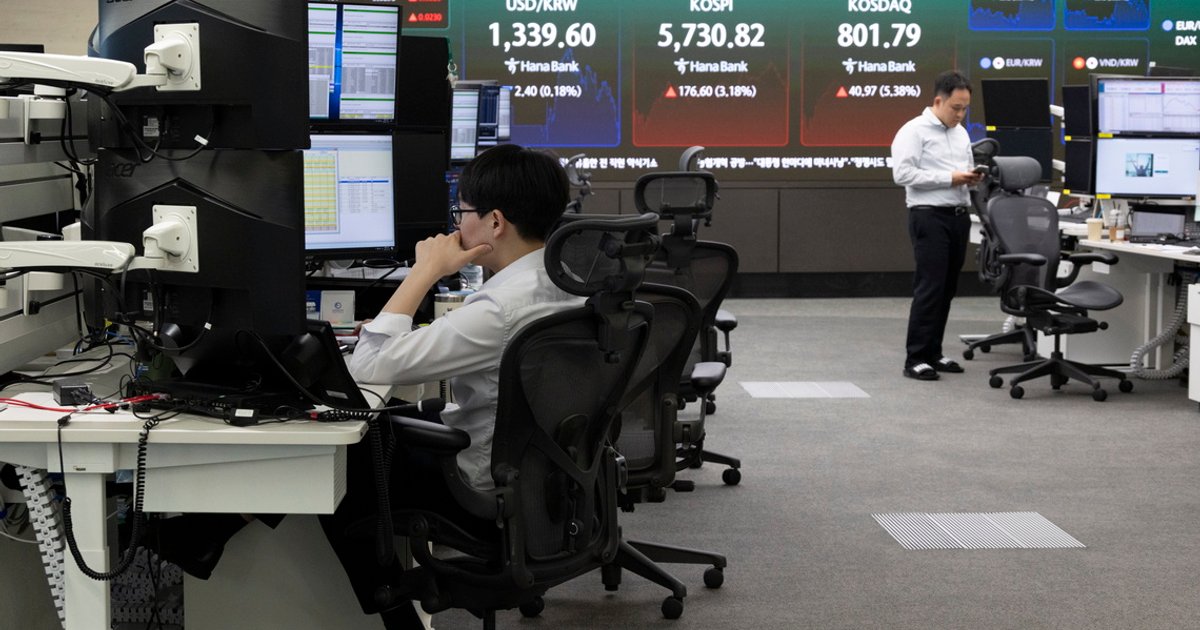
Breaking News Live Updates: China’s Sichuan hit by 5.2-magnitude earthquake
China's Sichuan province experienced a 5.2-magnitude earthquake amidst a flurry of major international trade policy updates and shifting tariffs.

- Core Development: China's Sichuan province experienced a 5.2-magnitude earthquake amidst a flurry of major international trade policy updates and shifting tariffs.
- Beat Context: Categorized under Business with independent corroboration.
- Reporting Depth: 7 minute analytical read synthesized from verified newsroom sources.
At mid‑day on 3 September 2026, Xinhua reported a 5.2‑magnitude earthquake shaking Sichuan province in western China. No casualties were announced in the brief live update, but the tremor added another layer of uncertainty to a day already filled with trade‑policy headlines from Washington.
U.S. Auto lobby pushes a ban on Chinese vehicles
In the United States, the same morning saw a Reuters‑sourced letter from the auto‑industry lobby urging Congress to pass legislation that would bar Chinese‑origin vehicles from the U.S. Market before the end of the year. The letter, viewed by Reuters, frames the request as a pre‑emptive move against “potential entry” of Chinese automakers into the U.S. Market. While the lobby has not disclosed the exact wording of the proposed bill, the push aligns with other trade‑policy actions the administration has taken this year.
Media additions


Brazilian imports hit with a 25 percent tariff
On 22 July 2026 the United States activated a 25 percent tariff on most Brazilian goods, a measure that the Office of the U.S. Trade Representative (USTR) says follows a year‑long Section 301 investigation. The tariff excludes beef, coffee, orange juice and civil aircraft parts, among more than 2,100 other classifications. Additional exemptions cover pig iron, unflavored instant coffee, organic honey, aluminum hydroxide, iron and steel scrap, certain seafood products, hides, leather, wood products, pharmaceuticals, antiques, art and used clothing.
"The United States remains open to negotiations if Brazil changes the policies identified in the investigation."
Jamieson Greer, U.S. Trade Representative, via Courthouse News
Brazil’s government responded on the same day by invoking its Economic Reciprocity Law and stating that it would “continue to diversify its commercial partnerships and seek new markets for Brazilian products.” The Brazilian statement warned that “the date of July 15 2026 will go down in the history of Brazil‑U.S. Relations as a regrettable milestone.”
Forced‑labour tariffs on the horizon
Later in June, the Trump administration signaled that it could begin rolling out additional tariffs aimed at goods made with forced labour. The proposal, described in a Peterson Institute for International Economics analysis, would levy 10 percent or 12.5 percent duties on imports from 60 economies under Section 301(b) of the Trade Act of 1974. The analysis notes that the administration has already announced temporary 10 percent across‑the‑board tariffs that expire on 24 July 2026, and that the new forced‑labour measures could start “this week.”
Legal scholars quoted in the same analysis argue that the proposed tariffs “would likely be struck down” because the Constitution reserves tariff‑setting authority for Congress, not the president. The analysis also points out that “90 percent of the cost” of such broad tariffs would fall on American businesses and consumers.
U.S. Trade balance widens in May
Data released by investingLive for May 2026 show the United States’ trade deficit deepening. Imports of goods rose $12.3 billion to $317.0 billion, while exports fell $11.3 billion to $210.6 billion. The overall balance registered a $77.6 billion shortfall against estimates of $78.5 billion.
Country‑by‑country shifts are illustrative. The deficit with Switzerland moved from a $4.4 billion surplus in April to a $2.3 billion deficit in May, as exports dropped $6.9 billion to $2.0 billion and imports slipped $0.1 billion to $4.3 billion. Mexico’s deficit grew $5.3 billion to $20.1 billion, with exports down $1.5 billion to $33.4 billion and imports up $3.9 billion to $53.5 billion. France’s deficit narrowed $0.9 billion to $1.5 billion, with exports barely moving and imports falling $0.9 billion to $5.4 billion.
Analysts in the report argue that a wider deficit “can be a drag on GDP growth,” but also note that strong import demand “can signal healthy consumer and business activity.” The numbers arrive as President Trump announced a renegotiation of the United States‑Mexico‑Canada Agreement (USMCA) with both Mexico and Canada, even suggesting that the USMCA could be scrapped.
USMCA renewal under the spotlight
The USMCA, a trade pact covering Canada, Mexico and the United States, is due for its first joint review by 1 July 2026. The agreement underpins what the Information Technology and Innovation Foundation calls a “factory North America,” linking roughly 500 million people and “almost 30 percent of global GDP.” It also gives “automobile manufacturing … the largest share of USMCA trade at 22 percent,” supporting about 3.3 million jobs across the three nations.
According to the Tax Foundation, the USMCA lifted tariffs on most goods among the three partners while addressing non‑tariff barriers in digital services, e‑commerce and intellectual property. The pact’s rules‑of‑origin requirements for autos, labor‑standard provisions for Mexico and a scaled‑back investor‑state dispute settlement mechanism are cited as key features that have helped keep supply chains within North America.
Both Canada and Mexico have signaled a desire to extend the agreement with “minimal adjustment.” The United States, however, has indicated a “mixed signal.” President Trump has publicly said he does not intend to renew the pact in its current form, while USTR statements on 1 July 2026 noted that “the United States did not agree to renew the USMCA in its current form.” The administration’s preference for bilateral deals over multilateral ones adds uncertainty to the renewal process.
The Tax Foundation warns that a failure to reach a clean extension could trigger “annual reviews” that would keep the agreement in place until 2036 but increase tariff uncertainty. The same analysis estimates that the USMCA contributes roughly $1.8 trillion in annual goods and services trade, supporting “more than 13 million American jobs” and that ending the pact could raise the cost of goods for households by about $700 in the current year.
Connecting the dots: trade policy turbulence and regional supply chains
From Sichuan’s tremor to the U.S. Slate of tariffs, the day’s news thread together a pattern of heightened trade‑policy activity. The auto industry’s push for a blanket ban on Chinese vehicles dovetails with the broader U.S. Strategy of using Section 301 to target perceived unfair practices, as seen in the Brazilian tariff and the looming forced‑labour duties. Both moves reflect an administration that, according to the Peterson Institute, is “seeking to press other countries to intensify their efforts against forced labour” while also re‑examining the legal basis for such actions.
At the same time, the widening U.S. Trade deficit in May, especially the swelling shortfall with Mexico, feeds directly into the debate over the USMCA’s future. The agreement’s auto‑trade provisions, which have helped keep 22 percent of North American vehicle trade within the bloc, are now under scrutiny as the president threatens to renegotiate or scrap the pact. If the USMCA were to lapse or be significantly altered, firms could lose the tariff‑free access that has encouraged “nearshoring” and reduced reliance on Chinese inputs—a point highlighted by both the ITIF and the Tax Foundation.
Brazil’s retaliatory steps under its Economic Reciprocity Law illustrate how trade actions can spiral. The Brazilian government’s intention to seek “new markets” and possibly bring the case before the World Trade Organization adds another layer of potential dispute resolution that may affect future tariff calculations.
What to watch next
- Implementation of the forced‑labour tariffs: the Peterson Institute notes they could begin “this week,” and legal challenges are expected given questions about presidential authority.
- The July 1 2026 USMCA review deadline: negotiations between the United States, Canada and Mexico will determine whether the pact is extended, revised or allowed to lapse in 2036.
- Potential WTO proceedings from Brazil: the country has hinted at a WTO challenge to the 25 percent tariff and may file additional complaints.
- Further statements from the U.S. Auto lobby: the industry’s comprehensive ban proposal could shape upcoming congressional hearings.
- Updates to the U.S. Trade‑balance data for June and July, which will reveal whether the May widening trend continues amid the tariff environment.
As the tremor in Sichuan fades, the reverberations across trade policy circles grow louder. Stakeholders from manufacturers to policymakers will be watching how Washington’s tariff strategy, the forced‑labour debate, and the fate of the USMCA interact—each development potentially reshaping the flow of goods, the cost of imports and the strategic positioning of North America’s supply chains.
How significant is this development?
Contribute your assessment to the aggregated reader sentiment ledger.
Frequently Asked Questions
Key questions answered in this reportWhat is the key development in: Breaking News Live Updates: China’s Sichuan hit by 5.2-magnitude earthquake?
China's Sichuan province experienced a 5.2-magnitude earthquake amidst a flurry of major international trade policy updates and shifting tariffs.
Why is this Business development significant for the UK?
This report covers critical events in our Business beat. Independent reporting monitors related UK statements, regulatory shifts, and public responses as further verified details emerge.
How was this reporting corroborated and verified?
Newsarchy UK compiles and cross-references reporting from primary reporting from Information Technology and Innovation Foundation and cross-checked wire reports. All coverage adheres to published editorial standards.
When was this report published?
This briefing was published on September 3, 2026 and is permanently cataloged in the Newsarchy UK Business archives.