CSIRO report finds abandoning net zero won't lower power prices
The latest CSIRO GenCost report challenges political arguments that shifting away from net zero emissions will reduce power costs for Australian consumers. The study suggests that replacing retiring coal with new generation remains costly, regardless of the chosen technology.
- Core Development: The latest CSIRO GenCost report challenges political arguments that shifting away from net zero emissions will reduce power costs for Australian consumers. The study suggests that replacing retiring coal with new generation remains costly, regardless of the chosen technology.
- Beat Context: Categorized under Business with independent corroboration.
- Reporting Depth: 3 minute analytical read synthesized from verified newsroom sources.
A new report from Australia’s national science agency, the CSIRO, has challenged the central economic argument used by the Coalition and One Nation to justify abandoning the national target of net zero greenhouse gas emissions by 2050. Published on 14 July 2026, the annual GenCost report indicates that shifting away from climate targets and pivoting toward a fossil-fuel-heavy grid will not deliver the reduction in power prices that conservative politicians have promised voters.
The findings arrive as energy policy remains a flashpoint in federal politics. The Coalition formally abandoned its net zero commitment in November 2025, a shift that prioritises energy affordability and reliability over climate goals.
Media additions

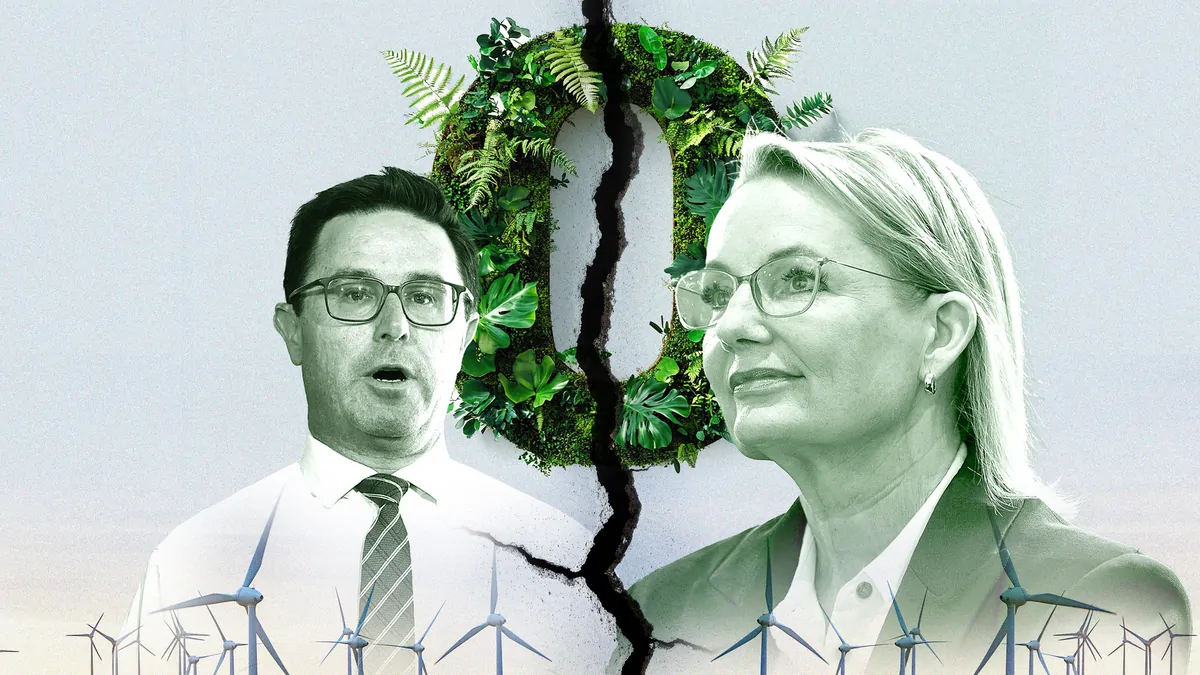
However, Paul Graham, the lead author of the GenCost report, stated that moving away from net zero fails to provide a viable path to cheaper electricity.
"If we abandon net zero, that does not open up some low-cost pathway [for electricity]. As coal retires, you have to replace it. If that new thing is coal, we still have the same costs [of electricity generation] as we are expecting if we replace it with renewables."
Paul Graham, CSIRO chief energy economist, via The Guardian
Comparative Costs and Projections
The report provides a detailed, technology-neutral analysis of the costs of electricity generation, which serves as a critical input for the Australian Energy Market Operator’s (AEMO) Integrated System Plan. While the CSIRO modelled a scenario where abandoning climate targets and limiting the rollout of solar and wind could result in a 5 per cent reduction in electricity costs by 2050 compared to a net-zero-compliant grid, experts emphasize that this projection comes with major caveats.
Tony Wood, energy director at the Grattan Institute, noted that this 5 per cent margin falls within the margin of error for such long-range modelling.
"Five per cent is within the rounding accuracy of the modelling. But if it was my money and I had to compare spending an extra 5 per cent to save the planet, I reckon that’s a pretty good investment."
Tony Wood, Grattan Institute, via SMH
Furthermore, the CSIRO found that nuclear power, frequently promoted by the Coalition and One Nation as a solution to grid stability, remains the most expensive option. The report places solar and wind with firming as the lowest-cost new-build technologies through 2030, while nuclear small modular reactors represent the highest end of the cost spectrum.
Market Realities vs. Policy Intentions
The economic viability of new coal plants remains in question, as financial institutions and insurers have largely withdrawn capital from fossil fuel projects. Industry and Science Minister Tim Ayres noted that new coal projects face severe hurdles in securing financing, as the global energy market continues to favour lower-cost renewable technologies.
The Coalition’s proposed policy changes, which include stripping climate objectives from the national electricity operator’s mandate, have sparked sharp criticism from the government. Prime Minister Anthony Albanese characterised the shift as a move that creates market uncertainty and could ultimately drive prices higher. Joel Gilmore, an energy systems expert at Griffith University, warned that attempting to return to legacy energy structures is based on a misunderstanding of global energy economics.
"There’s great wishful thinking that we could go back to the good old days, but just like you can’t buy lollies for one cent at the corner store, you can’t buy coal for rock-bottom prices."
Joel Gilmore, Griffith University, via The Nightly
What to Watch Next
- Election Cycle: The Coalition’s energy stance is set to remain a defining issue in the lead-up to the 2028 federal election.
- Global Context: The CSIRO will continue to update its GenCost data annually, incorporating global trends such as the impact of power-hungry data centres in the US on gas turbine pricing.
As the debate continues, the scientific agency has reaffirmed its role in providing data rather than participating in political advocacy. According to the CSIRO, the primary goal of the GenCost analysis is to ensure that future infrastructure and policy decisions are grounded in transparent, verifiable engineering and economic data, rather than being swayed by the volatility of political discourse.
How significant is this development?
Contribute your assessment to the aggregated reader sentiment ledger.
Frequently Asked Questions
Key questions answered in this reportWhat is the key development in: CSIRO report finds abandoning net zero won't lower power prices?
The latest CSIRO GenCost report challenges political arguments that shifting away from net zero emissions will reduce power costs for Australian consumers. The study suggests that replacing retiring coal with new generation remains costly, regardless of the chosen technology.
Why is this Business development significant for the UK?
This report covers critical events in our Business beat. Independent reporting monitors related UK statements, regulatory shifts, and public responses as further verified details emerge.
How was this reporting corroborated and verified?
Newsarchy UK compiles and cross-references reporting from primary reporting from theguardian.com and cross-checked wire reports. All coverage adheres to published editorial standards.
When was this report published?
This briefing was published on July 15, 2026 and is permanently cataloged in the Newsarchy UK Business archives.