Meta prioritised growth over child safety, ex-Meta executive testifies
Former Meta engineering director Arturo Béjar testified at a federal trial that CEO Mark Zuckerberg fostered a corporate culture prioritizing growth over child safety.
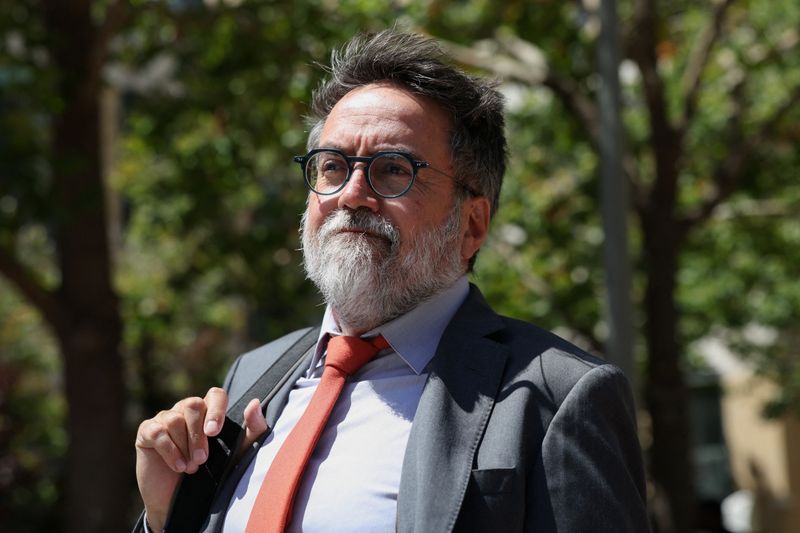
- Core Development: Former Meta engineering director Arturo Béjar testified at a federal trial that CEO Mark Zuckerberg fostered a corporate culture prioritizing growth over child safety.
- Beat Context: Categorized under Business with independent corroboration.
- Reporting Depth: 4 minute analytical read synthesized from verified newsroom sources.
A former engineering director at Meta Platforms testified that CEO Mark Zuckerberg fostered a corporate culture that systematically treated child safety as secondary to user growth and engagement across Facebook and Instagram, according to reporting by Aol and Komonews.
The testimony unfolded during the second day of a landmark federal trial in Oakland, California. A coalition of states—including California, Colorado, Kentucky, and New Jersey—has brought legal claims against the tech giant, accusing it of designing its applications to hook young users, fueling anxiety, depression, and suicide, while misleading consumers about platform safety. Additionally, those states and 25 others accuse Meta of violating federal law by improperly collecting and using the personal data of children under 13 while they used its platforms.
Media additions


Arturo Béjar, the states' first witness and a vocal critic of Meta's safety record, told the court that Zuckerberg was closely involved in major operational decisions. Béjar stated that the Menlo Park-based company operated under a top-down culture where product design changes occurred only if Zuckerberg explicitly ordered them. According to Aol, Béjar stated:
"If Mark makes something a priority, mountains move in months,"
Arturo Béjar, ex-Meta engineering director, via Aol
Béjar disputed public comments made by Zuckerberg following earlier whistleblower revelations by Frances Haugen. Zuckerberg had asserted in October 2021 that Meta constantly used research to improve its products and make them safer. Béjar countered that he had personally emailed Zuckerberg to flag his safety concerns, dismissing the CEO's assertions as false and arguing that Zuckerberg cannot be trusted regarding children. Béjar worked at Meta during multiple stints and examined the well-being of teenage Instagram users while employed as an independent contractor. Under cross-examination from Meta's lawyer Brian Stekloff, Béjar acknowledged he was unaware of the specific harm his teenage daughter would face when she set up an Instagram account, noting she experienced misogynistic comments while building her follower count.
Core Allegations and Product Design Scrutiny
The trial focuses heavily on fundamental product design choices rather than simply user-uploaded content. Cybersecurity expert and privacy attorney Leeza Garber noted in an interview with The National News Desk that state attorneys general are successfully shifting the legal paradigm toward structural design defects, addiction mechanics, and child endangerment.
Features facing intensive judicial scrutiny include infinite scrolling, algorithmic content recommendations, and beauty filters intentionally crafted to maximize time spent on the platforms. Béjar testified that a break-reminder tool frequently cited by Meta's defense was designed to fail because it was excluded as a default setting and made easy for users to ignore. Elena Davis, a Meta researcher who looked at the alleged addictiveness of social media, read from her report that Meta could change Facebook to have less potential to be habit-forming and provide support for people to break Facebook habits they don't want.
The proceedings also examine Meta's handling of underage users. Béjar testified that the company adopted a don't ask, don't tell policy regarding children under 13 using Facebook and Instagram. Although Meta possessed technology capable of identifying millions of suspected underage accounts, it allegedly chose inaction because retaining those users boosted long-term profits. States also accuse the platform of improperly collecting personal data from children without legally required parental consent.
Broader Legal Context and Industry Implications
Legal analysts compare the sweeping litigation to historical lawsuits against the tobacco industry. While potential financial penalties discussed by observers could reach massive sums, legal experts emphasize that court-ordered operational changes pose the most consequential threat to the company.
Meta is defending itself against these allegations by arguing that its systems employ hundreds of qualified safety professionals and that current age-verification challenges remain an industry-wide hurdle. A central legal battleground involves Section 230 of the Communications Decency Act, which typically shields platforms from liability for user-posted content. However, because states are targeting underlying platform design, safety representations, and data collection practices, privacy attorneys suggest Section 230 may provide a far less effective defense for the tech titan.
Meta faces thousands of similar lawsuits over alleged harm to children, and Béjar has been a key witness against the company at four trials. One of those cases, brought by New Mexico, resulted in $942 million in damages and penalties and an order requiring Meta to change its platforms in the state.
What to Watch Next
- The landmark federal trial in Oakland, California, is expected to last six weeks.
- Jurors are scheduled to deliver an advisory verdict at the conclusion of the proceedings.
- U.S. District Judge Yvonne Gonzalez Rogers will ultimately decide whether Meta is liable, determine civil penalties, and dictate mandatory alterations to Facebook and Instagram.
How significant is this development?
Contribute your assessment to the aggregated reader sentiment ledger.
Frequently Asked Questions
Key questions answered in this reportWhat is the key development in: Meta prioritised growth over child safety, ex-Meta executive testifies?
Former Meta engineering director Arturo Béjar testified at a federal trial that CEO Mark Zuckerberg fostered a corporate culture prioritizing growth over child safety.
Why is this Business development significant for the UK?
This report covers critical events in our Business beat. Independent reporting monitors related UK statements, regulatory shifts, and public responses as further verified details emerge.
How was this reporting corroborated and verified?
Newsarchy UK compiles and cross-references reporting from primary reporting from komonews.com and cross-checked wire reports. All coverage adheres to published editorial standards.
When was this report published?
This briefing was published on August 20, 2026 and is permanently cataloged in the Newsarchy UK Business archives.