Oil prices pass $100 amid intensified Middle East hostilities
International benchmark Brent crude surpassed $100 a barrel as intensified military actions in the Middle East disrupted vital crude export routes and rattled global markets.

- Core Development: International benchmark Brent crude surpassed $100 a barrel as intensified military actions in the Middle East disrupted vital crude export routes and rattled global markets.
- Beat Context: Categorized under Business with independent corroboration.
- Reporting Depth: 4 minute analytical read synthesized from verified newsroom sources.
Global energy markets have broken through a closely watched psychological threshold as intensified military actions across the Middle East threaten vital crude export routes. International benchmark Brent crude surpassed $100 a barrel, reaching its highest level in more than six weeks and renewing severe economic anxieties worldwide.
The fresh surge shatters a brief period of relative calm in the six-month conflict, which began with U.S. And Israeli military actions against Iran on Friday, 27 February 2026. According to primary reporting, Brent crude futures rose to $99.93 a barrel after touching $100.19 earlier in the session, while U.S. West Texas Intermediate (WTI) climbed to $94.52 a barrel according to Reuters via Yahoo Finance. Alternative timestamps from Internazionale put Brent even higher at $100.69 a barrel by mid-morning GMT, matching physical oil markets where dated Brent had already traded above $100 since Thursday, 3 September 2026, according to LSEG data cited in the same coverage.
Media additions


The latest military escalation unfolded after Iranian-backed Houthi forces in Yemen launched drone and missile strikes against several Saudi Arabian cities, setting energy installations ablaze and directly imperiling regional infrastructure. In swift retaliation, U.S. Central Command forces destroyed five Iranian oil tankers. The military response followed an earlier Iranian Islamic Revolutionary Guard Corps (IRGC) ballistic missile attack targeting a U.S. Navy warship. U.S. Secretary of State Marco Rubio defended the operation during a visit to Colombia, stating Iran continues to try to hit US naval ships, and for every time they do that or try to do that, they are going to lose tankers,
as reported by Reuters. Subsequently, the IRGC claimed it launched ballistic missiles at a U.S. Military base in Jordan, with Jordanian authorities confirming 18 out of 20 missiles were intercepted without casualties, and attacked ten ships, comprising two U.S. Vessels and eight oil tankers, inside a banned zone of the Strait of Hormuz.
Energy analysts emphasize that the structural risk extends far beyond immediate military skirmishes. In the weeks preceding a major resumption of fighting on Sunday, 30 August 2026, approximately 8 million to 9 million barrels per day (bpd) had flowed through the Strait of Hormuz, but volume recently plummeted below 2 million bpd, according to Rystad Energy Chief Economist Claudio Galimberti (Huffpost). Jeffrey Currie, co-chairman at Abaxx Markets, warned that the price movement reflects a permanent security premium rather than a temporary anomaly. This is structural. It’s not going away, and it’s part of what I would argue as a security premium. And it’s only going to get bigger,
Currie said. Hamad Hussain, senior climate and commodities economist at Capital Economics, added that market participants are actively pricing in prolonged supply disruptions, noting that threats to ship-to-ship transfers in the Gulf of Oman threaten the primary safety valve that previously kept global markets supplied.
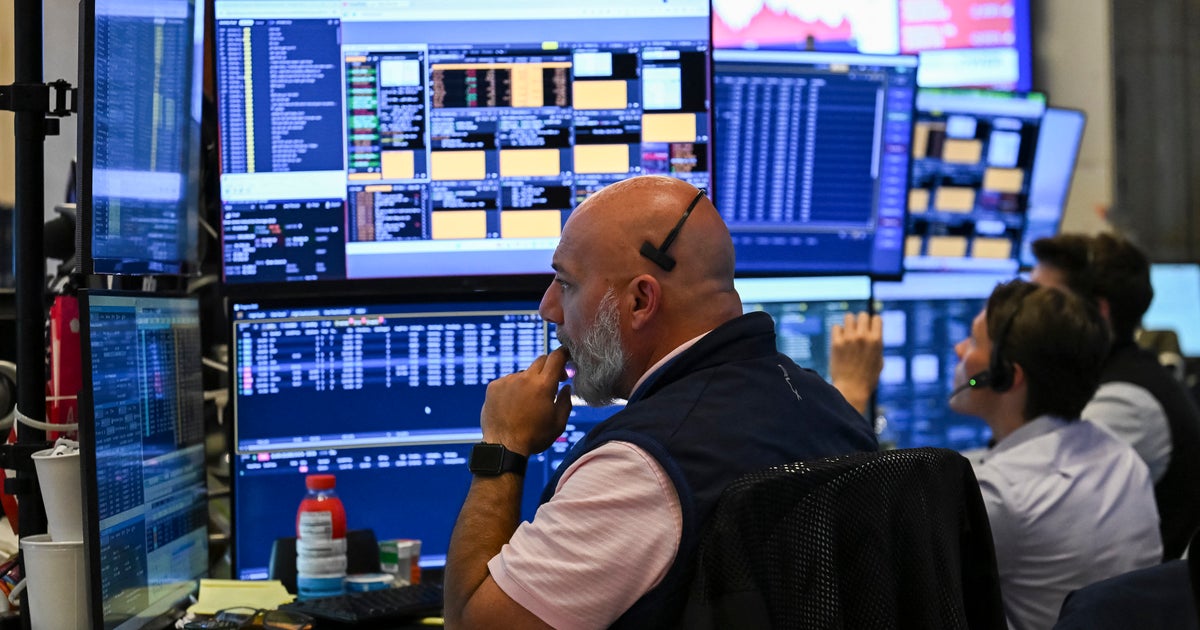
The shockwaves rippled immediately through international equity and debt markets. In India, benchmark indices suffered steep losses in early trade on Wednesday, 9 September 2026, as high crude prices collided with foreign fund outflows and IT selloffs reported by The Hindu BusinessLine. Radhakrishnan, founder and CEO of HST Wealth, warned that sustained crude prices above $100 will intensify inflationary pressures, weaken local currencies, and squeeze corporate margins. Similarly, Ponmudi R, CEO of Enrich Money, noted that oil remains the principal macro driver dictating high volatility across global financial platforms.
| Benchmark / Index | Price / Change | Context |
|---|---|---|
| Brent Crude Futures | $99.93 – $100.69 /bbl | Up over 2% intraday; highest level in more than six weeks |
| WTI Crude Futures | $94.52 – $95.21 /bbl | Strengthened alongside international benchmarks |
| BSE Sensex | Down 500.25 points (to 75,060.61) | Early trade tumble driven by energy and IT selloffs |
| NSE Nifty | Down 129.40 points (to 23,506.10) | Reflects foreign fund outflows and inflation concerns |
Refined fuel markets are feeling an even tighter squeeze. Consumers globally have endured elevated prices for gasoline and diesel for most of the year due to an ongoing global refining crunch. European diesel futures traded near $199 per barrel on Wednesday, maintaining levels above $100 continuously since the conflict began in February, while diesel refining margins touched a record $78.90 per barrel on Tuesday, 1 September 2026. Central banks face renewed policy friction as they attempt to balance stubborn inflation against slowing economic growth.
WisdomTree commodity strategist Nitesh Shah noted that the crisis significantly complicates monetary policy as central banks worldwide grapple with renewed price pressures. Ole Hansen, head of commodity strategy at Saxo Bank, warned that tight conditions across middle distillate products like diesel and jet fuel leave markets exceptionally vulnerable to further price spikes. Major financial institutions, including Goldman Sachs, Bank of America, and HSBC, have steadily upgraded their crude price forecasts to reflect the deteriorating geopolitical landscape.
What happens next depends entirely on the trajectory of military engagements in the Persian Gulf and Red Sea. Policymakers, central bankers, and corporate leaders will monitor whether diplomatic channels can reopen vital shipping lanes or if retaliatory strikes will provoke further blockades. If key transit corridors remain restricted, markets brace for persistent energy inflation and prolonged economic headwinds heading into the final quarters of the year.
How significant is this development?
Contribute your assessment to the aggregated reader sentiment ledger.
Frequently Asked Questions
Key questions answered in this reportWhat is the key development in: Oil prices pass $100 amid intensified Middle East hostilities?
International benchmark Brent crude surpassed $100 a barrel as intensified military actions in the Middle East disrupted vital crude export routes and rattled global markets.
Why is this Business development significant for the UK?
This report covers critical events in our Business beat. Independent reporting monitors related UK statements, regulatory shifts, and public responses as further verified details emerge.
How was this reporting corroborated and verified?
Newsarchy UK compiles and cross-references reporting from primary reporting from NBC News and cross-checked wire reports. All coverage adheres to published editorial standards.
When was this report published?
This briefing was published on September 9, 2026 and is permanently cataloged in the Newsarchy UK Business archives.