Rolls-Royce seeks UK government support for return to narrowbody market
Following a financial turnaround, Rolls-Royce is exploring a return to the narrowbody sector using its UltraFan architecture. The company is currently discussing potential government support to help de-risk the development of a 30,000-lb thrust engine.
- Core Development: Following a financial turnaround, Rolls-Royce is exploring a return to the narrowbody sector using its UltraFan architecture. The company is currently discussing potential government support to help de-risk the development of a 30,000-lb thrust engine.
- Beat Context: Categorized under Business with independent corroboration.
- Reporting Depth: 3 minute analytical read synthesized from verified newsroom sources.
Rolls-Royce is actively pursuing UK government support to facilitate its re-entry into the narrowbody jet engine market. This strategic initiative, which would signal a return to a sector the manufacturer exited in 2011, follows a period of intensive financial and operational recovery for the Derby-based aerospace company. As of Sunday, 19 July 2026, the firm is preparing for the biannual Farnborough airshow, where industry leaders are gathering to assess the current state of aviation and defense.
The company’s current position represents a significant shift from 2023, when chief executive Tufan Erginbilgiç arrived to lead an organization he described as a burning platform
facing critical risks. At that time, Rolls-Royce was weighed down by persistent durability issues affecting its Trent engine fleet, which powers widebody aircraft including the Airbus A330, A350, and A380, as well as the Boeing 787 and 777. These engines suffered from cracking turbine blades that necessitated frequent, costly maintenance, leading to strained relationships with airline customers and volatility in the company’s share price.
Media additions


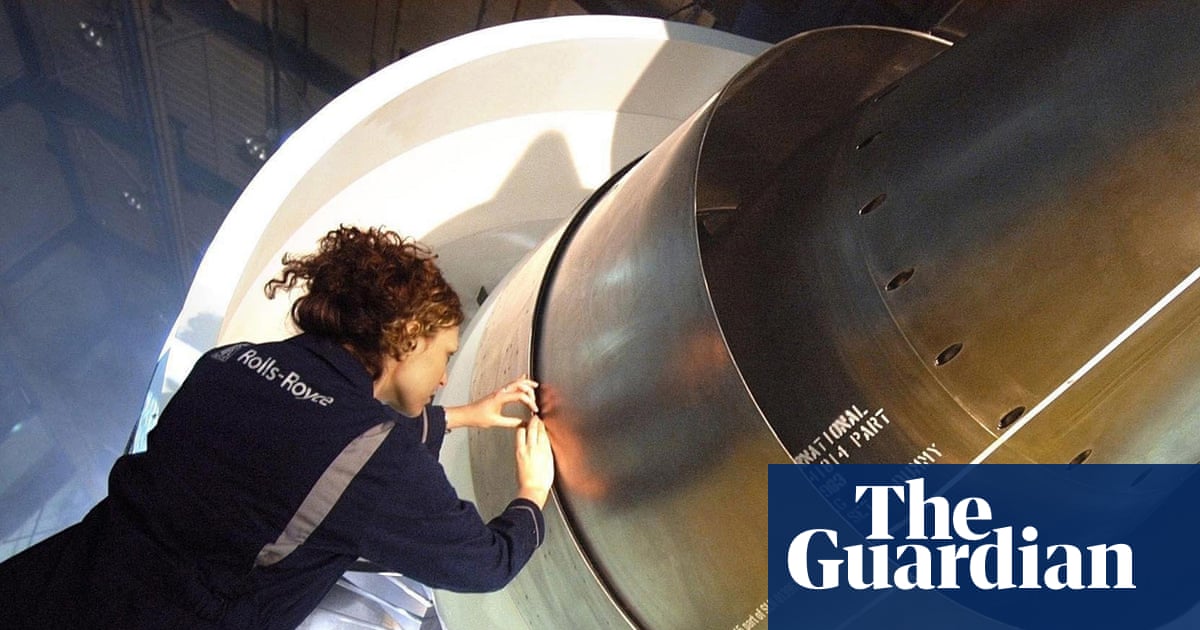
To rectify these issues, Erginbilgiç initiated a comprehensive turnaround, allocating £1bn toward improving the durability of the Trent engines and expanding maintenance, repair, and overhaul (MRO) capacity. Technical remediation involved modifying the pattern of cooling holes in the turbine blades to improve airflow by 40% and trimming weight from the blade tips to reduce structural stress. Rachel Walker, the Trent 1000 programme director, stated that these changes are expected to triple the time engines remain on aircraft wings before requiring service. While roughly half of the Trent 1000 engines have been updated, the company remains on track to complete the transition by next June.
Celine Bouas, senior vice-president for customers, noted that the reliability issues created significant challenges for airlines but defended the necessity of the investment, citing broader market pressures and certification delays triggered by the Boeing 737 Max crisis. The company’s financial recovery has been pronounced, with underlying profits for 2025 reaching £3.5bn. The manufacturer’s share price currently sits above £13, a substantial increase from its valuation three years prior.
Looking toward future growth, Rolls-Royce is leveraging its UltraFan engine technology, which recently reached a milestone by successfully linking a power gearbox to a high-pressure core. The company is developing two variants: an 80,000-lb thrust engine for widebodies and a 30,000-lb thrust version aimed at the narrowbody market. Rob Watson, president for civil aerospace, indicated that the narrowbody engine is in the concept stage, with testing targeted for 2028. While the company possesses the capital to fund development, Watson confirmed a preference for a partnership to de-risk the investment.
The push for government support comes as the company navigates the transition to a new government, which is currently reviewing available options. While Rolls-Royce executives maintain that a return to the narrowbody market is not strictly required for continued growth, they acknowledge the segment’s importance due to the high volume of point-to-point air travel. Watson emphasized that the UltraFan technology offers performance gains that likely warrant the development of entirely new aircraft platforms rather than retrofitting existing models.
The firm’s resurgence has been further supported by a robust recovery in global flight hours, increased defense spending following the 2022 invasion of Ukraine, and strong demand for power systems in AI datacentres. As the company looks ahead, its strategy remains focused on high-margin service agreements and the long-term potential of its next-generation engine architecture, setting the stage for its potential re-engagement with the competitive narrowbody sector.
How significant is this development?
Contribute your assessment to the aggregated reader sentiment ledger.
Frequently Asked Questions
Key questions answered in this reportWhat is the key development in: Rolls-Royce seeks UK government support for return to narrowbody market?
Following a financial turnaround, Rolls-Royce is exploring a return to the narrowbody sector using its UltraFan architecture. The company is currently discussing potential government support to help de-risk the development of a 30,000-lb thrust engine.
Why is this Business development significant for the UK?
This report covers critical events in our Business beat. Independent reporting monitors related UK statements, regulatory shifts, and public responses as further verified details emerge.
How was this reporting corroborated and verified?
Newsarchy UK compiles and cross-references reporting from primary reporting from theguardian.com and cross-checked wire reports. All coverage adheres to published editorial standards.
When was this report published?
This briefing was published on July 19, 2026 and is permanently cataloged in the Newsarchy UK Business archives.