SpaceX shares fall as company makes Nasdaq 100 debut
SpaceX joined the Nasdaq-100 index 15 trading days after its IPO, triggering market volatility and projected portfolio rebalancing by index funds.

- Core Development: SpaceX joined the Nasdaq-100 index 15 trading days after its IPO, triggering market volatility and projected portfolio rebalancing by index funds.
- Beat Context: Categorized under Business with independent corroboration.
- Reporting Depth: 3 minute analytical read synthesized from verified newsroom sources.
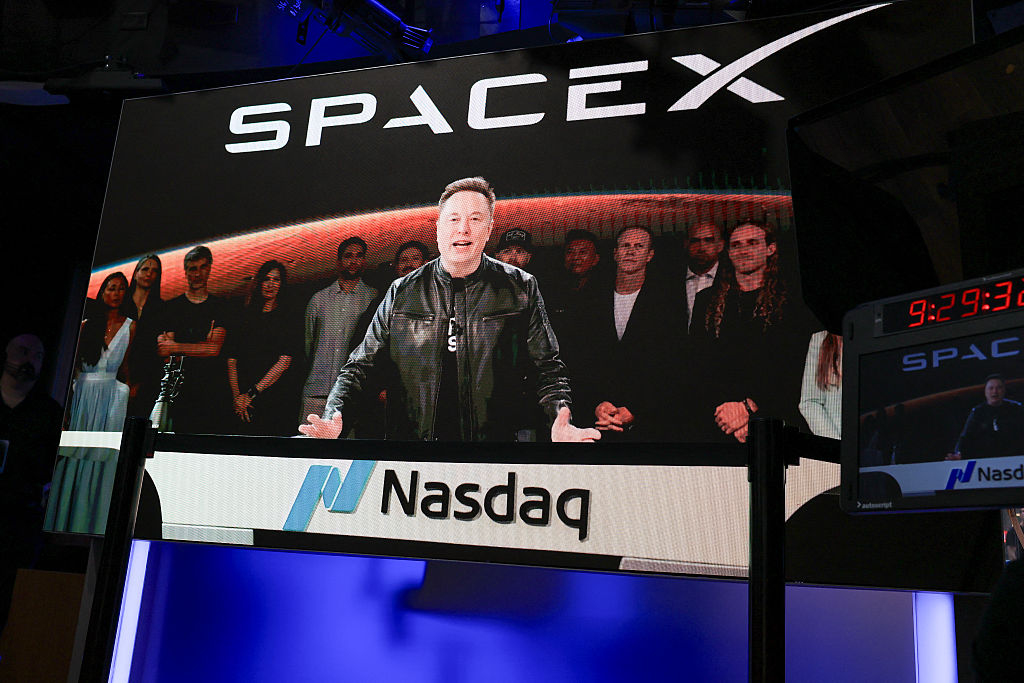
SpaceX officially joined the Nasdaq-100 index on Tuesday, 7 July 2026, marking a rapid transition for the aerospace and artificial intelligence firm just 15 trading days after its initial public offering on 12 June 2026. The inclusion, made possible by a recent shift in Nasdaq eligibility rules, allows large-cap companies to bypass traditional waiting periods. Despite the milestone, shares fell nearly 6% in early trading on the day of the debut, slipping to approximately $151 per share.
The entry into the benchmark index signifies that millions of individual investors — many unaware of their exposure — will now hold the stock through workplace 401(k) plans and exchange-traded funds that track the Nasdaq-100. This structural shift is expected to trigger significant passive buying, with JPMorgan estimating that index-tracking funds could purchase roughly $4.3 billion worth of SpaceX shares to rebalance their portfolios to match the new benchmark composition.
Media additions

Market Impact and Volatility
While index inclusion typically acts as a long-term stabilizer, the immediate reaction has been one of volatility. SpaceX shares experienced a sharp rally following their mid-June debut, surging roughly 50% in the first three trading sessions. However, that momentum faded as investors engaged in profit-taking and reacted to broader market shifts. By the time of the index entry, the stock had surrendered nearly all of its early gains.
Analysts suggest that the company’s unique market position, characterised by an extremely low free float, may exacerbate price swings. Because a vast majority of the company's voting rights remain concentrated with Elon Musk, only a small fraction of shares are available for public trading. Nasdaq calculates index weightings based on free-float market capitalisation, which will keep SpaceX’s initial weighting on the index at a relatively modest 1% to 1.34%.
Market observers remain divided on the valuation. Some, such as Ipek Ozkardeskaya of Swissquote, have questioned the wisdom of the fast-track inclusion, noting that the company went public at a valuation exceeding 100 times its previous year's sales. Conversely, major brokerages, including Morgan Stanley, Goldman Sachs, and JP Morgan, have initiated coverage with largely bullish ratings, betting on the company's long-term potential in satellite communications through Starlink and AI infrastructure via its xAI integration.
Financial Foundations
The company, which reported $18.7 billion in revenue for 2025, continues to operate at a significant net loss, recording a deficit of $4.9 billion last year due to heavy investments in next-generation rockets and satellite deployment. The public offering aims to raise as much as $75 billion to fund these capital-intensive projects.
For investors waiting on the sidelines, the market landscape is defined by several upcoming factors:
- Analyst Coverage: With the post-IPO quiet period now expired, Wall Street firms have begun publishing their first formal price targets.
- S&P 500 Status: Unlike the Nasdaq, S&P Dow Jones Indices has maintained its strict requirements, including a one-year listing period and proven profitability. SpaceX is not expected to join this index in the near term.
- Lockup Expirations: Market participants are monitoring the calendar for when early investors and employees become eligible to sell their shares, which could introduce new supply to the market.
The decline in share price on Tuesday also had a direct effect on the net worth of CEO Elon Musk, whose personal fortune dropped to approximately $973 billion, according to Forbes. Despite this, he remains the world's wealthiest individual, maintaining a significant lead over other global financial figures. As the market moves forward, analysts from institutions like Nationwide have suggested that volatility will likely persist until the company provides further evidence of sustained profitability through quarterly earnings reports.
How significant is this development?
Contribute your assessment to the aggregated reader sentiment ledger.
Frequently Asked Questions
Key questions answered in this reportWhat is the key development in: SpaceX shares fall as company makes Nasdaq 100 debut?
SpaceX joined the Nasdaq-100 index 15 trading days after its IPO, triggering market volatility and projected portfolio rebalancing by index funds.
Why is this Business development significant for the UK?
This report covers critical events in our Business beat. Independent reporting monitors related UK statements, regulatory shifts, and public responses as further verified details emerge.
How was this reporting corroborated and verified?
Newsarchy UK compiles and cross-references reporting from primary reporting from businessdesk.co.nz and cross-checked wire reports. All coverage adheres to published editorial standards.
When was this report published?
This briefing was published on July 8, 2026 and is permanently cataloged in the Newsarchy UK Business archives.